Table of Contents
ToggleMarkham homeowners know their bathrooms work hard. Between rushed morning routines and evening wind-downs, these spaces endure constant use while rarely getting the attention they deserve. But a well-planned bathroom renovation can transform a tired, outdated space into a high-functioning retreat that boosts home value and daily comfort. Whether dealing with cracked tiles, inadequate storage, or fixtures that haven’t been updated since the ’90s, tackling a bathroom remodel requires more than good intentions, it demands solid planning, realistic budgets, and an understanding of local codes. This guide walks through everything Markham homeowners need to know to pull off a successful bathroom renovation in 2026.
Key Takeaways
- A mid-range bathroom renovation in Markham typically recoups 65-70% of its cost at resale, making it one of the top ROI home improvement projects in the region’s competitive real estate market.
- Bathroom renovation timelines range from 1-2 weeks for cosmetic refreshes to 4-8 weeks for full gut renovations, plus 2-3 weeks for permit approvals—always include a 10-15% contingency budget for unexpected issues in older homes.
- Popular 2026 design trends include walk-in showers with frameless glass, floating vanities, warm neutral color palettes, and water-efficient fixtures like dual-flush toilets and low-flow showerheads that reduce consumption by up to 20%.
- Markham bathrooms must comply with Ontario Building Code requirements including GFCI protection within 1.5 meters of water sources, proper outdoor ventilation (minimum 50 CFM), and tempered glass in shower enclosures—skipping permits can void insurance and complicate future home sales.
- Smart design choices like pocket doors, vertical storage solutions, and large-format tiles maximize function in compact spaces while continuous flooring and strategic lighting make even small bathrooms feel larger and more luxurious.
- Hybrid DIY approaches—handling demolition and painting yourself while hiring licensed professionals for plumbing, electrical, and specialized tile work—balance cost savings with quality results and compliance with local codes.
Why Markham Homeowners Are Investing in Bathroom Renovations
Bathroom renovations rank among the top home improvement projects in Markham, and for good reason. The city’s housing stock includes a significant number of homes built in the 1980s and 1990s, many with original bathrooms showing their age. Outdated fixtures, poor lighting, and inefficient layouts no longer meet modern expectations for comfort and functionality.
Return on investment drives many renovation decisions. A mid-range bathroom remodel typically recoups 65-70% of its cost at resale in the Greater Toronto Area, according to recent market data. In Markham’s competitive real estate environment, updated bathrooms often become the difference between a home that sells quickly and one that lingers on the market.
Beyond resale value, homeowners cite daily quality of life as a primary motivator. Inadequate storage, cramped shower stalls, and poor ventilation create frustration that compounds over years. Modern water-efficient fixtures also deliver long-term utility savings, WaterSense-certified toilets use 20% less water than standard models, cutting both consumption and costs. Add in aging infrastructure issues like outdated plumbing or mold concerns, and many Markham homeowners find renovation becomes less optional and more necessary.
Planning Your Bathroom Renovation: Budget and Timeline Essentials
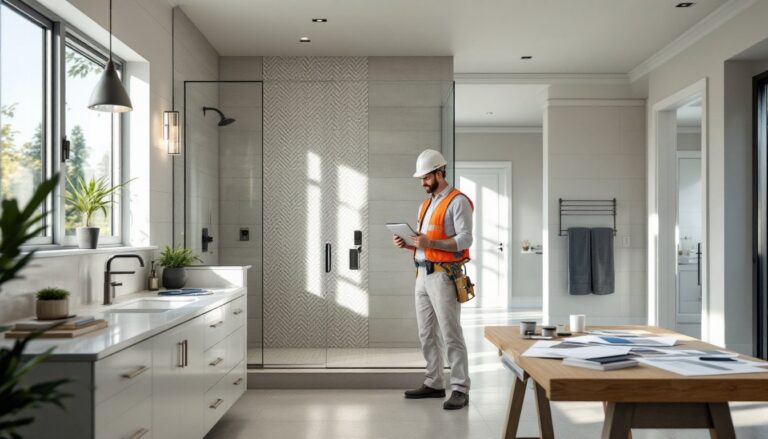
Solid planning separates successful bathroom renovations from projects that stall halfway through. Before swinging a hammer or ordering tiles, homeowners need a clear picture of costs, timelines, and potential complications.
Timeline expectations vary by scope. A cosmetic refresh, new paint, fixtures, and hardware, can wrap up in 1-2 weeks with minimal disruption. A full gut renovation involving plumbing relocation, electrical upgrades, and structural changes typically runs 4-8 weeks, assuming no surprises behind the walls. Factor in material lead times, especially for custom vanities or specialty tiles, which can add 2-4 weeks to the front end.
Permit processing in Markham takes time. Submit applications early and build in 2-3 weeks for approval on projects requiring permits. Rushing this step invites problems during future home sales or insurance claims.
Setting a Realistic Budget for Your Markham Bathroom Project
Bathroom renovation costs in Markham span a wide range depending on size, finishes, and structural complexity. A 5′ x 8′ powder room refresh might run $8,000-$12,000 with builder-grade materials and DIY labor. Mid-range full bathroom renovations in the $18,000-$35,000 range include quality fixtures, ceramic or porcelain tile, and professional installation. High-end remodels with custom cabinetry, natural stone, and luxury fixtures easily exceed $50,000.
Break down costs realistically:
- Labor: 40-50% of total budget for professional work
- Fixtures and fittings: 15-20% (toilet, vanity, faucets, shower)
- Tile and flooring: 10-15%
- Plumbing and electrical: 15-20%
- Contingency: 10-15% for unexpected issues
The contingency isn’t optional, older Markham homes frequently hide outdated wiring, asbestos-containing materials, or plumbing that doesn’t meet current code. Platforms offering home improvement cost estimators can provide baseline numbers, but always pad estimates for local market conditions and material availability. Supply chain disruptions and labor shortages continue affecting pricing in 2026, making fixed-price contractor quotes valuable protection against budget creep.
Popular Bathroom Renovation Trends in Markham for 2026
Markham bathroom renovations in 2026 blend practical functionality with clean, modern aesthetics. Homeowners are moving away from ornate traditional styles toward streamlined designs that maximize space and reduce maintenance.
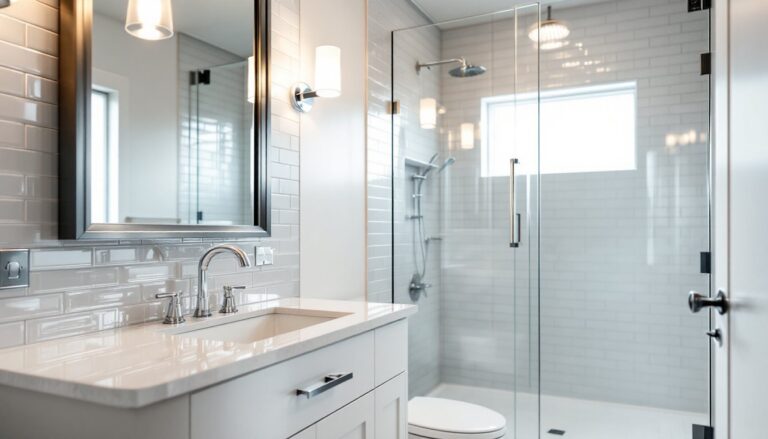
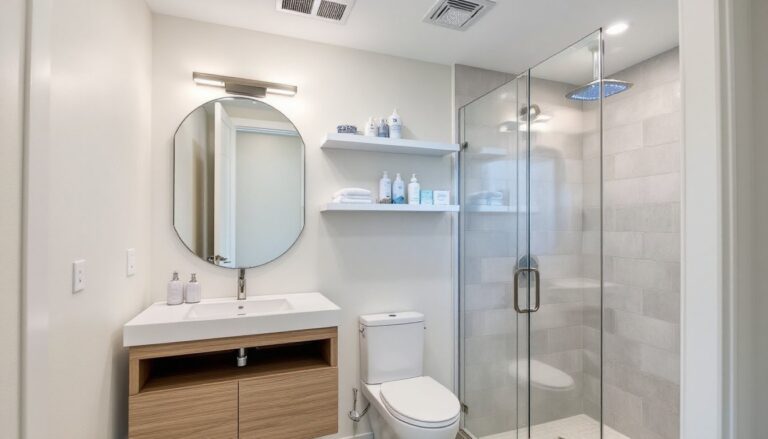
Walk-in showers continue replacing tub-shower combinations, particularly in primary bathrooms. Frameless glass enclosures, linear drains, and large-format porcelain tiles (12″ x 24″ or larger) create a spa-like feel while simplifying cleaning. For families with young children, but, retaining at least one bathtub in the home remains practical.
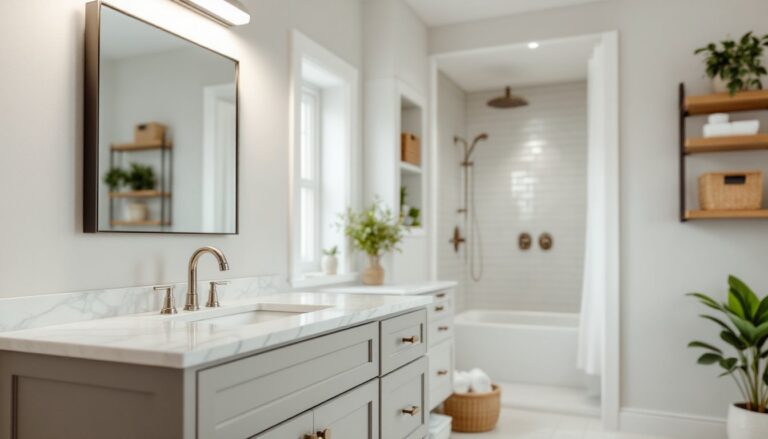
Floating vanities gain traction for their space-saving benefits and contemporary look. Mounting the vanity to the wall rather than the floor makes small bathrooms feel larger and simplifies floor cleaning. Pair with wall-mounted faucets for a cohesive, minimalist appearance.
Color palettes lean toward warm neutrals, greiges, soft taupes, and muted earth tones, replacing the stark gray-and-white schemes that dominated previous years. Matte black fixtures remain popular accents, offering durability and a modern edge without showing water spots as readily as chrome.
Practical upgrades include heated floors, which add comfort during Canadian winters without eating significant energy. Electric radiant mats install directly under tile and cost $8-15 per square foot for materials and labor. LED mirror lighting with integrated defoggers eliminates the need for separate fixtures while providing even, shadow-free illumination for grooming tasks.
Sustainability considerations drive fixture choices. Low-flow showerheads (max 2.0 gpm) and dual-flush toilets reduce water consumption without sacrificing performance. Homeowners also prioritize improved ventilation, Energy Star-rated bathroom fans with humidity sensors prevent mold growth and improve air quality, particularly important in Markham’s humid summers.
Navigating Permits and Building Codes in Markham
Markham’s building permit requirements aren’t optional suggestions, they’re legal mandates that protect homeowners and maintain property values. Understanding what requires a permit before starting work prevents costly corrections and legal headaches.
Building permits are required for:
- Relocating or adding plumbing fixtures
- Any electrical work beyond replacing existing fixtures
- Structural changes affecting walls, especially load-bearing walls
- Installing or relocating bathroom ventilation that vents outdoors
- Expanding bathroom square footage
Permits typically aren’t required for:
- Replacing existing fixtures in the same location (like-for-like swaps)
- Painting, wallpapering, or other cosmetic changes
- Installing new flooring over existing substrate without structural changes
- Replacing vanity cabinets without plumbing modifications
Markham follows the Ontario Building Code (OBC), which incorporates specific requirements for bathroom renovations. Key code considerations include:
- GFCI protection required for all bathroom receptacles within 1.5 meters of water sources
- Minimum ceiling height of 6’8″ in bathrooms (excluding shower areas, which allow lower ceilings in some cases)
- Proper ventilation, either an operable window or mechanical exhaust fan venting outdoors (min 50 CFM)
- Tempered glass required for shower enclosures and any glazing within specific distances of tubs and showers
Electrical work must comply with the Ontario Electrical Safety Code. Only licensed electricians can pull electrical permits in Markham, and all electrical work requires inspection before concealment. This isn’t a DIY-friendly area, hire a professional for anything beyond swapping fixtures.
Submit permit applications through Markham’s building permit portal with detailed drawings showing existing conditions and proposed changes. Plan review takes 2-3 weeks typically, though complex projects may take longer. Schedule inspections at appropriate stages, rough-in, insulation (if applicable), and final, before closing up walls or considering the job complete.
Skipping permits creates future problems. Unpermitted work can complicate home sales, void insurance coverage after water damage, and require expensive retroactive permitting with potential fines. It’s not worth the risk.
DIY vs. Hiring Professionals: What Markham Homeowners Should Consider
The line between DIY-friendly bathroom work and jobs requiring professionals isn’t always obvious. Skill level, tool access, and realistic time assessment all factor into smart decision-making.
Good candidates for DIY:
- Demolition work (with proper safety gear: goggles, dust masks, gloves, and hearing protection)
- Painting and surface prep
- Installing pre-fabricated vanities without plumbing modifications
- Replacing toilets, faucets, and other fixtures in existing locations
- Installing tile with careful prep work and patience
Hire professionals for:
- Any structural modifications or load-bearing wall questions
- Plumbing rough-in or significant relocation work
- All electrical work requiring permits
- Custom shower pans and waterproofing membranes
- Large-format tile installation (requires specialized tools and technique)
Honest self-assessment saves money and headaches. That YouTube tutorial makes tiling look simple, but achieving level, properly waterproofed surfaces requires practice and the right tools. A wet saw ($100-200 to rent) produces cleaner cuts than a snap cutter for porcelain tile, and proper waterproofing membranes like Schluter or RedGard aren’t optional in wet areas, they’re essential moisture barriers preventing catastrophic damage.
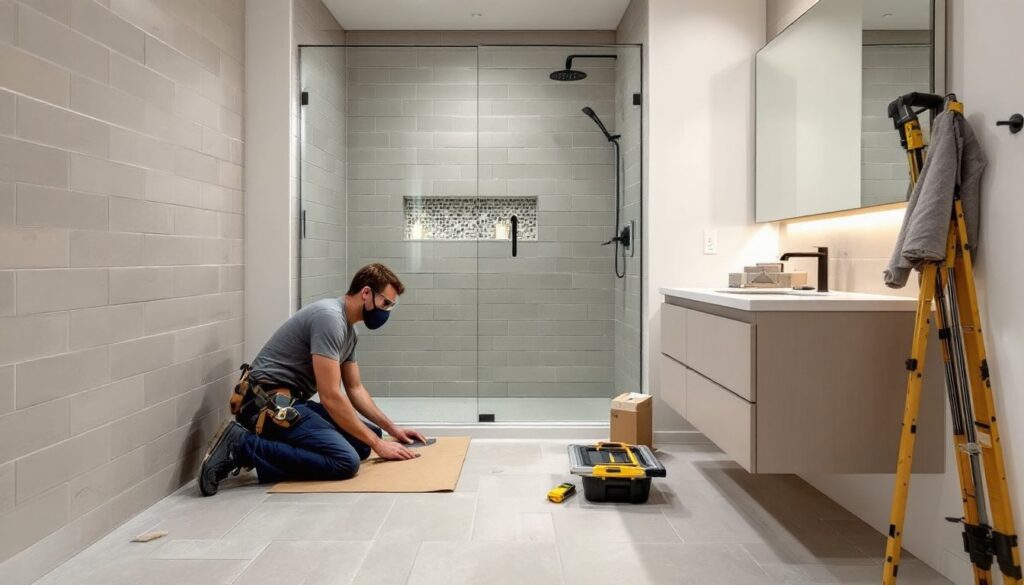
Many Markham homeowners find success with hybrid approaches: handling demolition, painting, and simple fixture replacement themselves while hiring licensed professionals for specialized tasks like plumbing rough-in and tile work. This balances cost savings with quality results.
Time considerations matter too. That weekend project often stretches into weeks when juggling work schedules, material delays, and learning curves. Without a second bathroom, family disruption adds pressure that can lead to rushed, subpar work. Be realistic about available time and skill level, and whether living through extended construction is worth the savings.
Maximizing Space and Functionality in Markham Bathrooms
Many Markham bathrooms, particularly in older homes, suffer from inefficient layouts that waste precious square footage. Smart design choices can make even compact spaces feel larger and function better.
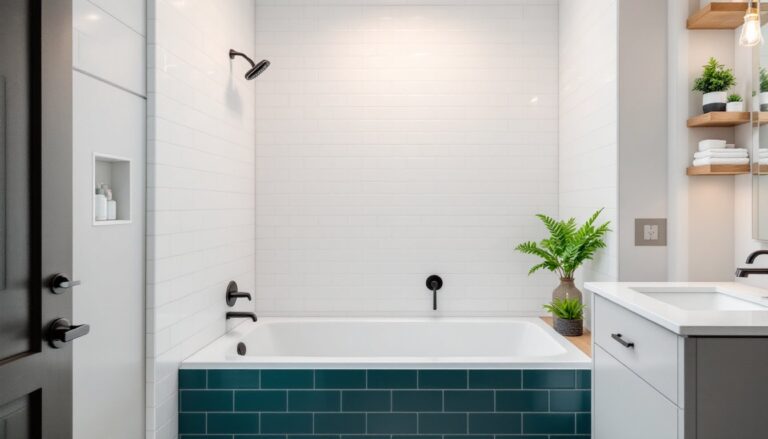
Reconsider the tub-shower combo. Replacing a standard 60″ x 32″ tub-shower unit with a walk-in shower opens up floor space and creates a more luxurious feel. Frameless glass enclosures eliminate visual barriers, making the room appear larger. If keeping a tub, consider a freestanding model that can nestle into corners or odd spaces more flexibly than built-in alcove tubs.
Pocket doors save the 16-20 square feet consumed by a traditional swing door’s clearance arc. They’re particularly effective in powder rooms or ensuite bathrooms where door swing conflicts with fixture placement. Installation requires 2×6 wall framing or furring out 2×4 walls, so factor this into planning.
Vertical storage makes up for limited floor space. Wall-mounted cabinets above toilets, recessed medicine cabinets, and tall linen towers use often-wasted vertical space. Niche shelving carved into shower walls during renovation provides storage without protruding into the shower footprint.
Strategic lighting expands perceived space. Layer ambient ceiling lighting with task lighting around mirrors and accent lighting in niches or under floating vanities. LED strips under toe kicks create a floating effect that makes the room feel larger.
Consistent flooring running throughout eliminates visual breaks that make spaces feel chopped up. Continuing 12″ x 24″ porcelain tile from the main floor into the shower creates seamless flow. Use proper slope toward drains (minimum 1/4″ per foot) to prevent water pooling while maintaining visual continuity.
Comparing design approaches and gathering renovation tips and strategies helps homeowners avoid common layout mistakes. Small changes in fixture placement, moving a toilet 12″ or rotating a vanity, can dramatically improve traffic flow and usability.
Dual-purpose features add value without adding square footage. Vanities with built-in electrical outlets eliminate countertop clutter from chargers and grooming tools. Combination fan-light-heater units consolidate three functions into one ceiling fixture, reducing installation complexity.
For homes with multiple bathrooms, consider coordinating renovations to maintain similar styles while addressing each space’s specific needs. Following best renovation tips ensures consistent quality across projects. The primary bathroom might justify luxury finishes, while a powder room renovation focuses on maximizing impact in minimal space.
Material selection affects both aesthetics and maintenance. Large-format tiles (24″ x 48″ or even larger) minimize grout lines, creating cleaner looks and easier cleaning. Quartz countertops offer the appearance of natural stone without sealing requirements, standing up better to bathroom humidity and cleaning products than granite or marble.
Consider aging-in-place features even in younger households. Curbless showers, grab bar blocking during construction (even if not installing bars immediately), and comfort-height toilets (17-19″ tall) add minimal cost during renovation but provide long-term flexibility. These features also appeal to future buyers, supporting resale value.
Resource guides from platforms like ImproveNet provide additional planning tools and cost comparisons to validate design decisions against current market rates.