Table of Contents
ToggleRaleigh homeowners know that a well-executed bathroom renovation delivers both comfort and serious ROI. With the Triangle region’s strong housing market and a growing number of aging homes built in the 1980s and 1990s, bathroom updates are among the most requested remodels in the area. Whether tackling a half-bath refresh or a full primary suite overhaul, understanding local costs, climate factors, and permitting requirements can mean the difference between a smooth project and a costly surprise. This guide walks through the essentials for planning and executing a bathroom renovation in Raleigh, from budgeting to code compliance.
Key Takeaways
- A bathroom renovation in Raleigh typically costs $12,000–$25,000 for a full bath and takes 4–8 weeks, with budget buffers of 10–15% recommended for unexpected structural issues common in older homes.
- Proper ventilation with an exterior-venting exhaust fan rated for 50–110 CFM is essential in Raleigh’s humid climate to prevent mold and moisture damage to grout and drywall.
- Bathroom renovation projects in Raleigh require permits for plumbing, electrical, or structural changes, with costs ranging from $150–$400 and inspections at rough-in and final stages.
- Popular bathroom styles in Raleigh blend transitional and modern farmhouse designs using neutral palettes, matte black fixtures, subway tile, and herringbone patterns that suit both historic and contemporary homes.
- Hire licensed plumbers and electricians for code-compliant work, as North Carolina law mandates professionals handle water supply, drain lines, and electrical circuits in wet areas.
- Choosing moisture-resistant materials like cement board, mold-resistant drywall, and textured porcelain tile with a slip-resistance rating of 0.6 DCOF protects against North Carolina’s humid subtropical climate.
Why Raleigh Homeowners Are Prioritizing Bathroom Renovations
Raleigh’s population growth continues to drive demand for updated living spaces. Older homes in neighborhoods like North Raleigh, Cary, and Apex often feature builder-grade bathrooms with cultured marble vanities, brass fixtures, and 8×10 tile, finishes that date a home instantly.
Homeowners renovate for several practical reasons. First, functionality: outdated layouts with cramped shower stalls, single sinks, or insufficient storage don’t meet modern needs. Second, water damage: North Carolina’s humidity and occasional heavy rainfall can expose old caulk failures, subfloor rot, or mold in poorly ventilated bathrooms. Third, resale value: a tasteful bathroom update can recoup 60-70% of the investment in this competitive market, especially when comparing homes in the same school district.
Energy efficiency also plays a role. Replacing old windows, upgrading to low-flow fixtures, and installing proper ventilation reduces utility bills and improves comfort year-round. Many Raleigh contractors report that clients now request heated floors, smart exhaust fans, and tankless water heaters as standard upgrades.
Planning Your Raleigh Bathroom Renovation: Budget and Timeline Essentials
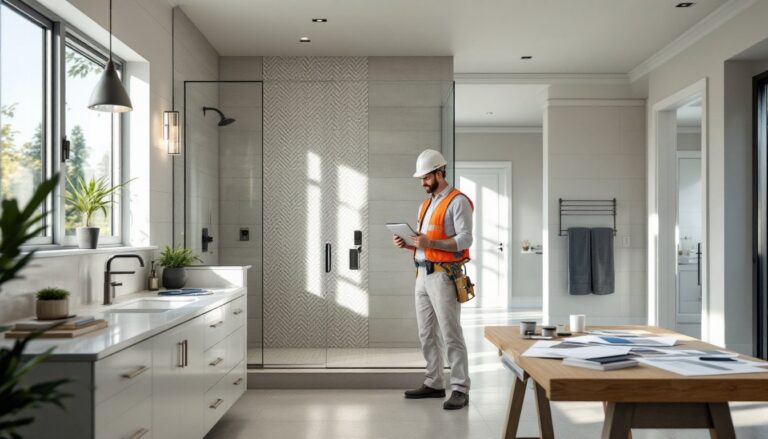
A realistic timeline for a full bathroom renovation in Raleigh runs 4-8 weeks, depending on scope. Demolition and framing take 3-5 days, plumbing and electrical rough-in another 3-4 days, then drywall, tile work, and fixture installation fill the remainder. Supply chain delays for custom vanities or specialty tile can add 2-3 weeks, so order materials early.
Always build in a 10-15% buffer for unforeseen issues. Older homes often reveal surprises during demo: rotted joists, outdated galvanized plumbing, or undersized drain lines that don’t meet current code. These aren’t optional fixes, they’re structural or safety requirements.
Setting a Realistic Budget for Your Project
Mid-range bathroom renovations in Raleigh typically run $12,000-$25,000 for a full bath (tub, toilet, vanity, tile, fixtures). Upscale projects with frameless glass, custom cabinetry, and high-end tile can reach $35,000-$50,000. Powder rooms or half-bath updates may cost $5,000-$10,000.
Costs vary by material grade and labor rates. Porcelain tile runs $3-$8 per square foot for materials: installation adds $8-$15 per square foot depending on pattern complexity. Quartz countertops cost $60-$120 per square foot installed. Licensed plumbers in Raleigh charge $85-$125 per hour: electricians run $75-$110 per hour.
Get at least three written estimates from licensed contractors. Verify they include material costs, labor, permits, and haul-away. Using cost estimators can provide ballpark figures, but local quotes account for Raleigh’s specific labor market and material availability.
Popular Bathroom Renovation Styles for Raleigh Homes
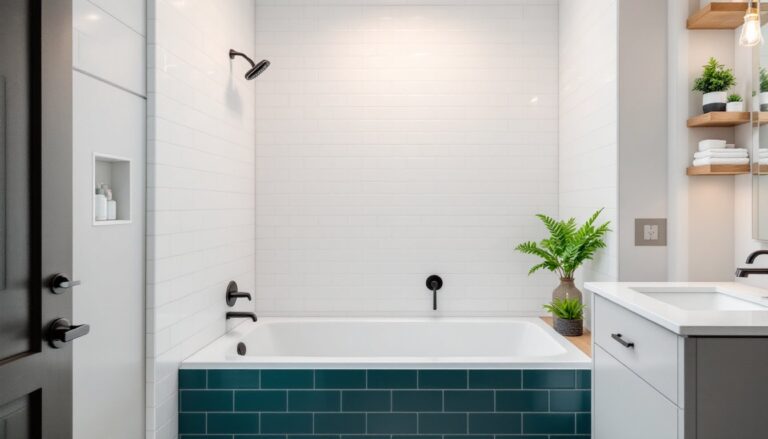
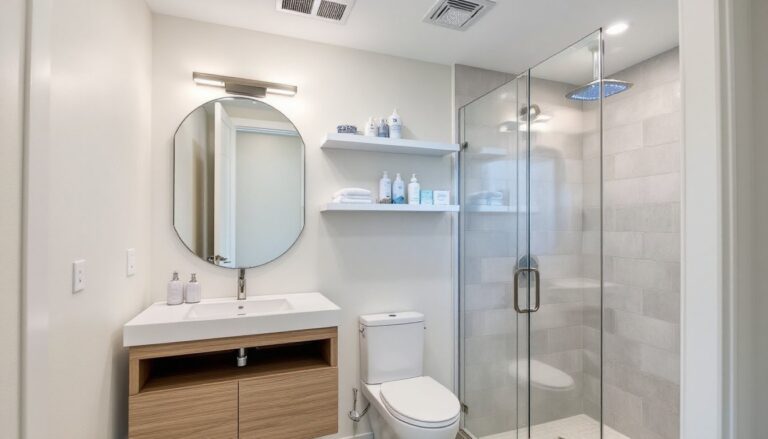
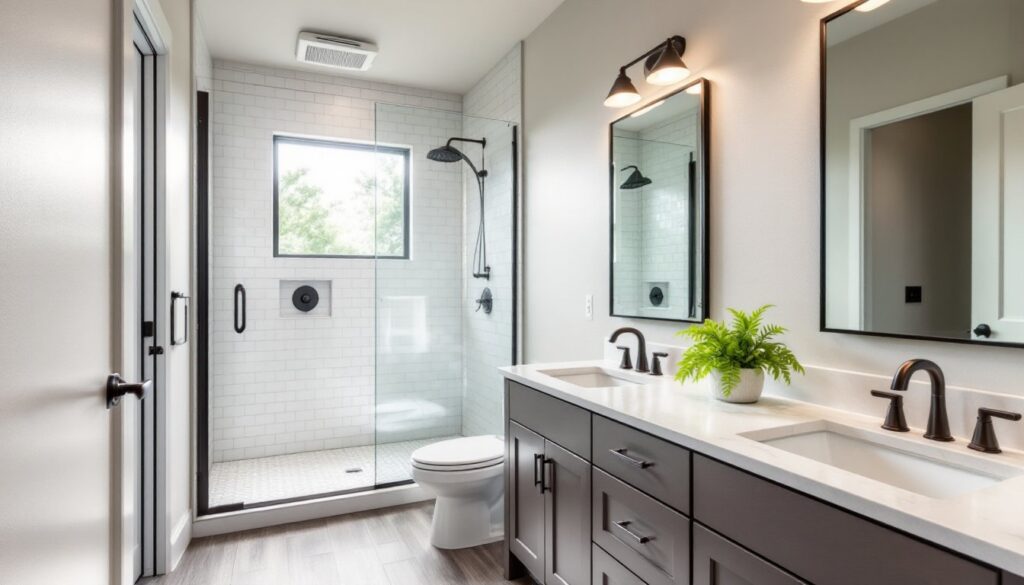
Raleigh’s design preferences lean toward transitional and modern farmhouse styles that blend clean lines with warm textures. Shiplap accent walls, matte black fixtures, and wide-plank tile that mimics wood grain remain popular. These choices suit both historic bungalows in Oakwood and newer builds in West Cary.
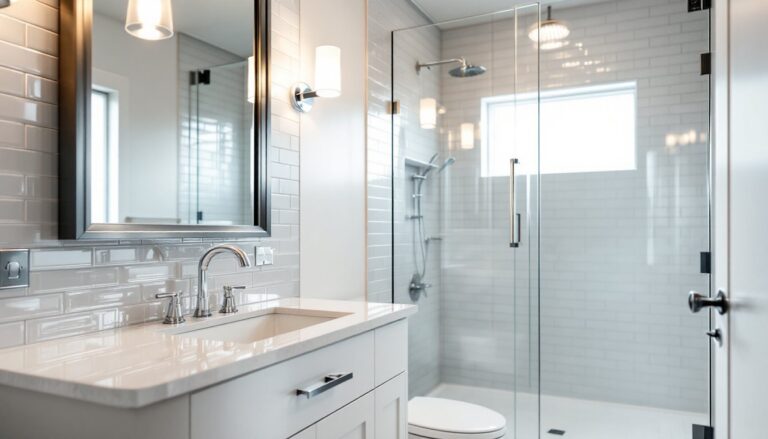
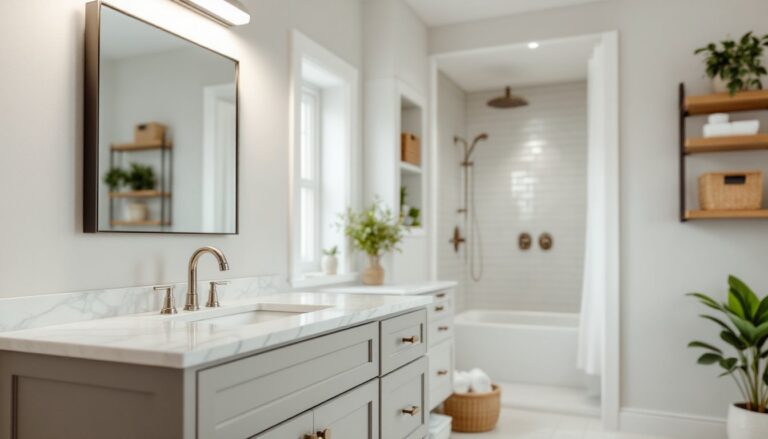
Transitional bathrooms pair neutral palettes (greige, warm white, soft taupe) with mixed metal finishes, brushed nickel faucets, matte black hardware, and chrome towel bars. Subway tile in 3×6 or 4×12 formats works for timeless wainscoting, while 12×24 porcelain tile in a herringbone or straight-lay pattern covers floors.
Modern farmhouse designs incorporate freestanding soaking tubs, barn-style sliding shower doors, and open wood shelving. Vessel sinks on reclaimed wood vanities add character but require careful planning for plumbing access and countertop height (typically 34-36 inches for vessel sinks vs. 30-32 inches for undermounts).
For homes in historic districts, preserving original features like hexagonal floor tile or pedestal sinks may be required. Check with the Raleigh Historic Development Commission if your home is in a designated overlay district. Applying essential renovation tips ensures these historical elements integrate smoothly with updated plumbing and lighting.
Key Renovation Considerations for North Carolina’s Climate
North Carolina’s humid subtropical climate demands specific material and ventilation choices. Average summer humidity in Raleigh hovers around 70%, creating ideal conditions for mold and mildew if bathrooms aren’t properly ventilated.
Install an exhaust fan rated for at least 50 CFM (cubic feet per minute) in bathrooms under 100 square feet: larger bathrooms need 80-110 CFM. The fan should vent directly to the exterior, never into an attic or crawlspace. Position it between the shower and the door for optimal air circulation. Models with humidity sensors automatically activate when moisture levels rise, preventing mold growth on grout and drywall.
Choose moisture-resistant materials. Cement board or Schluter Kerdi board works better than standard drywall behind tile in wet areas. Use mold-resistant drywall (purple board or similar) in the rest of the bathroom. Seal grout lines with a penetrating sealer after installation and reapply annually.
Floor tile should have a slip-resistance rating of at least 0.6 DCOF (Dynamic Coefficient of Friction) for wet areas. Textured porcelain or natural stone with a honed finish provides better traction than polished surfaces. Avoid large-format tiles (bigger than 12×24) on shower floors, smaller mosaics create more grout lines, which improve grip.
Consider a dehumidifier or HVAC zoning if the bathroom lacks a window. Raleigh’s spring and fall can bring weeks of damp weather, and passive ventilation won’t be enough.
DIY vs. Hiring Professionals: What Raleigh Homeowners Should Know
Cosmetic updates like painting vanities, replacing cabinet hardware, or installing new light fixtures fall comfortably within DIY territory. Swapping a toilet is manageable if the flange is in good shape and the floor is level, just turn off the water, unbolt the old unit, replace the wax ring, and set the new toilet.
But bathroom renovations quickly escalate beyond DIY limits. Moving plumbing or electrical requires licensed professionals. North Carolina law mandates that only licensed plumbers perform work on water supply and drain lines, and only licensed electricians pull permits for new circuits or GFCI outlets in wet areas. Homeowners can do their own work without a license on their primary residence, but inspectors will hold DIY work to the same code standards as professional installations.
Tile work demands precision. Setting large-format tile requires a perfectly level substrate, more than 1/8-inch deviation over 10 feet will cause lippage (uneven edges). A laser level, proper trowel technique, and tile spacers are non-negotiable. If you’ve never tiled before, practice in a low-stakes area like a laundry room before tackling a shower surround.
For complex projects involving structural changes, waterproofing membranes, or custom glass enclosures, hiring a local remodeling contractor makes sense. Ask for references, verify their license through the NC Board of Examiners of Plumbing, Heating, and Fire Sprinkler Contractors, and confirm they carry general liability and workers’ comp insurance. Following proven renovation strategies can help homeowners identify which tasks to tackle and which to delegate.
Permits, Codes, and Regulations in Raleigh
Raleigh enforces the 2018 North Carolina Residential Code, which incorporates the International Residential Code with state amendments. Permits are required for any work involving plumbing, electrical, or structural changes. Cosmetic updates (paint, fixtures that don’t require new wiring, vanity swaps using existing plumbing) don’t need permits.
Typical permit costs for a bathroom renovation run $150-$400, depending on project scope. Combination permits cover plumbing, electrical, and mechanical work. Apply through the City of Raleigh’s online portal or in person at the One Exchange Plaza office. Expect a 3-5 business day review period for residential permits.
Key code requirements for bathrooms include:
- GFCI protection on all outlets within 6 feet of a water source (IRC E3902.3)
- Minimum clearances: 21 inches in front of toilets, 30 inches centered side-to-side (IRC R307.1)
- Tempered glass for shower doors and any glazing within 18 inches of the floor or 60 inches of a tub (IRC R308.4)
- Exhaust fan venting to the exterior in bathrooms without operable windows (IRC M1507.3)
- Water heater temperature limited to 120°F to prevent scalding (IRC P2713.3)
Inspections occur at rough-in (after framing and before drywall) and final (after all fixtures are installed). Inspectors check that plumbing vents properly, electrical boxes are securely mounted, and GFCI outlets function. Failed inspections delay the project, so hire contractors familiar with Raleigh’s inspection process. Those seeking a comprehensive approach can reference a renovation guide that covers planning and permitting essentials.
For homes in Wake County but outside Raleigh city limits, permits go through Wake County Inspections. Requirements are similar, but processing times and fees may differ. If working with contractors, confirm who handles permit applications, most pros include this in their scope. Using resources like cost planning tools can help anticipate permit and inspection expenses alongside material and labor costs.