Table of Contents
ToggleBathroom renovations rank among the smartest home improvement investments Aurora homeowners can make. The combination of rising property values in Aurora’s competitive housing market and outdated bathrooms in many older neighborhoods creates a perfect opportunity for strategic upgrades. Whether dealing with a cramped 5×8 master bath or a dysfunctional three-piece basement bathroom, homeowners face unique challenges tied to Aurora’s mix of housing stock, from 1970s splits to newer builds.
This guide cuts through the guesswork. It covers budget realities, permit requirements specific to Aurora, contractor selection, and common pitfalls that trip up even experienced DIYers.
Key Takeaways
- Bathroom renovation in Aurora represents a smart investment, with midrange remodels recouping 60-65% of costs at resale in the competitive Chicago metro housing market.
- Aurora requires permits for most bathroom renovations involving plumbing, electrical, structural, or HVAC changes, with fees typically ranging $75-$300; skipping permits can void insurance and complicate home sales.
- Realistic budgeting is essential—small cosmetic updates cost $3,000-$8,000, midrange remodels run $12,000-$25,000, and full gut renovations can exceed $40,000, with labor representing 40-50% of total project costs.
- Hire licensed contractors for complex work like plumbing reroutes, electrical upgrades, and custom tile, while DIYers can handle demolition, painting, vanity swaps, and fixture installation to reduce costs.
- Plan for common pitfalls including hidden water damage, outdated plumbing requiring replacement, undersized ventilation systems, and tile layout mistakes by budgeting 10-15% contingency and ordering materials 4-6 weeks in advance.
- Current design trends favor functional, timeless aesthetics like neutral color palettes, walk-in showers, floating vanities, layered LED lighting, and quartz countertops that appeal to Aurora’s diverse buyer demographics.
Why Aurora Homeowners Are Prioritizing Bathroom Renovations
Aurora’s housing market continues to see strong demand, making bathroom renovations a high-return investment. Outdated bathrooms, especially those with original 1980s oak vanities, almond-colored fixtures, or single-pane windows, drag down resale values and fail modern family needs.
Many Aurora homes feature builders-grade bathrooms with minimal storage, poor lighting, and inefficient layouts. A well-executed renovation addresses these pain points while boosting equity. Remodeling Magazine’s 2026 Cost vs. Value report shows midrange bathroom remodels in the Chicago metro area (which includes Aurora) recoup roughly 60-65% of costs at resale, but that jumps higher in move-in-ready markets where buyers expect updated spaces.
Beyond resale, homeowners renovate for quality of life. Aging-in-place modifications like walk-in showers with grab bars, comfort-height toilets, and slip-resistant tile flooring are increasingly popular. Others prioritize energy efficiency, low-flow fixtures, LED vanity lighting, and improved ventilation cut utility bills and reduce environmental impact.
Planning Your Aurora Bathroom Renovation: Budget and Timeline Essentials
Start with a realistic budget. Small cosmetic updates, new paint, fixtures, vanity swap, run $3,000-$8,000. Midrange remodels with tile work, new tub/shower, and upgraded plumbing fixtures typically land between $12,000-$25,000. High-end gut renovations involving layout changes, custom tile, heated floors, and luxury finishes can exceed $40,000.
Timeline matters. A straightforward vanity and fixture swap takes 3-5 days. Full remodels with tile, plumbing reroutes, and electrical upgrades need 3-6 weeks, assuming no permit delays or supply chain issues. Building material lead times in 2026 remain unpredictable for specialty tile, custom vanities, and some plumbing fixtures, order early.
Prioritize spending on elements that affect function and longevity. Invest in proper waterproofing (RedGard or Kerdi membrane behind tile), quality underlayment, and solid framing for heavy tile or stone. Save money on decorative elements like mirrors, cabinet hardware, and paint color, these are easy to change later. Homeowners looking for practical project planning strategies should map out material selections before demolition begins.
Understanding Permit Requirements in Aurora
Aurora enforces the International Residential Code (IRC) and requires permits for most bathroom renovations beyond cosmetic work. You’ll need a permit if the project involves:
- Moving or adding plumbing fixtures
- Electrical work (new circuits, relocating outlets, adding GFCI protection)
- Structural changes (removing walls, altering framing, cutting joists)
- HVAC modifications (adding or relocating exhaust fans)
Simple fixture swaps (toilet for toilet, vanity for vanity in the same location) typically don’t require permits, but confirm with Aurora’s Building Division before starting work. Permit fees vary based on project scope, expect $75-$300 for typical bathroom remodels.
Skipping permits creates problems. Unpermitted work complicates home sales, voids insurance claims for water damage, and risks costly do-overs if discovered during inspections. Licensed contractors pull permits as part of their service: DIYers must apply directly at Aurora City Hall or online.
Top Bathroom Design Trends for Aurora Homes
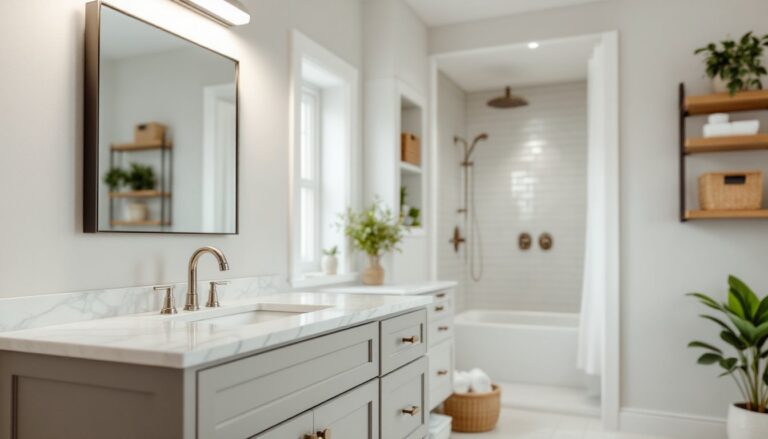
Aurora homeowners in 2026 gravitate toward functional, timeless design rather than trendy looks that date quickly. Neutral color palettes, soft grays, warm whites, black accents, dominate because they appeal to broad buyer demographics and pair well with Aurora’s varied home styles.
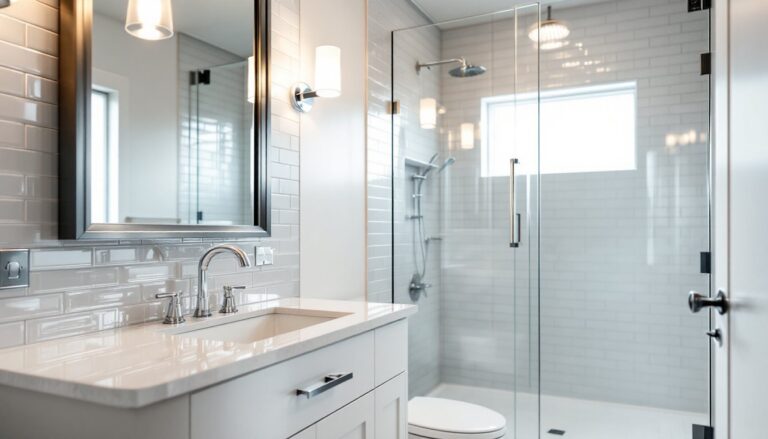
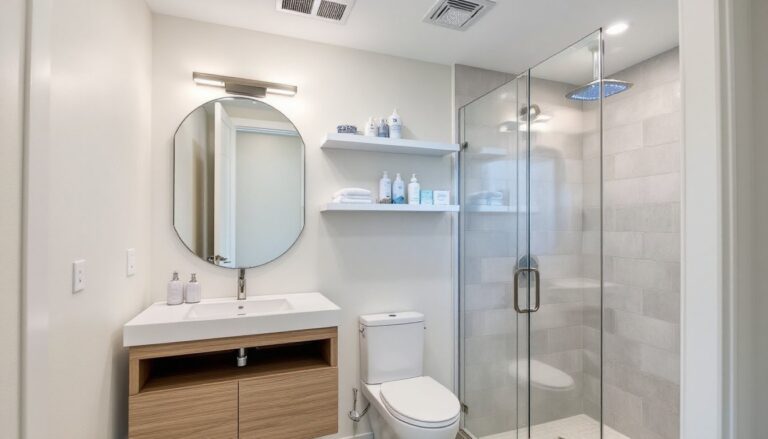
Walk-in showers continue replacing tub/shower combos, especially in master baths. Curbless or low-threshold designs with frameless glass enclosures and large-format tile (12×24 or bigger) reduce grout lines and simplify cleaning. For families with young kids, at least one bathtub remains essential, consider a modern soaking tub design if space allows.
Floating vanities with soft-close drawers maximize floor space and create a contemporary look. Pair them with undermount sinks in white or matte black for clean lines. Quartz countertops outpace granite and laminate thanks to superior durability, stain resistance, and low maintenance.
Lighting upgrades make dramatic differences. Replace builder-grade dome fixtures with layered lighting: recessed LED cans (IC-rated for insulation contact), sconce lighting flanking mirrors at eye level (roughly 60-65 inches off the floor), and dimmers for flexibility. Ventilation also matters, upgrade to a quiet exhaust fan (1.5 sones or less) rated for your bathroom’s square footage (typically 50-110 CFM for standard baths).
Heated floors using electric radiant mats under tile add luxury without huge expense. Budget roughly $8-$12 per square foot installed. They’re especially appreciated during Aurora’s cold months and add resale appeal.
Choosing the Right Contractor vs. DIY Approach
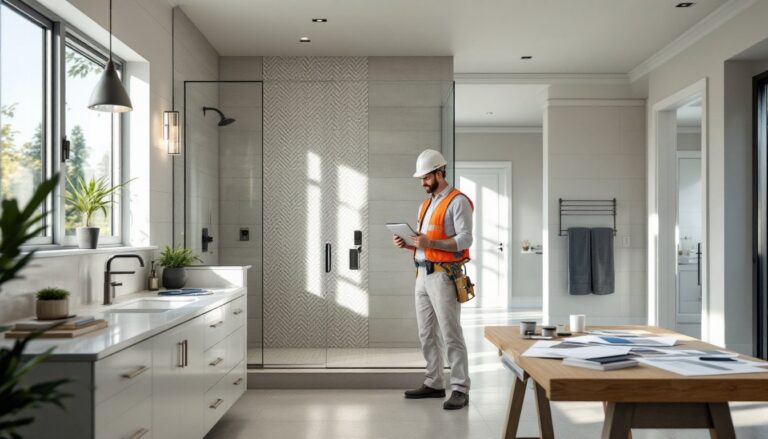
Decide early whether to DIY, hire out completely, or split the work. Full gut renovations involving plumbing reroutes, structural changes, and complex tile work favor licensed contractors. Cosmetic updates, painting, vanity swaps, fixture replacements, suit confident DIYers with basic tools.
When to hire a pro:
- Moving plumbing lines (requires licensed plumber in Aurora)
- Electrical work beyond simple fixture swaps (hire licensed electrician for new circuits, GFCI outlets, exhaust fan wiring)
- Custom tile work, especially floors and large-format wall installations
- Structural modifications (removing walls, sistering joists)
- Projects requiring permits and inspections
Good contractors carry liability insurance, workers’ comp, and relevant licenses. Ask for references from recent Aurora projects, verify permits were pulled, and get detailed written estimates breaking out labor and materials. Avoid lowball bids, they usually mean cut corners or change order surprises mid-project. Homeowners seeking expert guidance on working with contractors can save headaches with clear contracts and payment schedules.
What DIYers can tackle:
- Demolition (with proper PPE: gloves, safety glasses, dust masks, hearing protection)
- Painting and caulking
- Installing vanities, toilets, and simple plumbing fixtures
- Basic tile work with patient practice
- Trim carpentry and finishing details
Hybrid approaches work well. Hire a plumber for rough-in work and DIY the finish plumbing. Contract out tile but handle painting and trim yourself. This balances budget with quality. Just schedule carefully, plumbers and electricians need access before tile and drywall go up.
Cost Breakdown: What to Expect for Your Aurora Bathroom Remodel
Understanding where money goes helps prioritize spending. Here’s a typical cost distribution for a $18,000 midrange bathroom remodel in Aurora (5×8 bathroom, tub/shower replacement, new vanity, tile floor, updated fixtures):
- Labor: 40-50% ($7,200-$9,000), includes demolition, plumbing, electrical, tile installation, finish carpentry
- Fixtures & fittings: 15-20% ($2,700-$3,600), tub/shower, toilet, vanity, faucets, lighting
- Tile & flooring: 10-15% ($1,800-$2,700), floor tile, shower surround, waterproofing materials
- Vanity & countertop: 10-12% ($1,800-$2,160), cabinet, quartz or solid surface top, sink
- Plumbing & electrical: 8-12% ($1,440-$2,160), rough-in work, venting, wiring, GFCI outlets
- Permits & disposal: 3-5% ($540-$900), permit fees, dumpster rental, debris hauling
- Contingency: 10% ($1,800), hidden issues, change orders, material overages
Prices in Aurora track slightly below Chicago proper but above outlying rural areas. Supply costs fluctuate, porcelain tile ranges from $2-$15 per square foot, quality vanities from $400-$2,500, and walk-in shower kits from $800-$5,000 depending on size and features.
For accurate cost estimates and project comparisons, resources like ImproveNet provide regional pricing data. DIYers can cut labor costs significantly but should budget extra time and expect a learning curve on complex tasks like tile work or plumbing.
Common Challenges and How to Overcome Them
Even well-planned bathroom renovations hit snags. Knowing common issues helps you prepare.
Hidden water damage: Old bathrooms often conceal rot behind tub surrounds or under vinyl flooring. Budget 10-15% contingency for unexpected repairs. Once walls open up, inspect subfloor, studs, and joists carefully. Soft spots or discoloration indicate moisture problems requiring replacement, typically 3/4-inch plywood subfloor and pressure-treated framing in wet areas.
Plumbing surprises: Older Aurora homes may have galvanized steel or polybutylene pipes prone to failure. If renovating exposes old plumbing, replace it. Modern PEX or copper supply lines and PVC drain lines prevent future headaches. Shower valves also need updating, old pressure-balance valves lack modern anti-scald protection required by current code.
Ventilation inadequacy: Many older bathrooms lack proper exhaust fans or have undersized, noisy units. The IRC requires mechanical ventilation in bathrooms without operable windows. Size fans using the Home Ventilating Institute (HVI) formula: CFM = (length × width × 1.1). A 5×8 bathroom needs roughly 50 CFM minimum. Duct fans to exterior walls, not attics, using rigid metal duct, flexible duct kinks and restricts airflow.
Tile layout mistakes: Poor planning creates awkward cuts and visual imbalance. Dry-lay tile before setting it in thinset. Center patterns on focal walls and use full tiles in high-visibility areas. Small cuts (less than 2 inches) at edges look sloppy, adjust your starting point to maintain at least half-tile widths. Homeowners tackling tile for the first time benefit from detailed remodeling tutorials that cover layout techniques.
Scope creep: Projects expand when homeowners see walls open and think “might as well” add more work. Set firm boundaries before demolition. If you encounter necessary upgrades (code violations, structural issues), address them. Optional nice-to-haves can wait for future projects.
Material delays: Supply chain disruptions in 2026 still affect specialty items. Order tile, custom vanities, and unique fixtures 4-6 weeks before installation dates. Have backup options identified. Generic white subway tile and standard vanity sizes ship quickly if first choices face delays.
For design inspiration and material selection ideas, check Remodelista for curated bathroom remodel galleries. Proper planning, realistic budgets, and quality execution turn bathroom renovations from stressful ordeals into rewarding upgrades that serve Aurora homeowners for decades.