Table of Contents
ToggleScarborough homeowners are discovering what many already know: a well-executed bathroom renovation delivers one of the highest returns on investment in residential remodeling. Whether someone’s dealing with outdated fixtures, cramped layouts, or finishes that haven’t been touched since the ’90s, a bathroom upgrade transforms daily routines and adds serious resale value. Unlike trendy open-concept kitchen tear-outs, bathroom work often fits tighter budgets and timelines while still making a dramatic impact. This guide walks through everything from planning and permits to design trends and the DIY-versus-contractor decision for Scarborough-area projects.
Key Takeaways
- Bathroom renovation in Scarborough returns 60-70% on investment, making it one of the highest-ROI home upgrades—a $15,000 remodel can add $9,000-$10,500 to resale value.
- A bathroom renovation budget ranges from $2,000-$5,000 for cosmetic updates to $20,000-$40,000+ for high-end gut renovations; always include a 15-20% contingency for unexpected costs in older homes.
- Current design trends dominating Scarborough include walk-in showers with frameless glass, floating vanities, matte black or brushed gold fixtures, and smart features like heated floors and humidity-sensor exhaust fans.
- Scarborough homeowners must obtain permits for plumbing, electrical, and structural changes but can tackle DIY-friendly tasks like demolition, painting, and fixture replacement to reduce labor costs.
- Proper ventilation (minimum 50 CFM), water-efficient fixtures, accessible design elements, and durable moisture-resistant materials are essential investments that prevent costly damage and appeal to future buyers.
Why Scarborough Homeowners Are Investing in Bathroom Renovations
Scarborough’s housing stock includes a mix of older homes and newer builds, many with original bathrooms showing their age. Homeowners renovate for three main reasons: improving function, increasing home value, and addressing maintenance issues before they become expensive problems.
Return on investment sits around 60-70% for midrange bathroom remodels, according to recent remodeling impact reports. That means a $15,000 renovation could add $9,000-$10,500 to resale value, and often tips the scales during competitive offers. Even if someone isn’t selling soon, updated bathrooms make homes more enjoyable day-to-day.
Older Scarborough homes frequently deal with inadequate ventilation, outdated plumbing that limits fixture choices, and layouts designed for smaller families. Modern renovations address moisture control with proper exhaust fans (rated at minimum 50 CFM for standard bathrooms), upgrade supply lines from galvanized steel or old copper, and reconfigure space to accommodate double vanities or walk-in showers.
Accessibility matters too. Aging-in-place renovations, adding grab bars rated for 250-500 lbs, curbless showers with linear drains, and comfort-height toilets, keep homes functional for all life stages without sacrificing style.
Planning Your Scarborough Bathroom Renovation: Budget and Timeline
Solid planning prevents the budget creep and timeline chaos that plague bathroom projects. Start with a clear scope, realistic numbers, and a calendar that accounts for material lead times and inspection delays.
Setting a Realistic Renovation Budget
Budgets vary wildly based on scope, but here’s a rough breakdown for Scarborough-area projects in 2026:
- Cosmetic refresh (paint, fixtures, hardware): $2,000-$5,000
- Mid-range remodel (new vanity, tile, toilet, tub/shower surround): $8,000-$18,000
- High-end gut renovation (layout changes, custom tile, upgraded plumbing): $20,000-$40,000+
Always add a 15-20% contingency for surprises. Old homes hide rot, outdated wiring that doesn’t meet current NEC code, and plumbing that needs rerouting once walls open up.
Material costs fluctuate by supplier and season. Porcelain tile runs $3-$12 per square foot, but that doesn’t include thinset mortar, grout, underlayment, or labor. A standard 5×8-foot bathroom needs roughly 40 square feet of floor tile plus wall coverage, budget accordingly.
Timelines stretch longer than most expect. A cosmetic update takes 1-2 weeks if materials are on hand. A full remodel with plumbing and electrical work runs 3-6 weeks, and that assumes no permit delays or backorder issues. Homeowners using established renovation planning strategies often shave weeks off schedules by ordering fixtures and tile before demo starts.
Top Bathroom Design Trends for Scarborough Homes
Trends shift, but a few design directions dominate Scarborough bathrooms in 2026. Smart choices blend current style with timeless appeal, avoiding the dated look that plagued early-2000s travertine-and-tumbled-marble combos.
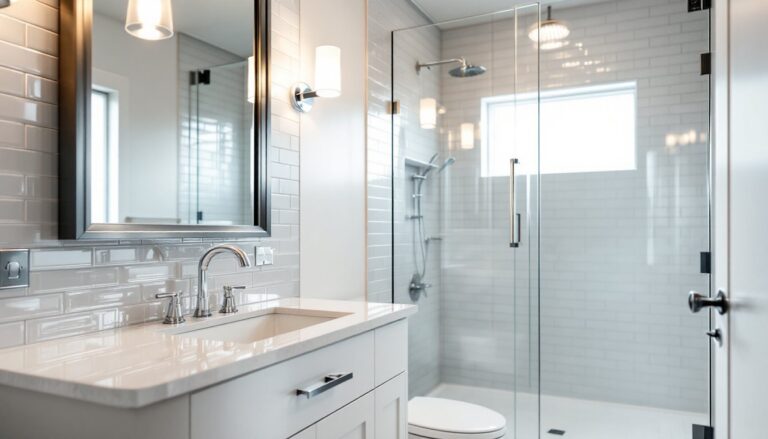
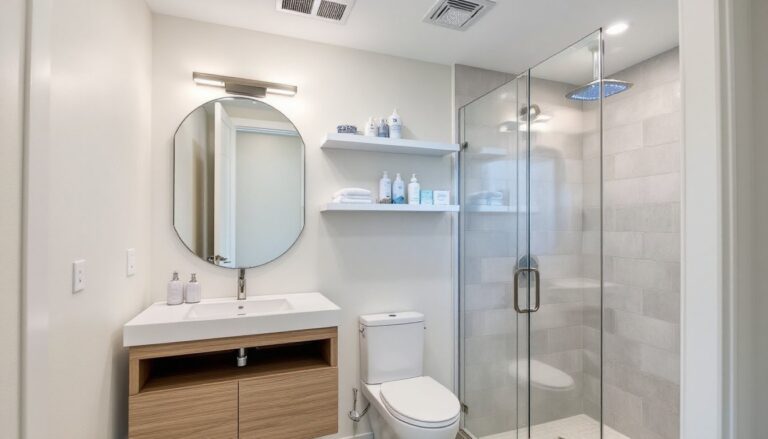
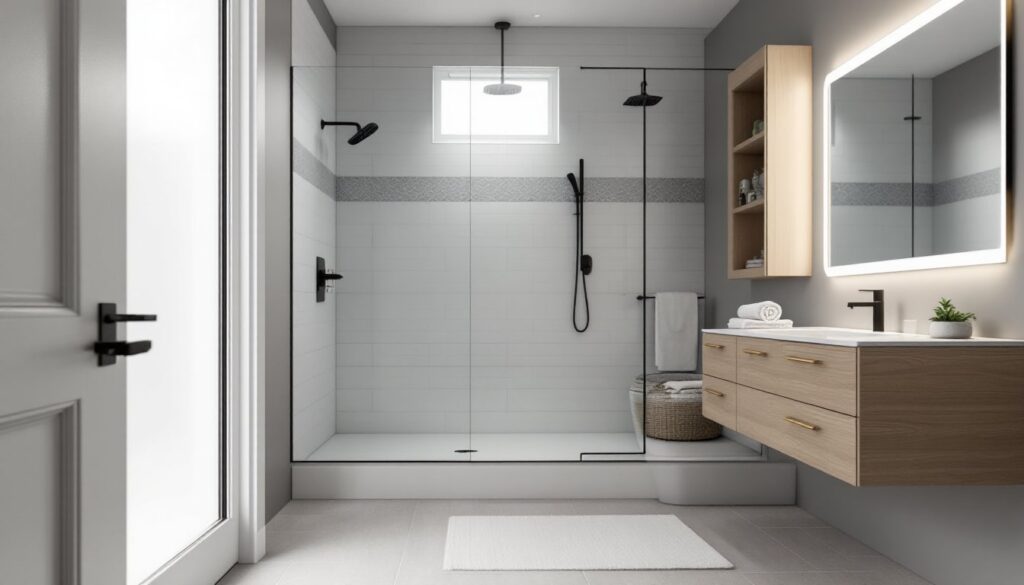
Walk-in showers continue replacing tub/shower combos, especially in primary bathrooms. Frameless glass enclosures, 12×24-inch large-format tiles on walls (fewer grout lines mean easier cleaning), and linear drains create a spa-like feel. Curbless or low-threshold designs improve accessibility without looking institutional.
Matte black and brushed gold fixtures remain popular, but mixing metals, like pairing matte black faucets with brushed nickel cabinet pulls, adds depth without clashing. Stick to two finishes max to avoid a chaotic look.
Floating vanities open up floor space visually and simplify cleaning. They work well in smaller bathrooms (common in Scarborough’s older homes) where a traditional 21-inch-deep vanity feels cramped. Wall-mounted units typically measure 18 inches deep and require blocking between studs during framing to support weight.
Natural materials like white oak vanities, stone vessel sinks, and textured tile (3D geometric patterns, zellige, terrazzo) bring warmth without veering into rustic farmhouse territory. Pair these with modern shapes and clean lines for balance.
Smart features include heated floors (electric mats run about $12-$15 per square foot installed), programmable exhaust fans with humidity sensors, and LED mirrors with integrated defoggers. These aren’t gimmicks, they solve real problems in New England’s humid summers and cold winters.
Finding the Right Contractor vs. DIY Bathroom Renovation
Some bathroom work suits confident DIYers: other tasks require licensed pros. Knowing the difference saves money and prevents code violations or dangerous mistakes.
DIY-friendly tasks include:
- Demolition (with proper dust barriers and PPE: respirator, eye protection, gloves)
- Painting and caulking
- Installing pre-hung vanities and mirrors
- Replacing toilets and basic faucets (if supply and drain lines already fit)
- Laying cement backer board for tile (requires a carbide-tipped scoring knife or circular saw)
Hire a licensed professional for:
- Moving plumbing (requires permits and pressure testing)
- Electrical work (GFCI outlets, vent fans, heated floors, all governed by NEC Article 210 for bathroom circuits)
- Structural changes (removing walls, altering joists)
- Tile work if precision matters (a wonky layout or lippage on large-format tile kills resale value)
- Shower pan installation (improper slope or waterproofing leads to mold and subfloor rot)
Contractor selection matters. Top-rated bathroom remodelers in Scarborough carry liability insurance, pull permits, and provide itemized quotes, not vague estimates.
Get at least three bids. Question line items that seem inflated or suspiciously cheap. A low quote often means cutting corners on waterproofing membranes, skipping backer board, or using unlicensed subs.
Ask for references and visit completed jobs if possible. Photos lie: seeing tile work and cabinet installation in person reveals craftsmanship. Check that contractors are registered with the state and carry workers’ comp insurance, homeowners can be liable if an uninsured worker gets hurt on their property.
Navigating Permits and Regulations in Scarborough
Scarborough follows Maine state building codes based on the International Residential Code (IRC), with local amendments. Homeowners often skip permits thinking small projects fly under the radar, but inspectors can halt work, require tear-out of completed installations, and delay resale closings if unpermitted work appears during home inspections.
Work requiring permits in Scarborough typically includes:
- Moving or adding plumbing fixtures
- Electrical circuit additions or modifications (bathroom outlets must be GFCI-protected per NEC)
- Structural changes (removing walls, cutting joists for plumbing)
- Window or door alterations affecting egress
Work usually exempt from permits:
- Replacing fixtures in existing locations (same-spot toilet swap, faucet upgrade)
- Cosmetic finishes (paint, flooring over existing surfaces, vanity replacement)
- Minor repairs that don’t alter systems
Permit fees in Scarborough vary by scope but generally run $50-$200 for bathroom projects. Processing takes 1-2 weeks for straightforward remodels, longer if plans require engineer stamps or variance approvals.
Inspections happen at key stages: rough plumbing and electrical (before covering walls), and final (after fixtures and finishes). Inspectors verify proper vent sizing (bathrooms need minimum 1.5-inch drains, 3-inch for toilets), GFCI protection, waterproofing membranes in wet areas, and adequate support for heavy fixtures like cast-iron tubs.
DIYers can pull their own permits but must demonstrate basic code knowledge during plan review. Using step-by-step renovation guides helps homeowners document scope clearly for permit applications. Contractors typically handle permitting as part of their service, confirm this before signing contracts.
Essential Features to Include in Your Bathroom Renovation
Smart feature selection balances budget, function, and resale appeal. Some upgrades pay immediate dividends: others matter more at sale time.
Ventilation tops the list. Undersized or missing exhaust fans cause mold, peeling paint, and warped cabinets. Install a fan rated for bathroom square footage (multiply length × width, then choose a fan with CFM rating at least equal to that number). Models with humidity sensors turn on automatically when moisture hits set levels, helpful in kids’ bathrooms where no one remembers to flip switches.
Water-efficient fixtures save money and appeal to eco-conscious buyers. WaterSense-labeled toilets use 1.28 gallons per flush versus old 3.5-gallon models. Low-flow showerheads (2.0 GPM or less) maintain pressure through aerating or laminar-flow designs, test before buying because some cheap models feel like drizzle.
Storage makes or breaks daily usability. Medicine cabinets recessed between studs (standard 14.5-inch or 22.5-inch widths fit between 16-inch-on-center framing) save wall space. Drawer organizers, pullout hampers in vanities, and shallow shelving above toilets maximize tight footprints. Homeowners often find renovation tips focused on storage transform cramped bathrooms without expanding square footage.
Lighting layers improve function and ambiance. Overhead lights (recessed LEDs or flush-mounts) provide general illumination: vanity sconces at 60-66 inches from the floor eliminate shadows on faces: and accent lighting (in niches, under floating vanities) adds drama. All bathroom lights should be wet-rated or damp-rated depending on proximity to showers.
Durable materials matter in high-moisture environments. Porcelain or ceramic tile outperforms vinyl in wet areas. For walls, water-resistant drywall (purple board or cement board) prevents moisture damage better than standard greenboard. Many cost estimators on sites like HomeAdvisor help homeowners compare material costs and longevity before committing.
Heating keeps floors comfortable in Maine winters. Electric radiant mats install under tile for $10-$15 per square foot and cost pennies per day to run on timers. They’re easier to retrofit than hydronic systems, which require boiler integration.
Accessibility features don’t have to look medical. Comfort-height toilets (17-19 inches versus standard 15 inches), lever-handle faucets, and grab bars finished in modern styles blend into design while future-proofing homes. Curbless showers with bench seating work for all ages and abilities. Additional resources on home improvement planning offer detailed accessibility guides and cost breakdowns.
Bathroom renovations in Scarborough succeed when homeowners balance current needs with future value, follow local codes, and invest in quality materials where moisture and wear demand durability. Whether tackling a weekend fixture swap or a full gut remodel, proper planning and realistic budgets turn stressful projects into rewarding upgrades that enhance daily life and resale appeal.