Table of Contents
ToggleYour bathroom doesn’t need a six-figure gut renovation to feel brand new. Whether you’re working with a tight budget or a generous timeline, smart bathroom redo ideas and bathtub renovation ideas can completely reshape how that space functions and feels. The best part? Many of these bathroom remodel suggestions don’t require professional help. From updating fixtures to rethinking your color scheme, the following bathroom remodel designs deliver fresh style without demolishing walls or your wallet. This guide walks you through eight practical, trendy updates that you can tackle this year, some in an afternoon, others over a weekend. Let’s explore what’s actually doable and worth your effort.
Key Takeaways
- Bathroom redo ideas like refreshing your color palette with warm neutrals or deep jewel tones is the cheapest update, with quality paint costing just $25–$45 per gallon.
- Layered lighting with LED sconces, recessed fixtures, and dimmers transforms functionality and ambiance for $15–$150 per fixture.
- Swapping fixtures, hardware, and towel bars takes minutes but delivers high visual impact, with faucets ranging from $30–$150 and cabinet pulls costing as little as $3–$15 each.
- Smart storage solutions like floating shelves ($20–$60) and medicine cabinets ($40–$120) maximize space without requiring a full bathroom remodel.
- Adding natural materials such as wood accents, pebble bath mats, and live plants brings spa-like warmth and can be completed as budget-friendly weekend projects.
- Most bathroom redo projects cost under $500 total and are completable in weekends, with quick wins like caulking, painting cabinet fronts, or installing a statement mirror delivering visible impact without permits or expertise.
Refresh Your Color Palette With Modern Bathroom Trends
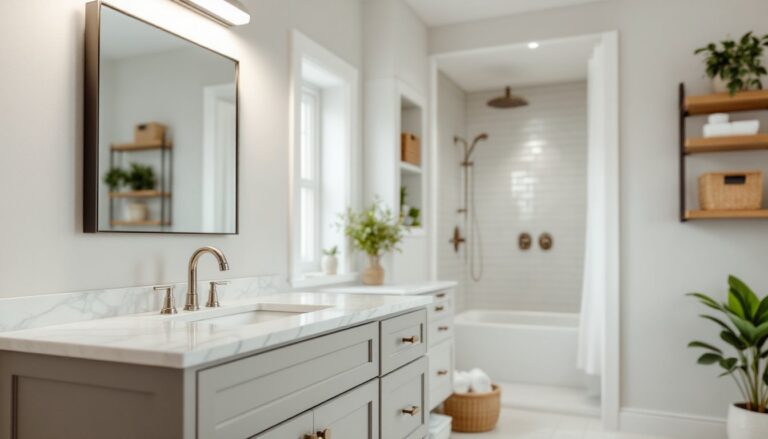
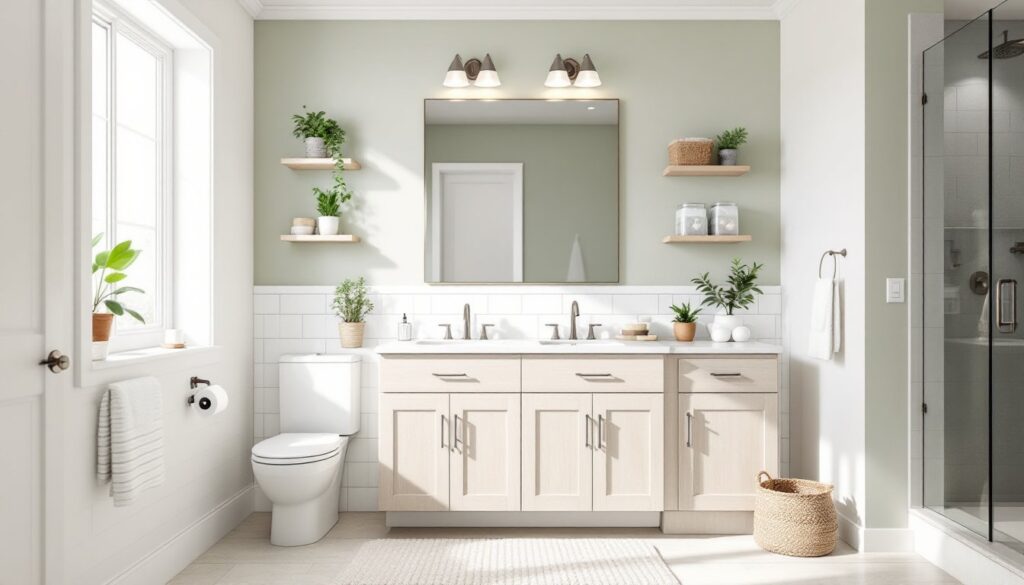
Color sets the mood in a bathroom faster than anything else. 2026 is seeing a shift away from sterile whites and grays toward warm neutrals, think creamy whites, soft taupes, and muted sage greens. These tones feel spa-like without the clinical vibe.
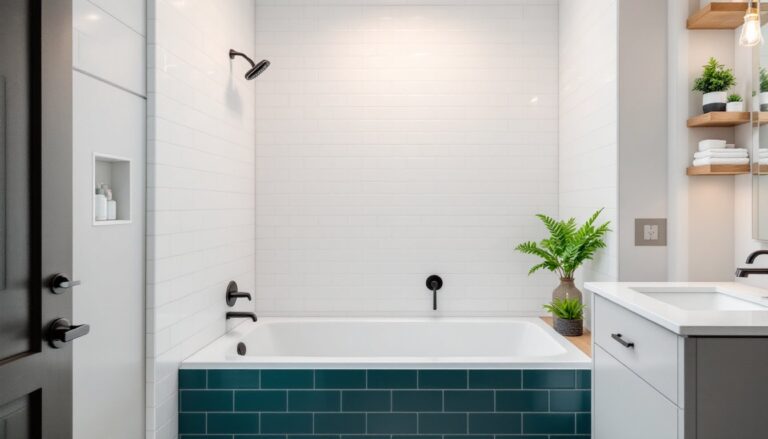
If you’re bold enough, deep jewel tones (forest green, navy, warm charcoal) are making a comeback, especially on accent walls or as tile choices. The key is pairing them with lighter fixtures and mirrors so the space doesn’t feel cramped.
Paint is the cheapest redo. A gallon of bathroom-grade paint (with mildew-resistant primer) runs $25–$45 and covers roughly 350–400 square feet. Use semi-gloss or satin finishes in moisture-prone areas, they resist mold better than flat. Prep matters here: sand lightly, fill nail holes, and prime bare drywall. Two coats are standard.
If paint feels temporary, consider removable wallpaper or peel-and-stick tiles for an accent wall. These options cost $15–$40 per roll, are forgiving if you mess up, and won’t damage rental agreements.
Choose The Right Lighting Fixtures For Function and Ambiance
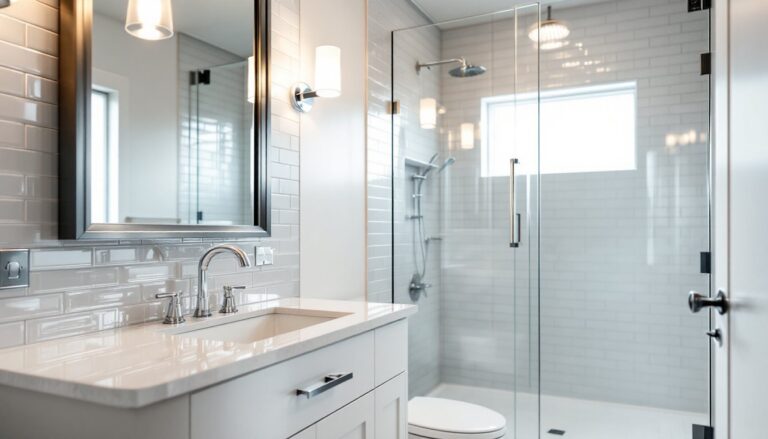
Bad lighting in a bathroom ruins your morning and makes applying makeup or shaving a nightmare. You need layered lighting: bright task lighting around the mirror, ambient light overhead, and ideally a dimmer for evening use.
Swap out old Hollywood-strip vanity lights with modern LED sconces flanking your mirror, one on each side. These cost $30–$80 per fixture and require only basic wiring if you’re replacing existing lights. Vertical sconces cast even light across your face, eliminating shadows that overhead lighting creates.
For overhead lighting, choose recessed LED fixtures or a flush-mount pendant. Recessed lights (also called downlights) cost $15–$40 each and work well in smaller bathrooms. They’re nearly invisible, leaving more visual space. Pendants ($40–$150) add style and are easier to install if you’re nervous about electrical work.
Dimmers are non-negotiable if you’re redoing lighting. They cost $15–$30 and work with most LED bulbs (check compatibility). Install them on ambient lights, not task lights, so you can adjust mood without sacrificing visibility.
Whenever you’re working with electricity, turn off the breaker at the panel. If you’re uncomfortable wiring, hire a licensed electrician, it’s safer and often required by code.
Upgrade Your Fixtures and Hardware on a Budget
The faucet, towel bars, and cabinet handles are the jewelry of your bathroom. Swapping them is fast and visually impactful. A simple single-hole faucet (the most common style) costs $30–$150 and installs in 30 minutes if you’re replacing an existing one. Moen and Delta are solid mid-range brands that balance durability and affordability. Avoid rock-bottom imported faucets, they leak quickly and aren’t worth the hassle.
When shopping, look at your existing sink. Is it a single-hole or widespread (three holes)? Most modern faucets default to single-hole, so you may need an escutcheon plate ($10–$20) to cover extra holes.
Hardware changes are nearly free wins. Cabinet pulls and knobs run $3–$15 each. Replacing a bathroom full of hardware takes 10 minutes and transforms the whole look. Choose finishes that match your faucet, brushed nickel, matte black, and polished chrome are trending.
Towel bars, toilet paper holders, and robe hooks are the same story. Swap them for styles that coordinate with your new color scheme and fixtures. You can find matching sets for $50–$100 total. Before removing old hardware, check if any fasteners are corroded, penetrating oil like WD-40 helps.
Unfortunately, outdated shower valves or broken tub spouts do require plumbing knowledge or a pro. If your shower handle is stuck or dripping, that’s where calling a plumber ($150–$300 for a service call) makes sense.
Add Storage and Organizational Solutions
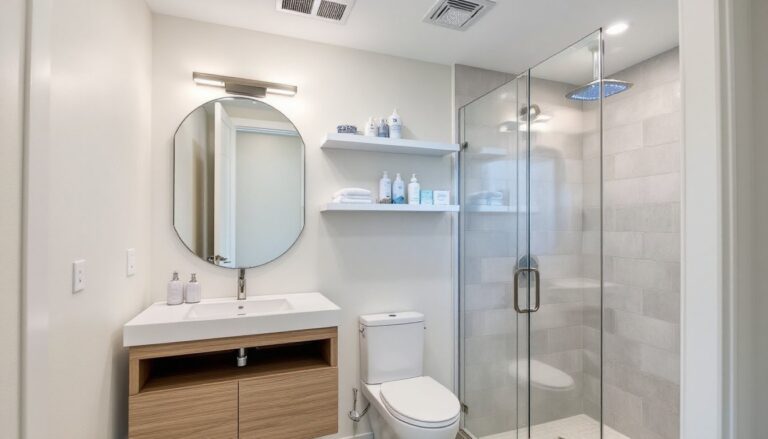
Bathrooms are notoriously cramped. Adding smart storage, without a major remodel, keeps clutter hidden and surfaces clear. Floating shelves cost $20–$60 each and install in an afternoon with a stud finder and basic brackets. One or two shelves above the toilet are perfect for toiletries and decorative baskets.
Medicine cabinets ($40–$120) are underrated. If your existing cabinet is outdated, replacing it is straightforward. You’ll need to cut out the old one (use a drywall saw carefully), ensure the opening is square, and slide the new cabinet in. Most mirror cabinets come with simple frame fasteners that screw into studs.
Drawer dividers and under-sink organizers cost $10–$30 and instantly create zones for bottles, makeup, and cleaning supplies. Clear acrylic or bamboo options look better than cramming everything loose.
If you’re short on wall space, consider a narrow rolling cart ($30–$80) that fits beside the toilet or in a corner. It’s mobile, stylish, and stores supplies you don’t need every day. Baskets on shelves and in open storage also hide mess while looking intentional.
Incorporate Natural Materials and Textures
Bathrooms have historically felt sterile. Adding wood, stone, and natural textures brings warmth and spa-like appeal. Designs for bathroom remodel increasingly feature warm wood accents, a wooden vanity surround, shelving, or even a wooden towel ladder.
Wood in bathrooms needs protection. Seal or finish any exposed wood with polyurethane or a moisture-resistant stain. Teak and cedar are naturally water-resistant, while pine or oak need extra coats. Expect to reapply finish every 3–5 years depending on humidity.
Stone and pebble textures add visual interest without expense. Pebble bath mats ($15–$30) feel luxurious underfoot. Stone soap dishes or succulent planters ($10–$25) cost little and upgrade the aesthetic. If you’re feeling adventurous, peel-and-stick stone accent tiles ($1–$3 per tile) can line a shelf or frame your mirror.
Live plants thrive in humid bathrooms. Pothos, ferns, and snake plants need minimal light. They add oxygen, soften hard lines, and genuinely improve the space. A bathtub renovation that includes a window shelf becomes the perfect spot for greenery. Small planters cost $5–$15, and plants themselves are often under $10.
DIY Updates You Can Complete This Weekend
Some projects are genuinely quick. Here are five that deliver visible impact without requiring permits, expertise, or a second person.
Caulk and Re-Grout (4 hours): Remove old, cracked caulk with a caulk remover tool ($8) or a damp cloth if it’s loose. Clean the seam thoroughly, use a small brush and let it dry completely. Apply paintable silicone caulk ($5–$10 per tube) with a caulk gun ($10). Run a wet finger along the bead to smooth it. For tile grout, rake out loose grout with a grout saw ($15), vacuum the gaps, and apply new epoxy or polymer grout ($10–$20). This alone transforms tired-looking tile.
Replace the Shower Curtain or Add a Sliding Glass Door: If your current setup is vinyl and dingy, a new cloth or weighted shower curtain ($20–$50) changes everything. Or invest in a frameless sliding glass door ($150–$400 installed by a handy friend). Both are cosmetic but feel luxe.
Paint Cabinet Fronts: If your vanity is solid but the finish is worn, sand it lightly and apply cabinet-grade paint ($20–$40). Use a foam roller for smooth results. This is cheaper and faster than replacing the whole vanity.
Install Beadboard or Shiplap: Wainscoting (beadboard or shiplap) on the lower half of walls creates cottage charm. Pre-primed panels cost $15–$30 per sheet. Cut them to height (usually 36–48 inches), apply construction adhesive, and nail them into studs. Paint to match your scheme. It’s simple geometry and looks intentional.
Add a Statement Mirror: A large frameless mirror ($50–$150) or one with a stylish frame can replace your existing mirror. If the new mirror is the same size, installation is a straightforward swap. Larger mirrors make small bathrooms feel bigger, a psychological win that costs under $100.
Conclusion
A bathroom redo doesn’t mean gutting the room. Color, lighting, fixtures, storage, and natural touches work together to make your space feel intentional and refreshing. Most of these updates cost under $500 total and are doable in weekends. Start with what bothers you most, cramped lighting, tired color, or cluttered counters, and work systematically. Use resources like Remodelista or Homify for design inspiration, then pick one or two updates and commit. Your bathroom will thank you.