Table of Contents
TogglePlanning a bathroom renovation means asking one question right away: what’s this actually going to cost? Bathroom remodels range from a simple refresh under $5,000 to luxury overhauls pushing $50,000 or more. The final price depends on project scope, material quality, labor costs in your region, and whether you’re doing some of the work yourself. This guide breaks down real-world costs by component and project type, so homeowners can build a realistic budget without surprises halfway through demo.
Key Takeaways
- Bathroom renovation costs range from $5,000 for a budget refresh to $50,000 or more for luxury transformations, with the final price determined by project scope, material quality, and labor costs.
- Labor typically represents 40–60% of your bathroom renovation budget, so keeping the existing plumbing layout and handling DIY demo work are the most effective ways to reduce expenses.
- Mid-range remodels ($10,000–$25,000) offer the best balance of upgrades and value, including professional tile installation, semi-custom vanities, and new fixtures without major structural changes.
- Tile installation costs $10–$25 per square foot for mid-grade materials, while labor for plumbers ($75–$150/hour) and electricians ($65–$125/hour) can quickly exceed initial estimates if not properly planned.
- Shopping for remnant countertop slabs, choosing stock-size vanities over custom options, and handling finishing work yourself like painting and caulking can reduce costs by 20–30% without sacrificing quality.
- Always get multiple bids, pad your bathroom renovation budget by 10–15% for unexpected issues, and finalize all selections before demolition begins to avoid costly mid-project change orders.
Average Bathroom Renovation Costs by Project Scope
Renovation costs vary dramatically based on what’s being changed. A cosmetic refresh costs a fraction of a full gut-and-remodel, and understanding these tiers helps set expectations early.
Budget Bathroom Refresh ($3,000–$8,000)
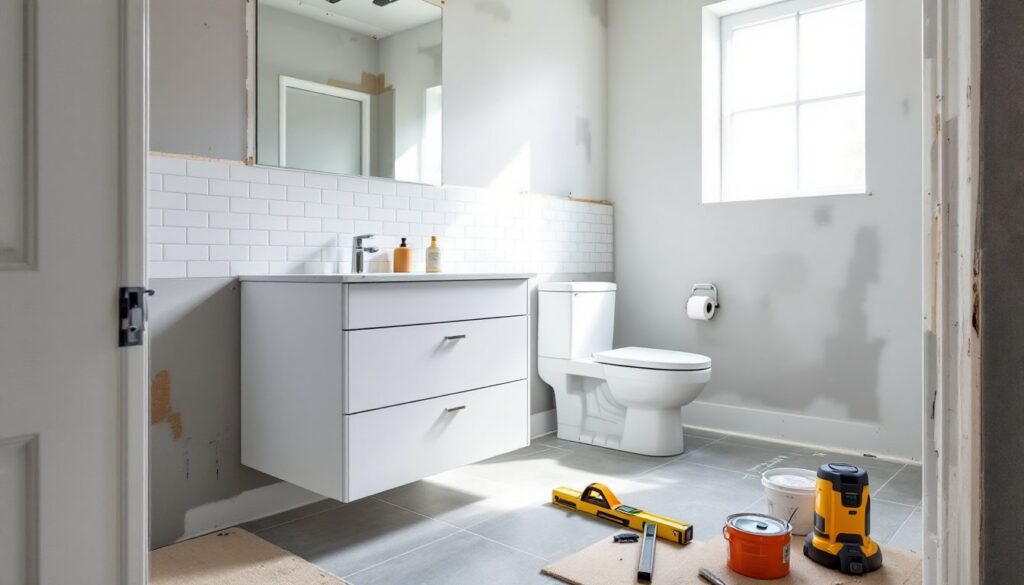
A budget refresh tackles surfaces and fixtures without moving plumbing or electrical. Think paint, new vanity, updated lighting, and hardware. National averages show that simple updates like these keep costs manageable, especially when homeowners handle painting and fixture installation themselves.
Typical scope includes:
- Fresh paint and caulking
- New vanity and countertop (stock options, not custom)
- Updated mirror and lighting fixtures
- New toilet and faucet
- Vinyl or peel-and-stick tile flooring
This tier works well for rental properties, quick pre-sale updates, or when the existing layout is solid but finishes are dated. Most DIYers can handle the bulk of this work with basic tools, though hiring a plumber for toilet or faucet installation adds $150–$300 per fixture. Applying renovation tips and strategies to these smaller projects keeps timelines short and budgets tight.
Pro tip: Stock vanities from big-box stores come in standard widths (24″, 30″, 36″, 48″). Measure your space and plumbing rough-in (typically 12″ from the wall to the center of the drain) before shopping.
Mid-Range Bathroom Remodel ($10,000–$25,000)
Mid-range remodels involve replacing most fixtures and finishes while keeping the existing plumbing layout. Industry data shows that homeowners in this range often upgrade to mid-grade tile, semi-custom vanities, and quality faucets. Labor becomes a bigger portion of the budget here, especially for tile installation and any electrical work.
Common upgrades include:
- Ceramic or porcelain floor and wall tile (professionally installed)
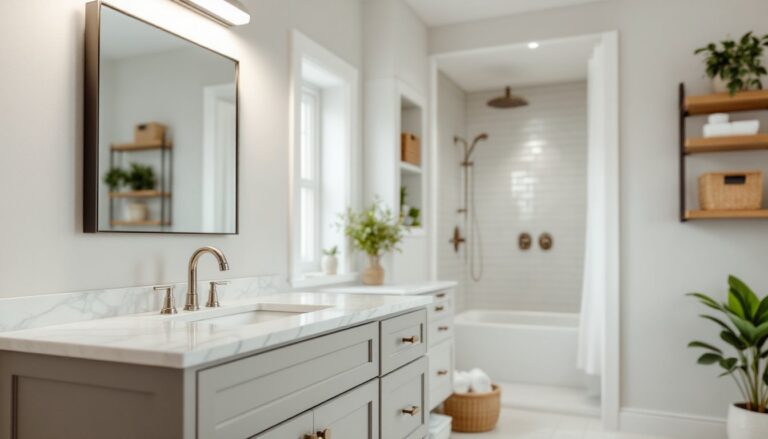
- Semi-custom vanity with stone or engineered countertop
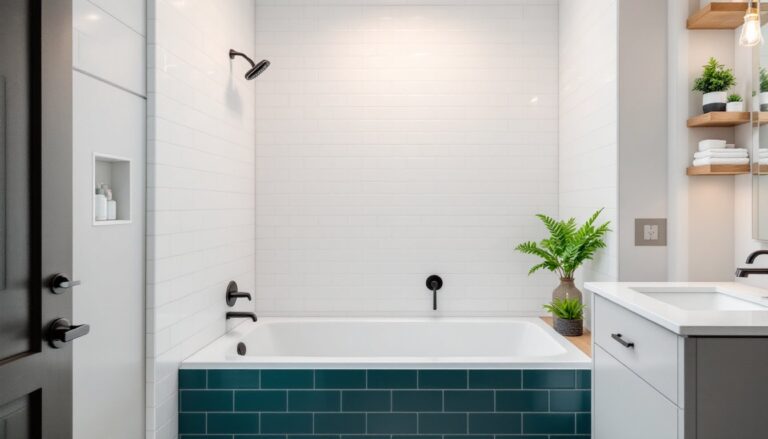
- New tub or shower surround
- Upgraded lighting (recessed cans, vanity sconces)
- Exhaust fan replacement or upgrade
- Minor drywall repair and painting
Most projects at this level require a licensed plumber and electrician for at least part of the work. Tile installation runs $10–$25 per square foot installed, depending on tile size, pattern complexity, and regional labor rates. Shower pan replacement or new tub installation adds $800–$2,500 for labor alone.
Permit consideration: If you’re adding or relocating electrical circuits or upgrading the exhaust fan ductwork, check local code. Many jurisdictions require permits for electrical work beyond simple fixture replacement.
High-End Bathroom Transformation ($30,000+)
High-end renovations often involve layout changes, custom features, and premium materials. According to recent cost analyses, luxury projects can exceed $50,000, especially in metro areas with high labor costs. Moving plumbing or walls requires permits, structural assessment if removing load-bearing elements, and coordination among multiple trades.
Luxury features include:
- Custom cabinetry and built-ins
- Natural stone tile and countertops (marble, quartz, granite)
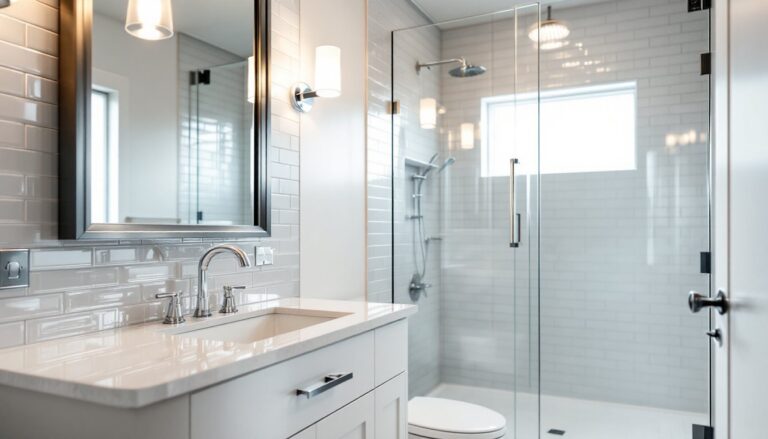
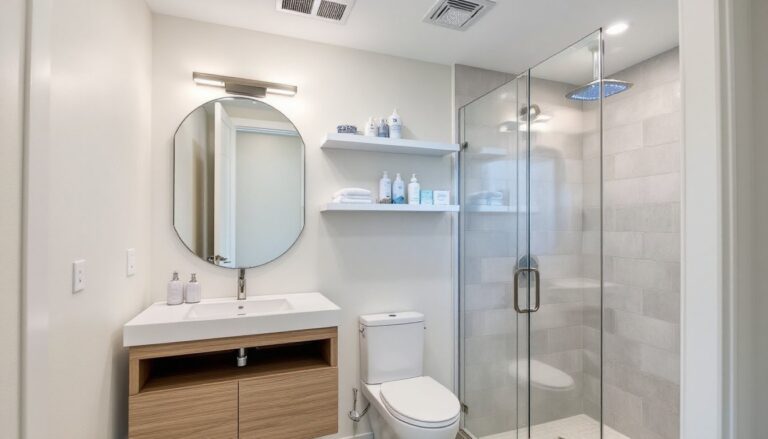
- Frameless glass shower enclosures with body sprays or steam generators
- Heated flooring systems
- High-end fixtures (brands like Kohler, Grohe, or Brizo)
- Reconfigured layout with relocated plumbing
Structural work (removing walls, relocating drains, installing new subfloor) requires professional help. Load-bearing walls need engineer approval and temporary support during demo. Even non-structural changes involving plumbing relocation can add $1,500–$5,000 in rough-in costs alone.
Reality check: Custom tile work, especially intricate patterns or large-format slabs, requires experienced installers. Budget $25–$60 per square foot installed for premium materials and skilled labor.
Bathroom Renovation Cost Breakdown by Component
Understanding where money goes helps prioritize spending and spot potential overruns early.
Labor costs: Depending on project complexity, labor typically represents 40–60% of the total budget. General contractors often charge 15–20% markup on top of subcontractor fees for project management. Plumbers run $75–$150 per hour, electricians $65–$125 per hour, and tile installers $10–$25 per square foot.
Vanity and countertop: Stock vanities start around $200–$600. Semi-custom units with soft-close drawers and better construction run $800–$2,500. Countertop material drives the price: laminate costs $10–$40 per square foot installed, while quartz or granite runs $50–$150 per square foot.
Tub and shower: Standard alcove tubs cost $300–$800 for the unit, plus $500–$1,200 for installation. Freestanding soaking tubs range from $800–$3,500. Prefab shower surrounds (acrylic or fiberglass) run $400–$1,000 installed, while custom tile showers start around $2,000 and climb quickly with glass enclosures, niches, and bench seating.
Tile flooring and walls: Material costs for ceramic or porcelain tile range from $2–$15 per square foot. Natural stone and designer tile can hit $20–$50 per square foot. Installation doubles or triples the material cost. A typical 5’×8′ bathroom floor (40 sq ft) might cost $400–$1,000 in materials and labor combined for mid-grade tile.
Toilet: Standard two-piece toilets cost $150–$400. Comfort-height models (taller for easier sitting/standing) add $50–$150. One-piece or wall-hung models run $400–$1,500. Installation costs $150–$300 if the flange and wax ring are in good shape.
Lighting and electrical: Replacing existing fixtures is straightforward, vanity light bars cost $50–$300, and installation runs $75–$200 if wiring is in place. Adding recessed lights or relocating switches requires running new wire and costs $100–$250 per fixture installed. Detailed cost estimates confirm that electrical upgrades often exceed initial expectations.
Ventilation: A basic exhaust fan costs $40–$150. Quiet, high-CFM models with humidity sensors run $150–$400. Installation costs $150–$500 depending on duct routing and whether ceiling joists need cutting. Proper ventilation (50 CFM minimum for bathrooms under 50 sq ft, 1 CFM per square foot for larger spaces per IRC) prevents mold and moisture damage.
Paint and finishing: Quality bathroom paint (mold- and mildew-resistant) covers about 350–400 square feet per gallon and costs $30–$60 per gallon. A small bathroom (walls and ceiling) needs 1–2 gallons. Caulk, grout, trim, and touch-up supplies add another $50–$150.
Smart Ways to Save on Your Bathroom Renovation
Cutting costs without sacrificing quality means knowing where to splurge and where to economize. Following practical renovation strategies helps avoid common budget traps.
Keep the existing layout: Moving plumbing drains and supply lines is expensive. A 3″ drain relocation can cost $1,000–$3,000 depending on slab or crawlspace access. Keeping fixtures in place saves big.
DIY the demo: Ripping out old tile, vanity, and fixtures is time-consuming but straightforward. Rent a dumpster ($300–$500 for a week) and budget a weekend. Wear safety goggles, gloves, and a dust mask, old tile and drywall create sharp debris and silica dust. Know where shutoffs and electrical panels are before you start swinging a sledge.
Choose mid-grade materials strategically: Porcelain tile that mimics natural stone costs a fraction of real marble but looks great. Save marble or quartz for a small accent wall or vanity top, and use ceramic tile elsewhere.
Shop sales and remnants: Stone fabricators often sell remnant slabs (leftover pieces from larger jobs) at 30–50% off. A bathroom vanity only needs 4–6 square feet of countertop, making remnants ideal. Big-box stores run seasonal sales on vanities, toilets, and tile.
Handle finish work yourself: Painting, caulking, installing mirrors, and mounting hardware are all DIY-friendly. A quality caulk gun ($10–$20) and silicone caulk ($5–$8 per tube) go a long way. YouTube has solid tutorials, but using proven renovation tips prevents rookie mistakes like skipping primer or under-caulking wet areas.
Get multiple bids: For professional work, get at least three quotes. Ask for references and verify licensing where required. A low bid isn’t always the best, check reviews and past work quality.
Avoid change orders: Changing plans mid-project costs money and time. Finalize tile selection, fixture styles, and layout before demo day. Contractors charge premium rates for rework.
Use stock sizes: Custom vanities, mirrors, and shower doors cost 30–100% more than stock. Measure carefully and design around available sizes (common vanity widths: 24″, 30″, 36″, 48″: shower bases: 32″×32″, 36″×36″, 48″×36″).
Consider refinishing over replacing: If the tub is cast iron and structurally sound, professional refinishing costs $300–$600 versus $1,500–$3,000 for replacement. Reglazing lasts 10–15 years with proper care.
Conclusion
Bathroom renovations deliver solid returns, both in daily comfort and resale value, when budgeted correctly. Start by defining the project scope, get firm quotes for professional work, and pad the budget by 10–15% for surprises like hidden water damage or code updates. Applying effective renovation techniques and realistic cost expectations turns a stressful project into a manageable one.