Table of Contents
ToggleBurlington homeowners looking to modernize their bathrooms face unique considerations, from navigating Ontario building codes to managing budgets in a competitive renovation market. A bathroom renovation isn’t just about fresh tile and new fixtures: it’s a complex project that can boost home value by 60–70% of the renovation cost while improving daily function. Whether you’re planning a cosmetic refresh or a full gut-and-rebuild, understanding local regulations, realistic timelines, and the DIY-versus-pro decision will save thousands and prevent costly mistakes. This guide walks through the practical side of bathroom renovation in Burlington, from setting budgets and pulling permits to choosing finishes that hold up in Canadian humidity.
Key Takeaways
- A bathroom renovation in Burlington can boost home value by 60–70% of the renovation cost while addressing outdated plumbing, poor ventilation, and accessibility needs common in older homes.
- Budget $15,000–$25,000 for a mid-range bathroom refresh or $30,000–$50,000+ for a full renovation, with labor accounting for 40–50% of costs and a critical 10–15% contingency for unexpected issues.
- Many bathroom renovation tasks require hired professionals in Ontario—including plumbing relocation, electrical work beyond fixture swaps, and tile surrounds—while painting, vanity installation, and toilet replacement are safe DIY projects.
- Permits are mandatory for bathroom renovations involving plumbing relocation, electrical upgrades, or structural changes; skipping permits risks failed home inspections and insurance claim denials.
- Plan 4–8 weeks for a typical bathroom renovation timeline, ordering long-lead items like custom vanities and specialty tile early to avoid material backorders.
- Prioritize quality waterproofing membranes ($200–$400) and code-compliant cement backer board over decorative finishes to prevent costly water damage and ensure compliance with Ontario Building Code standards.
Why Burlington Homeowners Are Prioritizing Bathroom Renovations
Burlington’s housing market remains strong in 2026, with many homeowners choosing to renovate rather than relocate. The city’s older housing stock, particularly homes built between the 1960s and 1980s, often features outdated bathrooms with poor ventilation, inadequate lighting, and inefficient fixtures.
A well-executed bathroom renovation addresses several pain points. Water efficiency is a major driver: replacing old toilets (which use 13+ liters per flush) with dual-flush models (4.8/3 liters) cuts water bills by roughly 20–30%. Updating outdated plumbing also prevents future damage, many Burlington homes still have galvanized steel supply lines prone to corrosion.
Accessibility upgrades are another common motivator. Homeowners aging in place prioritize curbless showers, grab bars anchored to blocking behind drywall, and wider doorways (minimum 32 inches clear width). These modifications align with universal design principles without sacrificing aesthetics. Burlington’s demographics skew toward families and retirees, both groups that value functional, safe bathrooms over trendy but impractical design.
Setting Your Bathroom Renovation Budget
Bathroom renovation costs in Burlington vary wildly based on scope, finishes, and labor rates. As of 2026, expect to budget $15,000–$25,000 for a mid-range 5×8-foot bathroom refresh (new vanity, tile surround, fixtures) and $30,000–$50,000+ for a full gut with relocated plumbing, in-floor heating, and premium tile.
Break down your budget into categories:
- Labor (40–50%): Tile setters charge $8–$15/sq ft, licensed plumbers $120–$150/hour, electricians $100–$130/hour in the Burlington area.
- Fixtures and finishes (25–35%): A mid-tier toilet runs $250–$500, vanity $800–$2,000, tilework $4–$12/sq ft installed.
- Structural and mechanical (15–20%): Drywall repair, subfloor replacement, vent fan installation, GFCI outlets.
- Contingency (10–15%): Always pad for unknowns, rotted subfloor, outdated wiring, hidden mold.
Material costs fluctuate, but as a rule, allocate more to waterproofing and substrate prep than to decorative tile. A Schluter or Kerdi waterproofing membrane costs $200–$400 but prevents thousands in water damage. Don’t scrimp on the cement backer board (1/2-inch HardieBacker or similar) behind shower tile: drywall, even “green board,” isn’t code-compliant in wet areas per Ontario Building Code.
For those exploring broader home improvements, understanding renovation strategies helps prioritize spending across multiple projects.
Popular Bathroom Design Trends in Burlington for 2026
Design trends in Burlington balance aesthetics with practicality suited to the region’s climate and building stock.
Larger-format tile (12×24-inch or bigger) dominates. Fewer grout lines mean easier cleaning and a more contemporary look. Porcelain in matte or textured finishes reduces slip hazards in wet areas, critical for shower floors. Pair with rectified edges for tighter grout joints.
Neutral palettes with warm undertones (greige, taupe, soft whites) remain popular, often accented with black matte fixtures or brushed brass hardware. Avoid ultra-trendy colors: bathrooms are expensive to redo, so timeless choices hold resale value.
Heated floors are nearly standard in higher-end renovations. Electric in-floor heating mats (120V) cost $10–$15/sq ft installed and add comfort during Ontario winters. Pair with a programmable thermostat to manage energy use.
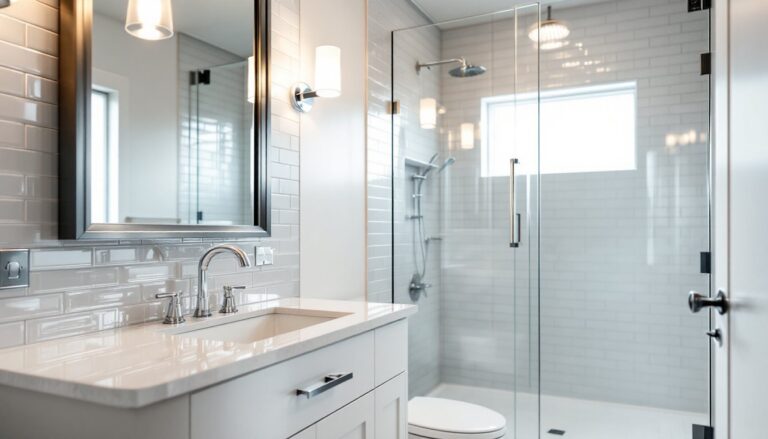
Frameless glass shower enclosures create a spa-like feel and make small bathrooms appear larger. Budget $800–$1,500 for a quality enclosure: cheaper options use thinner glass (3/16-inch vs. 3/8-inch) that flexes and feels flimsy.
Ventilation upgrades are less glamorous but essential. A Panasonic WhisperCeiling or similar quiet exhaust fan (0.3–1.0 sones, 80–110 CFM) prevents mold in Burlington’s humid summers. Code requires fans vented to exterior, not into attics.
For inspiration rooted in practical execution, platforms like Remodelista showcase curated designs that balance form with real-world durability.
DIY vs. Hiring Professionals: What Burlington Homeowners Need to Know
Not every bathroom task is DIY-friendly, and some work legally requires licensed tradespeople in Ontario.
Safe DIY projects:
- Painting (use mold-resistant primer and satin or semi-gloss finish for moisture resistance)
- Installing vanity and faucet (if supply lines and drain already roughed in)
- Replacing light fixtures (if circuit is already GFCI-protected)
- Tiling a small backsplash or floor (practice cuts on scrap: rent a wet tile saw for $60–$80/day)
- Installing toilet (use a new wax ring, and don’t overtighten bolts, porcelain cracks easily)
Hire a pro for:
- Relocating plumbing or drain lines: Requires licensed plumber and often a permit. Venting must comply with Ontario Plumbing Code.
- Electrical beyond swapping fixtures: Adding circuits, GFCI outlets, or in-floor heating requires a licensed electrician. DIY electrical work voids insurance in many cases.
- Shower/tub surrounds: Proper waterproofing is critical. A failed DIY tile job costs more to fix than hiring a tile setter upfront ($1,200–$3,000 for a standard tub surround).
- Structural modifications: Removing walls (even non-load-bearing) or altering floor joists requires an engineer’s stamp and permit.
Burlington has a robust network of licensed contractors. Platforms like HomeAdvisor offer contractor matching and project cost estimators, though always verify licensing and insurance independently. When considering renovation tips, knowing your limits prevents expensive do-overs.
Navigating Permits and Building Codes in Burlington
Burlington’s Building Division enforces the Ontario Building Code (OBC), which governs plumbing, electrical, and structural work.
When you need a permit:
- Moving or adding plumbing fixtures (toilet, shower, sink)
- Electrical work beyond simple fixture replacement (new circuits, relocating outlets)
- Structural changes (removing walls, altering floor joists)
- Installing or relocating exhaust fans vented to exterior
Cosmetic updates, paint, vanity swap, light fixture replacement, generally don’t require permits, but verify with the city if uncertain.
Permit process:
- Submit drawings and scope of work to Burlington’s Building Division (online portal or in-person).
- Pay fees (typically $150–$400 for bathroom renovations, based on project value).
- Schedule inspections at key stages: rough-in (plumbing/electrical before drywall), final.
- Inspections ensure code compliance (GFCI protection, proper venting, waterproofing, etc.).
Skipping permits risks failed home inspections during resale and potential insurance claim denials. DIYers often balk at permit costs, but inspections catch mistakes, like undersized drain vents or missing vapor barriers, that cause long-term problems.
Key code requirements:
- GFCI protection on all bathroom outlets within 1.5 meters of water sources
- Exhaust fan minimum 50 CFM (or per manufacturer specs for larger bathrooms)
- Shower valve with pressure-balancing or thermostatic control to prevent scalding
- Tempered glass or safety glazing for shower enclosures
Burlington’s permit turnaround averages 10–15 business days. Factor this into your timeline. Detailed planning guides help anticipate permit and code requirements before breaking ground.
Timeline and Project Planning Tips
A typical Burlington bathroom renovation takes 4–8 weeks from demolition to final inspection, assuming no major surprises.
Phase breakdown:
- Planning and permits (1–3 weeks): Finalize design, order materials, submit permit application. Long-lead items (custom vanity, specialty tile) can take 4–6 weeks, so order early.
- Demo and rough-in (3–5 days): Remove old fixtures, tile, drywall. Address subfloor damage, update plumbing/electrical. Rough-in inspection follows.
- Waterproofing and substrate (2–3 days): Install cement backer board, apply waterproof membrane. Let cure per manufacturer specs (often 24 hours).
- Tile work (3–7 days): Wall tile, floor tile, grout. Allow thin-set mortar to cure 24–72 hours before grouting.
- Fixture installation (2–3 days): Vanity, toilet, shower door, lighting. Final plumbing and electrical connections.
- Final inspection and touch-ups (1–2 days): City inspector verifies code compliance. Address punch-list items (caulk, paint touch-ups).
Common delays:
- Material backorders: Tile, vanities, and custom shower doors often lag. Order 10% extra tile for cuts and future repairs.
- Hidden damage: Rotted subfloor or mold behind walls adds days and cost. Budget contingency time.
- Inspection scheduling: Inspectors may be booked out a week. Don’t start drywall until rough-in passes.
Pro tips:
- Stage materials in a dry space. Tile and grout absorb moisture: let acclimate 48 hours before installation.
- Protect existing finishes. Ram board or heavy cardboard over floors and doorways prevents dings from hauling debris.
- Communicate with your household. Bathroom downtime is disruptive: plan alternate facilities.
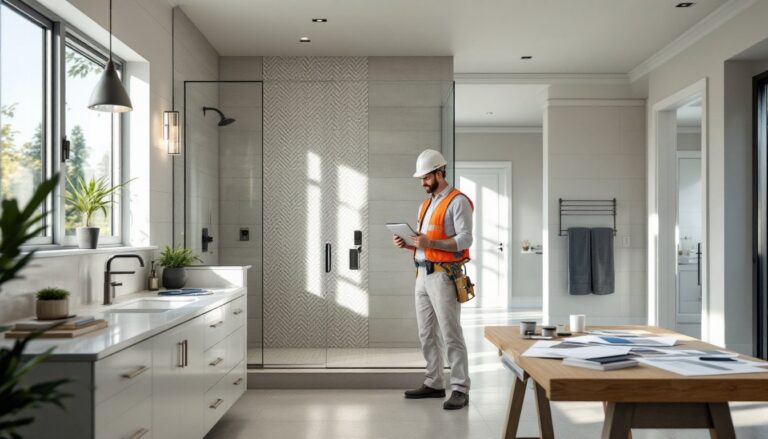
Local bathroom remodeling contractors can provide detailed timelines and coordinate trades efficiently. For multi-room projects, applying renovation tips ensures sequencing doesn’t bottleneck progress.
Conclusion
Bathroom renovations in Burlington require balancing design aspirations with practical realities, local codes, realistic budgets, and honest assessments of DIY capability. Invest in quality waterproofing, don’t skip permits, and allocate contingency for the unexpected. Whether tackling a weekend vanity swap or a full gut with relocated plumbing, careful planning pays off in a bathroom that functions beautifully for years.