Table of Contents
ToggleBathroom renovations rank among the most impactful upgrades homeowners can make, and Vaughan residents are discovering this firsthand. Whether dealing with outdated fixtures, cramped layouts, or simply craving a fresh aesthetic, a well-executed bathroom remodel delivers both immediate comfort and long-term value. The process involves more than choosing pretty tiles, it requires careful planning around permits, budgets, material selection, and realistic timelines. This guide walks through the essentials every Vaughan homeowner should know before demolition begins.
Key Takeaways
- Bathroom renovation in Vaughan typically recouped 60-70% of costs at resale, making it one of the smartest home upgrades available.
- Full bathroom remodels in Vaughan take 4-6 weeks from demolition to completion, with budgets ranging from $8,000-$15,000 for cosmetic refreshes to $40,000-$70,000+ for high-end projects.
- Permit requirements apply when moving plumbing fixtures, modifying electrical work, or altering structural elements, with timelines of 2-4 weeks and fees of $200-$600.
- Professional materials like porcelain tile flooring, quartz countertops, and GFCI-protected outlets ensure durability and code compliance in Vaughan’s climate and hard water conditions.
- Strategic combinations of DIY work (demolition, painting) with professional trades (plumbing, electrical, waterproofing) deliver cost savings without compromising quality or safety.
Why Vaughan Homeowners Are Prioritizing Bathroom Renovations
Vaughan’s housing stock includes a mix of older homes built in the 1980s and 1990s alongside newer developments. Many of these properties feature bathrooms with builder-grade finishes, dated color palettes, and layouts that don’t align with modern expectations for functionality and style.
Homeowners renovate bathrooms for several concrete reasons. First, return on investment: bathroom upgrades typically recoup 60-70% of their cost at resale, making them one of the smarter renovation choices. Second, functionality improvements, adding a double vanity, upgrading to a walk-in shower, or installing better lighting transforms daily routines. Third, addressing problems like poor ventilation, water damage, or outdated plumbing before they escalate into costly structural issues.
Vaughan’s demographic shift toward multi-generational households also drives demand for accessible features: curbless showers, grab bars, and non-slip flooring. These aren’t just age-in-place considerations: they’re smart design choices that benefit everyone.
Planning Your Bathroom Renovation: Budget and Timeline Essentials
Timeline planning separates successful renovations from chaotic ones. For a full bathroom remodel in Vaughan, expect 4-6 weeks from demolition to final fixtures, assuming no structural surprises. Powder room refreshes might take 2-3 weeks. Factor in permit approval time (discussed below) and potential material lead times, special-order tiles or custom vanities can add 2-4 weeks.
Create a realistic schedule by working backward from any deadline. If hosting holiday guests in December, start planning by late summer and begin work by early fall. Most contractors book 4-8 weeks out during busy seasons (spring and early fall).
Build in a 10-15% contingency for timeline slippage. Older Vaughan homes often reveal hidden issues once walls open up: outdated wiring that doesn’t meet current code, subfloor rot around the toilet flange, or galvanized supply lines that should be replaced.
Setting a Realistic Budget for Your Vaughan Bathroom Remodel
Budget expectations vary wildly based on scope and finish level. Here’s a rough breakdown for Vaughan renovations:
- Cosmetic refresh (new paint, fixtures, vanity, flooring with existing layout): $8,000-$15,000
- Mid-range remodel (includes relocating fixtures, new tub/shower, tile work, updated electrical): $20,000-$35,000
- High-end renovation (custom cabinetry, heated floors, frameless glass, stone tile): $40,000-$70,000+
These figures assume professional installation. Material costs represent roughly 40-50% of the total, with labor eating the remainder. Planning tools can help estimate costs specific to your scope, though local market conditions in the GTA often run 10-20% higher than national averages.
Always secure at least three written quotes from licensed contractors. Verify they include detailed line items for materials, labor, waste removal, and any subcontractor fees (plumbing, electrical). Vague estimates often signal trouble ahead.
Popular Bathroom Renovation Styles and Trends in Vaughan
Vaughan bathrooms currently trend toward clean, transitional styles that balance contemporary function with timeless elements. Here’s what local homeowners are gravitating toward:
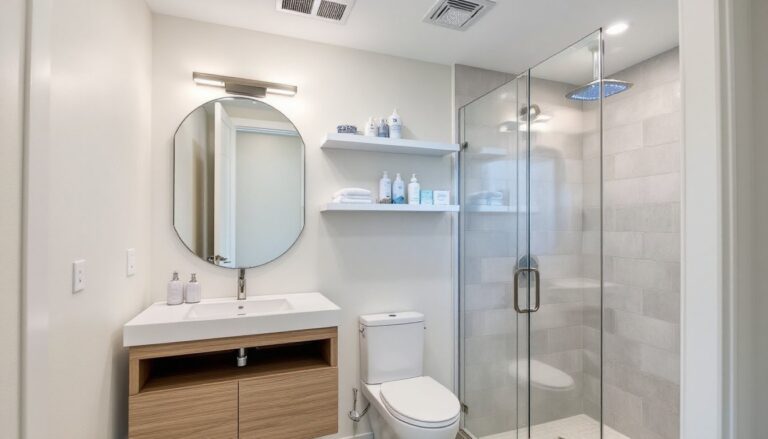
Modern minimalist: Floating vanities, wall-hung toilets, large-format porcelain tile (12″×24″ or larger), and matte black fixtures. This style works particularly well in smaller bathrooms, as it creates visual space. Pair it with recessed medicine cabinets and linear drains in curbless showers.
Spa-inspired: Natural stone (or convincing porcelain lookalikes), freestanding soaking tubs, rainfall showerheads, and warm wood accents. Heated floors are practically standard in this category. Consider 12mm luxury vinyl plank (LVP) for wood-look flooring that handles moisture better than engineered hardwood.
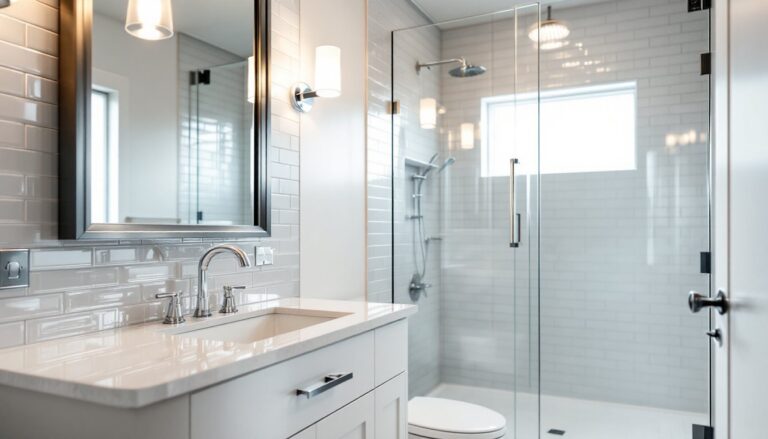
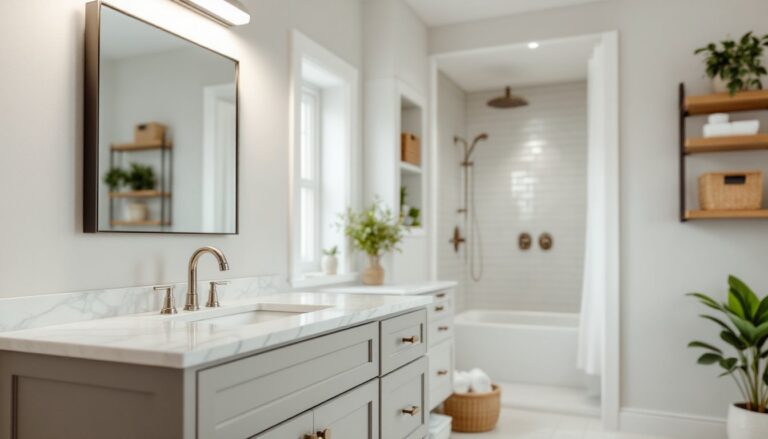
Classic transitional: Shaker-style vanities, subway tile (but installed in less predictable patterns, vertical stack bond or herringbone), brass or brushed gold fixtures, and marble or quartz countertops. This approach avoids looking dated because it doesn’t commit fully to any single trend.
Color palettes lean neutral, grays, whites, warm beiges, with interest added through texture rather than color. Homeowners seeking resale appeal should stick with these safe choices. Those planning to stay long-term can experiment with bolder tile choices in showers or accent walls, keeping larger surfaces neutral for future flexibility.
Navigating Permits and Building Codes in Vaughan
This section matters more than most homeowners realize. Vaughan operates under the Ontario Building Code (OBC), enforced through the City of Vaughan’s Building Standards department. You’ll need a building permit if your renovation includes:
- Moving or adding plumbing fixtures
- Modifying electrical (adding circuits, relocating outlets, upgrading lighting)
- Altering structural elements (removing walls, even non-load-bearing ones)
- Installing new ventilation systems
Simple cosmetic work (replacing a vanity, repainting, swapping light fixtures on existing boxes) typically doesn’t require permits, but calling the Building Standards department to confirm your specific scope is always wise. Permit fees for bathroom renovations typically range $200-$600 depending on project value.
Permit timelines run 2-4 weeks for standard bathroom renovations, longer if structural plans require review. Licensed contractors usually handle permit applications as part of their service, verify this upfront.
Code compliance isn’t optional. Key requirements include:
- GFCI protection on all bathroom outlets (required within 1.5 meters of water sources)
- Proper ventilation: either a window or exhaust fan rated for the room’s cubic footage, venting to exterior (not into attic space)
- Minimum clearances around toilets (15″ from center to sidewalls, 21″ clear in front)
- Waterproofing membrane (like Schluter Kerdi or RedGard) behind all wet-area tile
Skipping permits creates problems during home sales. Professional contractors understand these requirements and build them into timelines and budgets from the start.
Choosing the Right Materials and Fixtures for Your Space
Material selection determines both the renovation’s success and its longevity. Here’s what works in Vaughan’s climate and typical home conditions:
Flooring: Porcelain tile remains the gold standard for durability and moisture resistance. Look for 12″×24″ rectified tiles with a slight texture to prevent slipping. Luxury vinyl plank (LVP) offers a budget-friendly alternative that handles temperature fluctuations better than traditional vinyl. Skip natural stone unless you’re committed to annual sealing, Ontario’s hard water accelerates etching on marble and limestone.
Wall tile: Ceramic or porcelain work for most applications. For shower surrounds, use tiles no smaller than 4″×4″, smaller means more grout lines and more maintenance. Large-format panels (like acrylic or solid surface systems) eliminate grout entirely but require professional installation to avoid visible seams.
Vanities and countertops: Quartz countertops dominate mid-to-high-end renovations for good reason, they’re non-porous, low-maintenance, and available in hundreds of patterns. Standard vanity depths run 21″ (suitable for powder rooms or tight spaces) or 24″ (standard bathrooms). Custom depths help maximize storage in awkward layouts.
Fixtures: Toilets should be WaterSense certified (maximum 4.8 liters per flush) to comply with Ontario efficiency standards. Dual-flush models offer further water savings. For faucets and showerheads, ceramic disc cartridges outlast compression models and resist Vaughan’s hard water better.
Lighting: Layer three types, ambient (ceiling fixture or pot lights), task (vanity sconces at eye level, not above the mirror), and accent (if budget allows). Use LED bulbs rated 3000-4000K for flattering, functional light. Verify all fixtures are rated for wet or damp locations as applicable.
Always buy 10-15% extra tile to account for cuts, breakage, and future repairs. Dye lots vary between production runs, making exact matches impossible later.
DIY vs. Hiring Professionals: What Vaughan Homeowners Should Know
Deciding what to tackle yourself versus hiring out depends on skills, time, and risk tolerance. Here’s a realistic breakdown:
Suitable DIY tasks (with moderate experience):
- Demolition (wear safety goggles, dust mask, and gloves: shut off water and electrical first)
- Painting (use mold-resistant primer and paint rated for bathrooms)
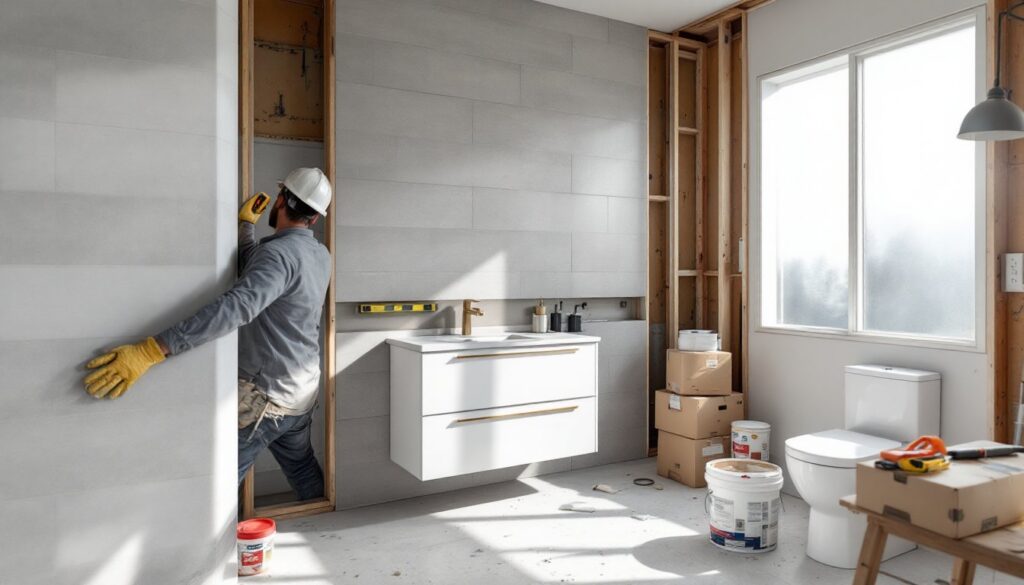
- Installing floating vanities (requires locating studs: use 3″ construction screws into studs, not drywall anchors)
- Replacing faucets and showerheads (straightforward if supply lines and drain assembly cooperate)
- Simple tile work in small areas (backsplash behind vanity)
Hire professionals for:
- Any plumbing that involves moving drain lines or supply pipes
- Electrical work beyond simple fixture swaps (required by code in Ontario unless you’re a licensed electrician)
- Waterproofing and tile installation in showers (improper technique causes catastrophic water damage)
- Anything structural or requiring permits
The math matters. A properly planned renovation accounts for both direct costs and opportunity costs. DIYing your shower tile might save $1,500 in labor but cost you four weekends and risk expensive failures if the waterproofing fails. Professional installers carry liability insurance and warranty their work, typically 1-2 years on labor.
If hiring contractors, verify they’re licensed, insured, and willing to provide references from recent Vaughan projects. Cost estimation tools help establish baseline expectations, but local market conditions and material choices create significant variance. Get everything in writing: scope, materials, timeline, payment schedule, and warranty terms.
For DIY portions, invest in proper tools rather than making do. A 4-1/2″ angle grinder with diamond blade cuts tile cleaner than a snap cutter. A laser level ensures perfect tile lines. Rent specialized tools like a wet saw rather than buying equipment you’ll use once.
Most successful renovations blend DIY and professional work strategically, homeowners handle demolition and painting while leaving plumbing, electrical, and tile to licensed trades. This approach controls costs without compromising quality or code compliance.