Table of Contents
ToggleSmart home tech trends 2026 point to a major shift in how people interact with their living spaces. The coming year promises smarter AI assistants, universal device compatibility, and a stronger focus on energy efficiency. Privacy and security will also take center stage as more households connect everything from thermostats to door locks. This guide breaks down the key developments shaping smart homes in 2026, and what they mean for homeowners ready to upgrade.
Key Takeaways
- Smart home tech trends 2026 highlight AI assistants that proactively learn routines, predict needs, and automate tasks without manual commands.
- The Matter protocol enables universal device compatibility, letting homeowners mix brands without worrying about integration issues.
- Energy management features like smart thermostats and solar integration help reduce utility bills and carbon footprints.
- Local data processing and end-to-end encryption are becoming standard, keeping personal information safer and response times faster.
- Sustainability tools now track household carbon emissions and suggest actionable steps toward reduction goals.
- Buyers should prioritize Matter-certified devices and brands with strong privacy practices when upgrading their smart homes in 2026.
AI-Powered Home Automation Gets Smarter
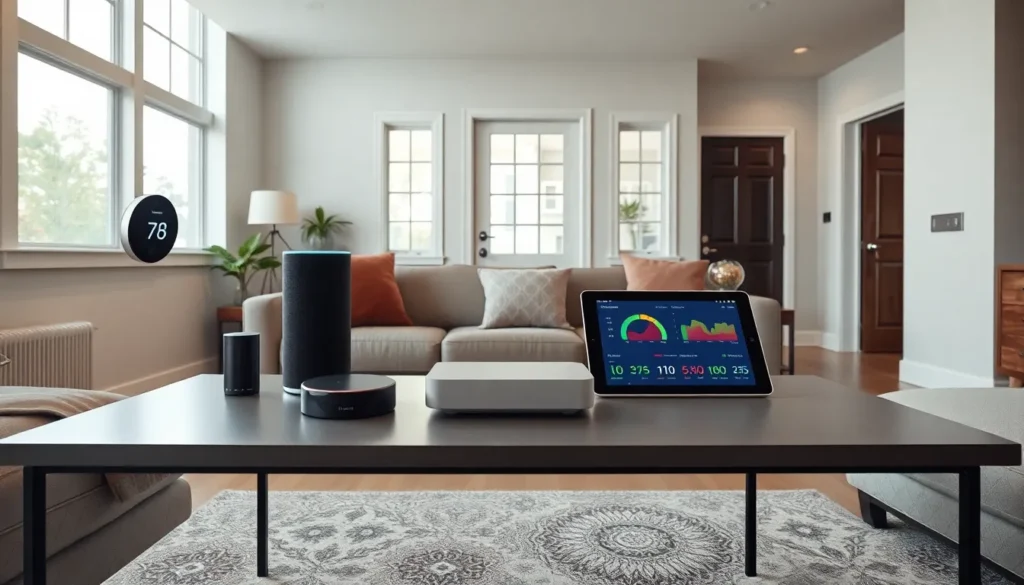
Artificial intelligence sits at the heart of smart home tech trends 2026. Voice assistants like Alexa, Google Assistant, and Siri now do far more than answer questions. They learn household routines, predict needs, and take action without prompts.
Expect AI systems to manage heating, lighting, and appliances based on occupancy patterns. A smart thermostat might lower temperatures when everyone leaves for work, then warm the house before anyone returns. These predictive features reduce energy waste and improve comfort.
Natural language processing has improved dramatically. Homeowners can speak in full sentences without memorizing specific commands. Saying “It’s too bright in here” triggers shade adjustments and dimmed lights. The AI understands context, not just keywords.
Multi-device coordination also gets a boost. In 2026, AI hubs will orchestrate routines across brands and product categories. A single “goodnight” command might lock doors, arm security cameras, turn off lights, and start the white noise machine. The technology handles complexity so users don’t have to.
Machine learning models now run locally on home hubs rather than relying solely on cloud servers. This shift speeds up response times and keeps more data inside the home. It’s a win for both performance and privacy.
Smart home tech trends 2026 show AI moving from reactive to proactive. Homes will anticipate what residents want, and deliver it automatically.
Matter Protocol Drives True Device Interoperability
For years, smart home buyers faced a frustrating question: Will this work with my other stuff? The Matter protocol changes that. It’s the most significant development among smart home tech trends 2026.
Matter creates a universal standard for smart devices. Products from Apple, Google, Amazon, Samsung, and hundreds of other manufacturers now speak the same language. A Matter-certified light bulb works with any Matter-compatible hub or app.
Adoption has accelerated. By early 2026, over 3,000 devices carry Matter certification. Major retailers stock Matter products prominently, and consumers recognize the logo as a guarantee of compatibility.
The protocol runs on Thread and Wi-Fi networks. Thread offers low-power mesh networking, which extends range and improves reliability. Devices stay connected even when individual nodes fail.
Setup becomes simpler too. Scanning a QR code adds a new device to any compatible ecosystem. No more hunting for specific apps or creating multiple accounts. One scan, and it works.
Smart home tech trends 2026 favor open ecosystems over walled gardens. Matter delivers that openness without sacrificing security. Every device uses encrypted communication and verified identities.
Homeowners benefit from flexibility. They can switch platforms without replacing hardware. Buy the best product in each category, and trust it will integrate smoothly.
Energy Management and Sustainability Features
Rising energy costs and climate concerns push sustainability to the top of smart home tech trends 2026. New devices help households cut consumption and shrink their carbon footprint.
Smart thermostats lead the charge. Models from Ecobee, Nest, and others now integrate with utility time-of-use pricing. They shift heating and cooling to off-peak hours when electricity costs less. Some systems pre-cool homes before afternoon rate spikes.
Solar panel integration has matured. Smart inverters communicate with home batteries and appliances. Excess solar power charges EVs or runs dishwashers instead of flowing back to the grid at low buyback rates. Homeowners maximize the value of every kilowatt.
Water monitoring enters more homes in 2026. Smart sensors detect leaks within minutes and send alerts before damage spreads. Usage dashboards reveal which fixtures consume the most, encouraging conservation.
Plug-level energy monitors have dropped in price. Homeowners can track exactly how much power each device draws. Vampire loads from idle electronics become easy to spot and eliminate.
Smart home tech trends 2026 also include carbon tracking. Some platforms calculate household emissions based on energy mix and usage patterns. They suggest changes and display progress toward reduction goals.
Sustainability features appeal to both budget-conscious and eco-minded buyers. The financial and environmental benefits align nicely.
Enhanced Privacy and Security Measures
Connected devices collect sensitive data. Smart home tech trends 2026 address growing concerns about who sees that information, and how it stays protected.
Local processing reduces cloud dependency. More cameras, speakers, and sensors handle data on-device. Voice commands don’t travel to distant servers. Video feeds stay within the home network unless owners choose otherwise.
End-to-end encryption becomes standard. Data moving between devices and apps remains unreadable to outsiders. Even manufacturers can’t access content in transit.
Two-factor authentication protects accounts. Biometric options like fingerprint and face recognition add convenience without sacrificing safety. Smart locks and cameras require verification before granting remote access.
Smart home tech trends 2026 include better transparency. Devices display clear indicators when microphones or cameras are active. Privacy dashboards show what data each product collects and where it goes.
Firmware updates happen automatically and frequently. Manufacturers patch vulnerabilities faster as regulatory pressure increases. Devices that fall behind on updates lose connectivity or trigger warnings.
Network segmentation tools help advanced users isolate smart devices from computers and phones. A compromised light bulb can’t become a gateway to personal files.
Trust matters. Buyers in 2026 favor brands with strong privacy track records. Companies that mishandle data face real consequences in the market.