Table of Contents
ToggleTop smart home tech has moved from futuristic fantasy to everyday reality. Homeowners now control lights, locks, thermostats, and entertainment systems with voice commands or smartphone taps. The global smart home market reached $115 billion in 2024, and adoption keeps accelerating.
Why the surge? Smart devices save time, cut energy bills, and add genuine convenience. They also provide security features that bring peace of mind. Whether someone wants to dim the lights without leaving the couch or monitor their front door from 500 miles away, today’s technology delivers.
This guide covers the best smart home tech categories worth considering in 2025. From voice assistants to climate control, each section breaks down what works, what stands out, and what matters most for modern living spaces.
Key Takeaways
- Top smart home tech in 2025 spans voice assistants, lighting, thermostats, security, and entertainment—all controllable via smartphone or voice commands.
- Smart thermostats offer the fastest ROI, reducing heating and cooling costs by 10-23% and paying for themselves within two years.
- Amazon Echo leads smart speakers with 140,000+ compatible devices, while Apple HomePod offers the strongest privacy controls.
- Smart security devices like video doorbells and smart locks can integrate into unified systems that automate responses to motion or arming events.
- Smart lighting uses 75% less energy than incandescent bulbs and enables automation features like sunrise simulation and motion-triggered hallway lights.
- Multi-room audio systems from Sonos, Amazon Echo, and Google Nest let music follow you seamlessly throughout your home.
Smart Speakers and Voice Assistants
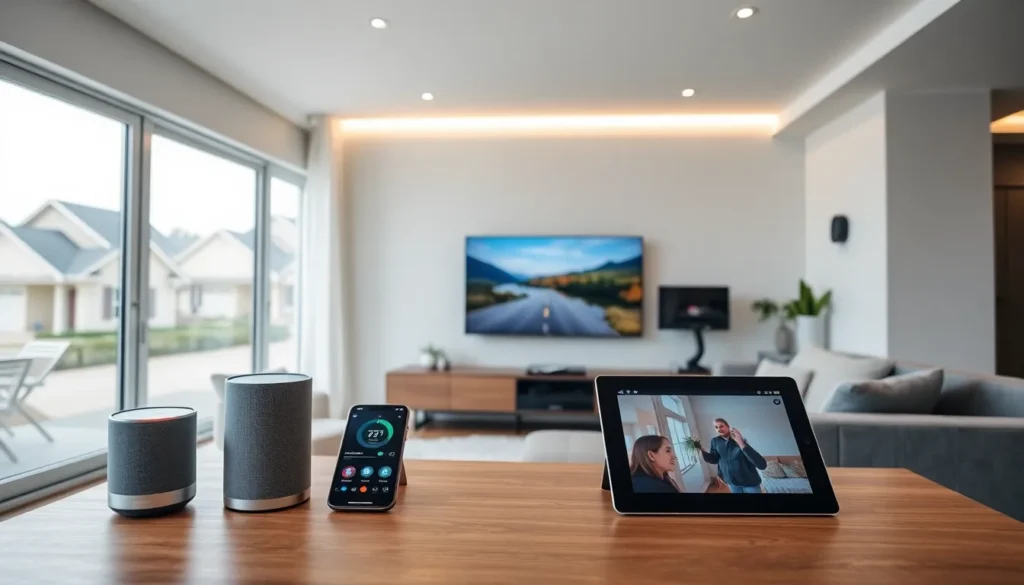
Smart speakers serve as command centers for connected homes. Amazon Echo, Google Nest, and Apple HomePod lead this category. Each device responds to voice commands, plays music, answers questions, and controls other smart home tech throughout the house.
Amazon’s Alexa dominates the market with the largest library of compatible devices, over 140,000 products work with Echo speakers. Google Assistant excels at answering complex questions and integrates smoothly with Android phones. Apple’s Siri through HomePod offers the tightest privacy controls and works best within the Apple ecosystem.
What should buyers prioritize? Sound quality matters for daily music listening. Smart home compatibility determines how many devices the speaker can control. Privacy features vary significantly between brands, Amazon and Google store voice recordings by default, while Apple processes most requests locally.
The price range spans from $30 for entry-level models to $300 for premium speakers with studio-quality sound. Most households find mid-range options around $100 hit the sweet spot between capability and cost.
Voice assistants continue improving through software updates. Features like multi-room audio, intercom functions, and routine automation make these devices increasingly useful. A smart speaker often becomes the first piece of top smart home tech people purchase, and the gateway to a fully connected house.
Smart Lighting Systems
Smart lighting transforms how people experience their homes. Philips Hue, LIFX, and Wyze offer bulbs that change color, dim on schedule, and respond to voice commands. Installation usually takes minutes, unscrew the old bulb, screw in the smart one, and connect through an app.
Philips Hue remains the industry standard with the widest color range and most third-party integrations. LIFX bulbs don’t require a separate hub, which simplifies setup. Wyze delivers impressive features at budget prices, though color accuracy doesn’t match premium brands.
Beyond bulbs, smart switches and light strips expand possibilities. Lutron Caseta switches work with existing bulbs and feel like traditional switches, no app required for basic on/off. LED strips from Govee and Nanoleaf create accent lighting for entertainment spaces.
Energy savings add up quickly. Smart bulbs use LED technology that consumes 75% less electricity than incandescent options. Scheduling features ensure lights turn off automatically, eliminating waste from forgotten switches.
The real magic happens with automation. Lights can simulate sunrise to wake residents gently. Motion sensors trigger hallway lights at night. Movie mode dims everything with a single command. These small conveniences accumulate into a genuinely better living experience.
Top smart home tech in lighting ranges from $10 per bulb to $200 for starter kits. Most users begin with two or three bulbs in high-traffic areas, then expand over time.
Smart Thermostats and Climate Control
Smart thermostats pay for themselves. The Nest Learning Thermostat, Ecobee Premium, and Amazon Smart Thermostat reduce heating and cooling costs by 10-23% annually. For the average household, that translates to $150-$200 saved each year.
Nest learns household patterns automatically. It observes when residents leave and return, adjusting temperatures to save energy without sacrificing comfort. After about a week, it builds an accurate schedule without manual programming.
Ecobee includes room sensors that detect occupancy and temperature variations throughout the house. This solves the common problem of hot upstairs bedrooms and cold basements. The thermostat prioritizes comfort where people actually spend time.
Amazon’s Smart Thermostat costs under $80 and integrates perfectly with Alexa. It lacks some premium features but handles basic scheduling and voice control well.
Installation typically takes 30 minutes for anyone comfortable with basic tools. Most smart thermostats work with existing HVAC systems, though homes with complex setups may need professional help.
Climate control extends beyond thermostats. Smart ceiling fans from Hunter and Big Ass Fans adjust speed based on temperature. Portable air quality monitors from Awair track humidity, CO2, and particulates. These devices work together to create healthier indoor environments.
Top smart home tech for climate control represents one of the fastest returns on investment. The upfront cost usually recovers within two years through lower utility bills.
Smart Security Devices
Smart security devices provide protection and peace of mind. Video doorbells, smart locks, and security cameras let homeowners monitor their property from anywhere. The category has exploded with options at every price point.
Ring and Google Nest dominate video doorbells. Both capture HD video, detect motion, and enable two-way conversation with visitors. Ring requires a subscription for video storage, while Nest offers limited free storage. Eufy provides local storage without monthly fees, a compelling alternative for privacy-conscious buyers.
Smart locks eliminate the need for physical keys. August, Schlage, and Yale offer models that unlock via smartphone, fingerprint, or code. Temporary access codes work perfectly for house guests, dog walkers, or package deliveries. Most smart locks install over existing deadbolts in under 15 minutes.
Security cameras have gotten remarkably affordable. Wyze cameras start at $20 and deliver solid 1080p footage. Premium options from Arlo offer 4K resolution, color night vision, and weather resistance for outdoor use.
Professional monitoring services from Ring, SimpliSafe, and ADT add another layer. These systems contact emergency services automatically during break-ins or fires. Monthly costs range from $10-$30 depending on features.
Integration matters most with security devices. The best setups connect cameras, locks, and sensors into unified systems. When the doorbell detects motion, interior lights turn on. When the system arms at bedtime, all locks engage automatically.
Top smart home tech for security continues advancing with AI-powered features. Package detection, facial recognition, and vehicle identification now come standard on many devices.
Smart Entertainment Systems
Smart entertainment systems transform living rooms into immersive experiences. Streaming devices, smart TVs, and multi-room audio create seamless media consumption throughout the home.
Streaming devices remain essential for older TVs. Roku, Apple TV 4K, and Amazon Fire TV Stick provide access to every major streaming service. Apple TV 4K delivers the best picture quality and gaming capabilities. Roku offers the most user-friendly interface. Fire TV integrates deeply with Alexa and Amazon services.
Smart TVs from Samsung, LG, and Sony now include voice control, app stores, and smart home integration built-in. LG’s webOS and Samsung’s Tizen platforms receive regular updates that add features over time. OLED displays from LG deliver stunning contrast for movie enthusiasts.
Multi-room audio brings music to every corner of the house. Sonos leads this category with speakers that sync perfectly across rooms. A song starts in the kitchen and follows the listener to the bedroom. Amazon Echo and Google Nest speakers offer similar functionality at lower prices.
Smart projectors have improved dramatically. Options from Xgimi and BenQ deliver cinema-quality images with built-in streaming apps. They’re perfect for outdoor movie nights or rooms where large TVs won’t fit.
Universal remotes and hubs simplify control. Logitech Harmony (now discontinued but still available) and SofaBaton consolidate multiple devices into single controllers. Voice commands through assistants eliminate remote hunting entirely.
Top smart home tech for entertainment emphasizes convenience as much as quality. The goal is effortless access to content without fumbling through inputs or searching for remotes.