Table of Contents
ToggleBathroom renovations don’t have to expensive or require months of chaos. Whether you’re dealing with outdated fixtures, cramped layouts, or just tired finishes, smart renovation ideas can turn your space into something functional and fresh. The good news is that a bathroom renovation cost varies widely depending on your goals, a minor refresh might run $3,000 to $8,000, while a full overhaul could stretch higher. Many homeowners find that targeted updates deliver the best return on investment. Let’s explore practical, budget-conscious approaches that transform how you use your space every single day.
Key Takeaways
- Budget-friendly restroom renovation ideas like paint, hardware, and lighting updates can transform your bathroom for under $500, delivering high visual impact without breaking the bank.
- Smart storage solutions such as recessed medicine cabinets, floating vanities, and vertical shelving maximize small bathrooms while keeping plumbing costs low by working with existing layouts.
- Layered lighting with task lighting around mirrors and ambient ceiling fixtures makes bathrooms feel larger and more functional than a single dome fixture.
- Modern fixture finishes like matte black and brushed nickel hide water spots better, while low-flow toilets and LED lighting reduce utility bills and environmental impact by 30% annually.
- Refinishing an existing bathtub for $300–$600 extends its life by 10–15 years and costs far less than a full replacement, making it a smart bathtub renovation cost solution.
- A complete bathroom renovation price varies from $3,000–$8,000 for minor updates to $15,000+ for overhauls, so prioritize high-use fixtures and avoid unnecessary plumbing relocations.
Budget-Friendly Updates That Make a Big Impact
The smartest bathroom renovation ideas don’t always involve ripping out everything. Start with what costs the least but changes the most: paint, hardware, and lighting. A fresh coat of quality bathroom paint (moisture-resistant, mildew-resistant finish) on walls and trim costs under $200 in materials. New cabinet hardware, simple stainless steel or brass pulls, runs $50 to $150 and feels like an instant upgrade.
Swapping out dated faucets is another high-impact move. A new vanity faucet costs $100 to $400 depending on finish and quality, and installation is usually a DIY job if you’re comfortable with basic plumbing connections. If you’re replacing a tub spout or shower head, budget $30 to $150. These changes catch your eye every morning and signal that the space matters.
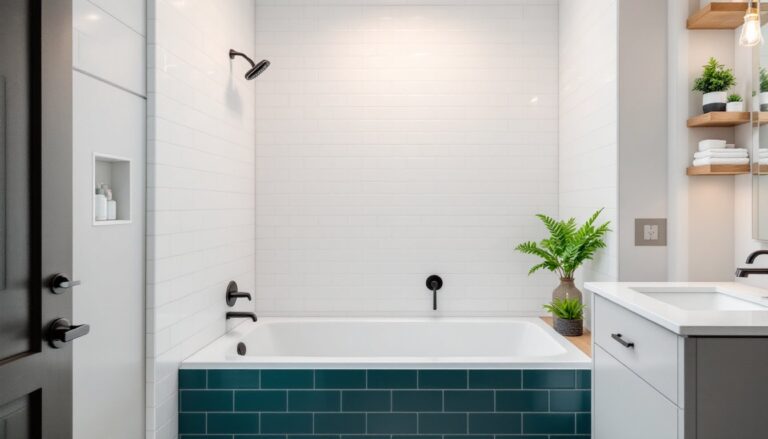
For bathtub renovation cost considerations, you don’t always need a replacement. Refinishing an existing bathtub, stripping, prepping, and applying new acrylic coating, runs $300 to $600 and extends life by 10-15 years. It’s far cheaper than a new bathtub. A new bathtub itself, installed, typically costs $1,500 to $4,000 depending on material (acrylic vs. cast iron) and size.
Consider recaulking tile or addressing grout discoloration before replacing everything. A full bathroom renovation price depends heavily on what you keep versus replace. Keeping the toilet, tub, and plumbing lines in place can save $3,000 to $5,000 compared to moving pipes and relocating fixtures.
Maximize Small Spaces With Smart Design Choices
Storage Solutions and Layout Optimization
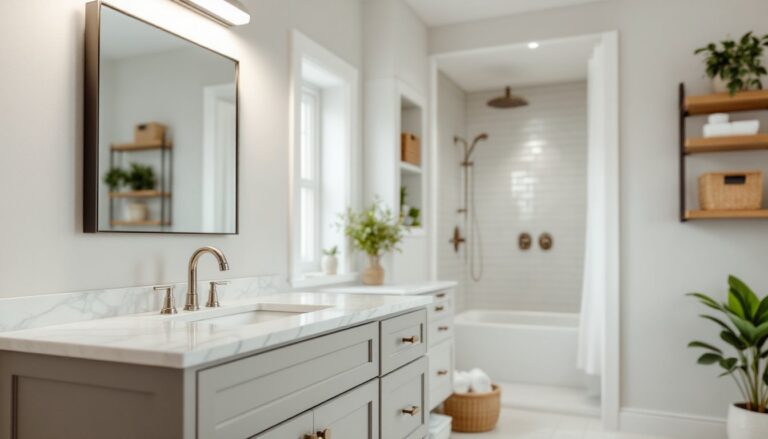
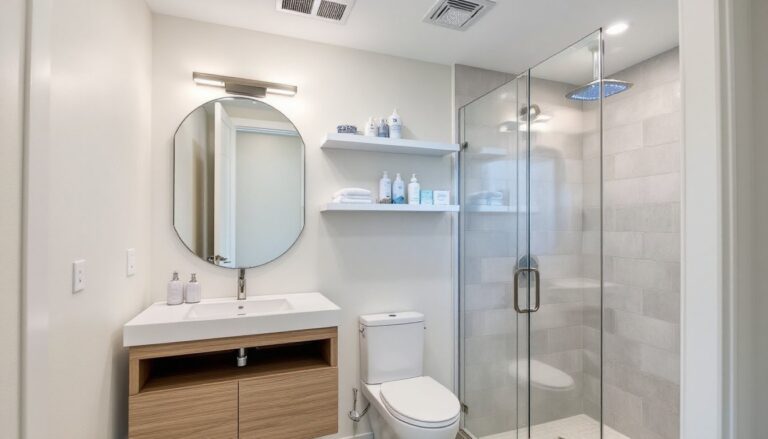
Small bathrooms demand clever storage. A recessed medicine cabinet above the sink costs $40 to $150 installed and doesn’t eat floor space like a surface-mounted cabinet. Floating vanities (wall-hung sinks with no legs) create visual space and make cleaning the floor easier. Wall-mounted shelving above the toilet, if code-compliant for your jurisdiction, adds function without taking up corner real estate.
Vertical storage is your friend. Tall, narrow shelving units or ladder-style racks hold towels, toiletries, and décor without eating horizontal floor space. When choosing layout, resist the urge to fill every inch: negative space in a small bathroom actually feels larger. Group storage near the vanity or behind the toilet door rather than spreading items around.
If your small bathroom struggles with plumbing placement, moving fixtures requires permits, professional work, and costs $2,000 to $6,000+. Often it’s smarter to work with the existing layout and optimize storage and visual flow instead.
Lighting and Color Strategies for Bigger-Feeling Bathrooms
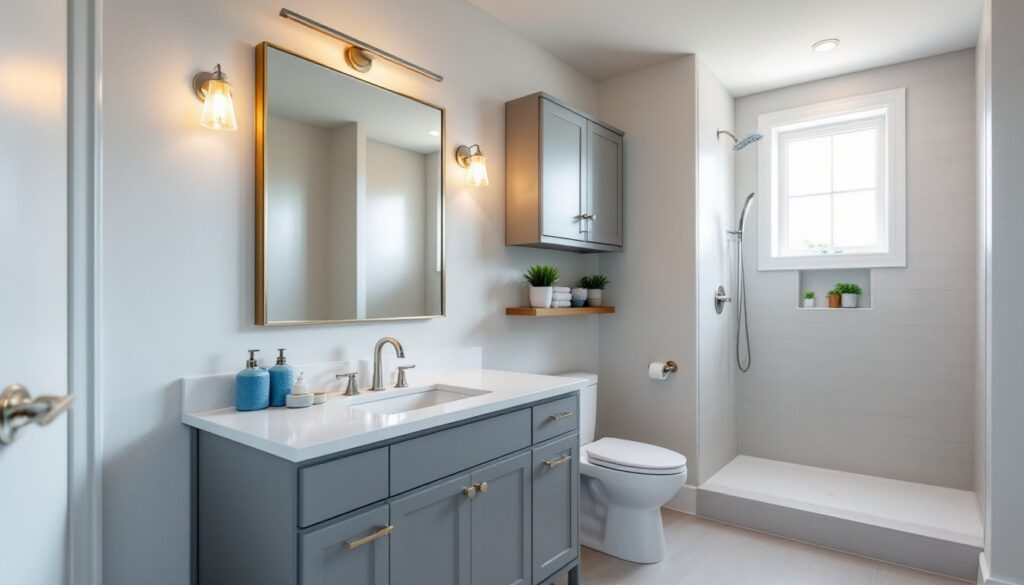
Lighting transforms perception faster than almost anything else. Replace a single dome fixture with layered lighting: bright task lighting flanking the mirror (4,000K to 5,000K color temperature for true makeup and grooming light), ambient ceiling lighting, and a dimmer switch so you’re not squinting at 5 a.m. This costs $200 to $400 for fixtures and installation.
Color matters. Light, neutral tones (whites, soft grays, pale blues) bounce light and feel airy. If you want personality, use color on one accent wall or in tile trim rather than all four walls. Dark colors in small bathrooms can feel cave-like. Matte finishes hide water spots better than glossy ones, though they’re harder to clean.
Mirror size and placement create the illusion of space. A large mirror opposite a window (if you have one) reflects natural light and opens the room visually. Avoid tiny, cramped mirrors above the sink: a 36- to 48-inch-wide mirror is standard for most vanities.
Popular Fixture and Finishes to Consider
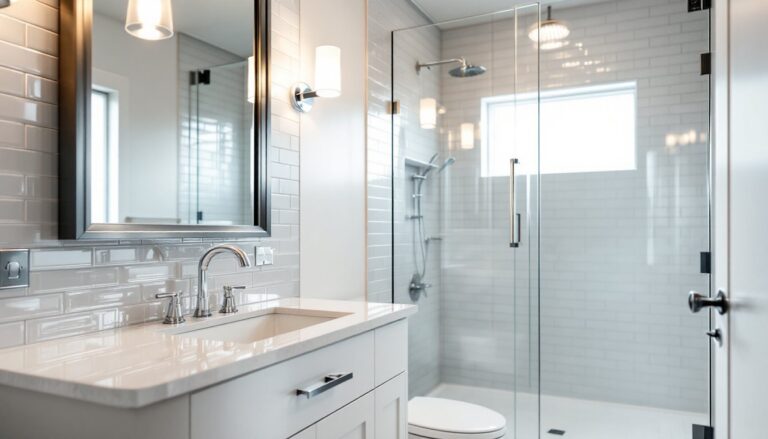
Fixture finishes have shifted in 2026. Matte black and matte brushed nickel remain popular and hide water spots well, unlike polished chrome. Oil-rubbed bronze adds warmth: brushed gold and rose gold appeal to those wanting a softer modern look.
Shower systems are getting attention. A rainfall showerhead (8 to 12 inches wide) with a separate hand-held spray feels luxurious and costs $150 to $400 installed. Thermostatic valves that hold a set temperature cost more upfront ($200 to $400) but prevent scalding surprises and work well in homes with inconsistent water pressure.
Toilet choices matter. Dual-flush toilets use less water (0.8 gallons for liquid waste, 1.6 for solid), lowering utility bills. They cost $200 to $500 versus $100 to $250 for standard models. If your bathroom is older, upgrading to a modern low-flow toilet can reduce water use by 30% annually.
Tile choices drive the visual and the budget. Ceramic tile is affordable ($2 to $15 per square foot installed) and durable. Porcelain is harder and better for wet areas ($4 to $20 per square foot installed). Natural stone (marble, granite, slate) costs $10 to $30+ per square foot and requires sealing. Luxury vinyl plank (LVP) mimics wood or stone, costs $3 to $10 per square foot installed, and handles moisture well, making it a smart budget alternative.
Eco-Friendly and Sustainable Bathroom Features
Water conservation is both environmentally responsible and budget-smart. Low-flow showerheads (2 to 2.5 gallons per minute versus 5+ for older models) reduce water use without sacrificing pressure. They cost $20 to $80 and save money on water heating. Faucet aerators ($5 to $20) deliver the same feel with less flow.
LED lighting uses 75% less energy than incandescent bulbs and lasts 25,000+ hours. Switching bathroom fixtures to LED costs $30 to $100 per fixture but pays back through electricity savings within two years.
Sustainable materials are becoming mainstream. Reclaimed wood vanities, recycled glass tile, and low-VOC (volatile organic compound) paint reduce environmental impact. Recycled glass tile costs slightly more than standard ceramic ($3 to $8 per square foot installed) but creates striking visual interest.
Ventilation matters for moisture control and longevity. A properly sized exhaust fan (CFM rating based on bathroom square footage, typically 50 to 100 CFM) prevents mold and mildew. Modern Energy Star fans cost $80 to $200 and qualify for rebates in some regions. Running a fan during and 20 minutes after showers extends your renovation’s life considerably and reduces future damage.
Conclusion
Bathroom renovation ideas in 2026 center on smart choices, not spending big. Whether you’re tackling a bathtub renovation cost concern, figuring out your overall bathroom renovation price, or just refreshing fixtures and finishes, prioritize what you use daily. Start with high-impact, low-cost changes like paint and hardware, then invest in fixtures that deliver function and durability. When you understand your bathroom’s potential and work within a realistic budget, you’ll create a space you genuinely enjoy using every day.