Table of Contents
ToggleA bathroom remodel doesn’t have to drain your bank account or your sanity. Whether you’re planning a complete overhaul or a strategic refresh, 2026 brings practical bathroom remodel ideas that balance aesthetics with function. From contemporary fixtures to smart storage solutions, today’s remodeling options let homeowners tackle bathroom redo ideas at their own pace and budget level. This guide breaks down the most impactful bathroom remodel design trends and DIY-friendly updates you can carry out now, no contractor required.
Key Takeaways
- Contemporary fixtures like matte black faucets and soft-close toilets modernize bathrooms affordably, with quality valve cartridges lasting far longer than budget alternatives.
- Strategic storage solutions—including recessed shelving, vertical cabinets, and under-sink organizers—maximize space and improve daily bathroom functionality without requiring professional installation.
- Proper vanity lighting with bulbs at 4000–5000K color temperature and recessed or semi-flush ceiling fixtures create shadow-free grooming conditions and balance ambient brightness.
- Bathroom remodel ideas on a budget include fresh paint with moisture-resistant primer, peel-and-stick tile accents, and resealing caulk, which deliver 20–30% labor savings when tackled as DIY projects.
- Low-flow faucets and dual-flush toilets reduce water consumption by up to 60%, paying back their initial cost in 5–7 years while supporting eco-conscious remodeling goals.
- Planning your bathroom renovation by prioritizing high-impact changes—lighting first, storage second, fixtures third—and adding a 15–20% contingency budget prevents costly surprises and ensures long-term satisfaction.
Contemporary Fixtures and Hardware Upgrades
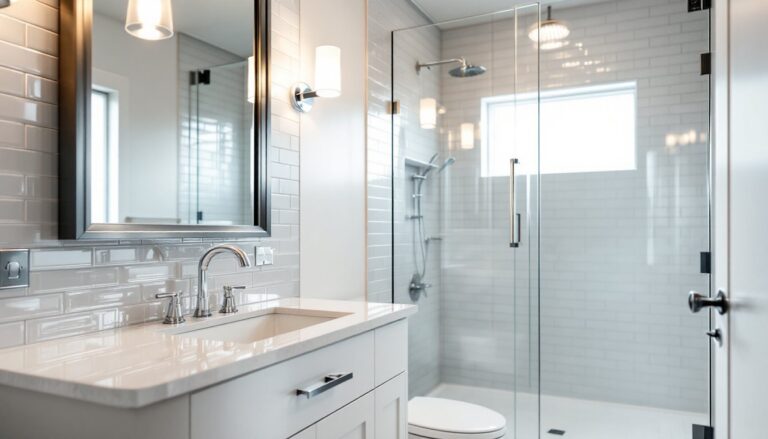
Modern bathroom fixtures strike a balance between minimalist design and genuine usability. Contemporary faucets with clean lines, matte black, brushed nickel, or oil-rubbed bronze finishes, have become the go-to choice because they hide water spots better than polished chrome and coordinate with nearly any tile palette. When upgrading, focus on quality valve cartridges. A Delta or Moen cartridge ($40–80) lasts far longer than budget knock-offs and can be replaced without tearing into walls.
Showerheads deserve attention too. Rainfall heads create spa-like appeal, but they often deliver less pressure: consider a dual-setting model that switches between rainfall and concentrated spray. If your home has low water pressure, a restricted aerator might be the culprit, swap it out before upgrading the fixture.
Toilet selection shapes both form and daily function. Wall-mounted toilets offer a floating aesthetic and simplify floor cleaning, but they require reinforced framing behind the wall and a concealed tank, plan for this during rough-in if you’re committed. Elongated bowls (comfort height, 17–19 inches) suit most adults better than round bowls. Soft-close lids, once a luxury, now cost only $20–50 more and eliminate midnight slamming.
Don’t overlook cabinet hardware. Swapping drawer pulls and knobs transforms a dated vanity in under an hour. Mix metals intentionally: brushed brass with black steel reads contemporary and intentional, not confused.
Innovative Storage and Organization Solutions
Poor storage planning torpedoes even beautiful bathrooms. Before you redesign, audit what you actually store: medications, hair tools, cleaning supplies, linens, skincare. Each category needs its own zone.
Recessed shelving carved into wall cavities between studs (typically 14.5 inches wide) saves floor space and looks built-in. Studs run 16 inches on center in most homes, so you can fit a slim shelf between two studs without compromising wall strength. Install a header and footer with blocking to support shelves safely. Open shelving looks airy but requires dedication to tidiness: consider floating shelves with hidden brackets for a sleek edge.
Vertical storage multiplies usable space in tight bathrooms. Tall, narrow cabinets next to the toilet or beside the vanity hold towels, spare rolls, and cleaning gear without hogging floor space. Corner cabinets with carousel shelves (lazy Susans) make deep corners actually accessible.
Under-sink organization hinges on selecting the right inserts. Tiered shelving, pull-out baskets, and sliding organizers transform dead space under the vanity from a dark tangle into functional zones. Measure your cabinet dimensions first, many inserts are modular and won’t fit standard-depth vanities.
Drawer dividers for the vanity keep daily essentials, toothbrushes, floss, deodorant, from becoming a jumbled mess. Bamboo dividers cost $15–30 and adapt to various drawer sizes. For hair tools and cords, a pegboard mounted inside the cabinet door keeps them visible and prevents tangling.
Lighting and Ventilation Improvements
Bathroom lighting divides into three tasks: ambient (overall brightness), task (mirror and shower), and accent (creating mood). Most bathrooms get by with one ceiling fixture and mirror sconces, insufficient for grooming and makeup work.
Vanity lighting should flank the mirror at eye level (48–60 inches from the floor) rather than hovering above. Bulbs should mimic natural daylight (4000–5000K color temperature): warm yellow bulbs (2700K) cast shadows that hide grooming errors but feel less energizing. LED vanity strips or paired sconces deliver consistent, shadow-free light. If your mirror lacks sconces, a backlit mirror ($150–400) adds professional light and contemporary style in one swap.
Ceiling fixtures matter. Recessed downlights work well as ambient lighting but alone create a cave-like effect. A semi-flush mount or low-profile fixture (keeping 7.5 feet minimum clearance in smaller baths) distributes light more evenly. Dimmer switches ($10–30) let you adjust mood from morning-bright to evening-relaxing.
Ventilation prevents moisture from warping trim, peeling paint, and fostering mold. An exhaust fan rated 50–100 CFM (cubic feet per minute) suits most half-baths: a full bath needs 100–150 CFM. Ducting matters: flex duct is cheaper but sags and traps condensation: rigid ductwork (PVC or aluminum) performs better. Duct the fan directly to the exterior, not into the attic. Run the fan for 20–30 minutes after showers. Look for models with built-in dampers to prevent outside air from backdrafting into your home on cold days.
Budget-Friendly Design Refresh Ideas
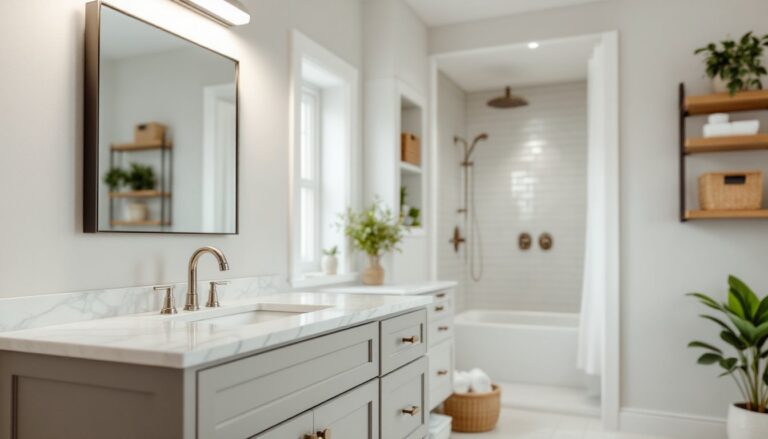
Bathroom renovation costs vary wildly, but smart choices let you stretch every dollar. A fresh coat of paint instantly refreshes tired walls: moisture-resistant bathroom primer and semi-gloss finish ($30–60 total) resists mildew better than regular interior paint. Light, neutral tones (soft grays, warm whites) make small bathrooms feel larger and pair with future fixture upgrades.
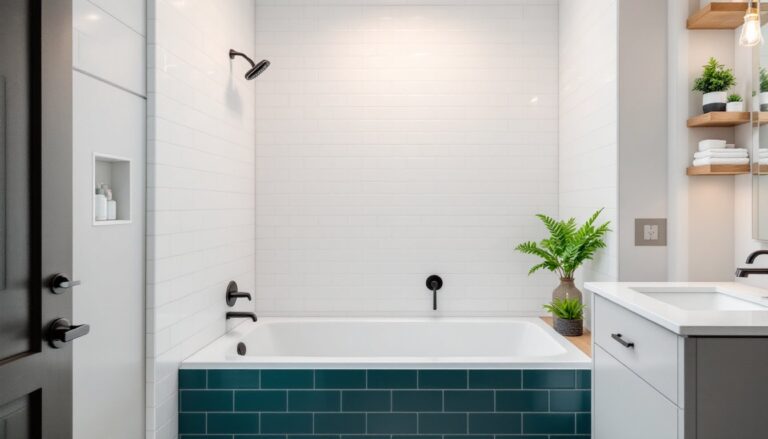
Tile updates don’t require gutting the walls. Peel-and-stick tile decals ($20–80) temporarily refresh backsplashes or accent walls. For permanence, a narrow tile stripe or border, installed over existing tiles with thinset and waterproof adhesive, adds visual interest without a full retile. Hexagon or subway tile patterns cost less to install than complex mosaics and read as contemporary.
Caulk and grout color choices impact the whole aesthetic. Removing old, yellowed caulk and resealing with white or gray silicone ($15 in materials) brightens a space dramatically. Grout colorant ($20–30) revives dingy grout lines without a full regrout job.
Accessory swaps multiply the visual return: towel racks, mirrors, shower curtain rods, and toilet brush holders in brushed brass or matte black coordinate modern bathrooms instantly. A statement mirror ($50–150) becomes a focal point and reflects light to amplify brightness. Swap the shower curtain for neutral linen or solid tones that coordinate with tile and fixtures.
If you’re tackling bathroom reno ideas yourself, you’ll save 20–30% on labor. Focus DIY effort where it’s visible and difficult to hide mistakes, painting, caulking, accessory swaps, and hire professionals for plumbing, electrical, and structural changes. This hybrid approach delivers polish without the sticker shock.
Sustainable and Smart Bathroom Features
Water conservation and smart tech reshape how modern bathrooms function. Low-flow faucets (1.5 gallons per minute or less) reduce water use without compromising pressure because aerators draw in air. Over a year, a family saves thousands of gallons, and dollars on the water bill.
Toilet efficiency varies dramatically. Dual-flush models save 27–60% of water compared to 1990s single-flush toilets by offering a half-flush for liquid waste. High-efficiency (HE) toilets use 1.28 gallons per flush, the federal maximum, versus older 5–7 GPF models. The initial cost ($300–600) pays back in water savings within 5–7 years.
Shower timers ($5–20) or smart showerheads that gradually reduce flow after a set time gently nudge shorter showers. Some models pause flow while you lather, cutting overall usage in half.
Smart mirrors with integrated LED lighting and humidity sensors add function without complexity. Temperature-controlled towel bars (around $150) warm towels and extract bathroom moisture. These features appeal to tech-forward homeowners and signal care in a bathroom redo ideas package.
Materials matter for sustainability too. Recycled glass tile ($8–12 per square foot) shimmers and outperforms virgin ceramic in durability. Bamboo vanities sequester carbon and cost less than hardwood. Cork flooring resists moisture, feels warm underfoot, and comes from renewable sources. Research bathroom remodel design options that balance eco-credentials with performance, not all “green” products endure wet environments well.
Bringing It All Together: Planning Your Remodel
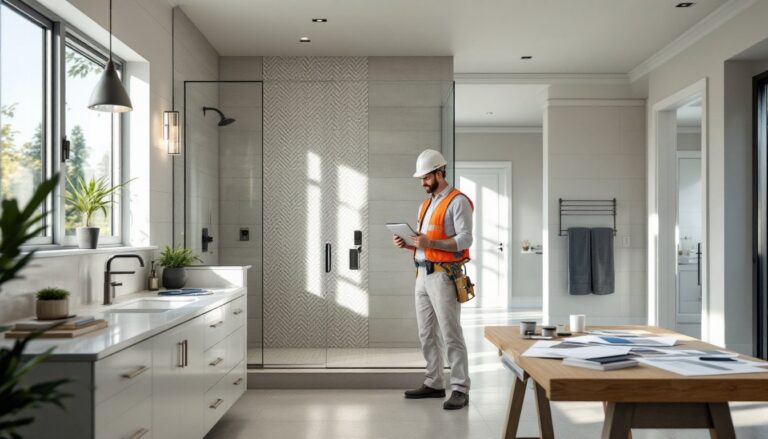
Start with a clear scope: are you refreshing the aesthetic (paint, fixtures, hardware) or overhauling systems (plumbing, electrical, structural)? A design refresh takes weeks: a full gut remodel takes months and requires permits if you’re moving walls or water lines.
Sketch a layout scaled to your actual bathroom dimensions. Note fixture placement, door swing, and knee clearance. A 60-inch vanity rarely fits standard half-baths (36–42 inches wide): measure twice. Visit a showroom to see contemporary fixtures, tile textures, and color palettes in person, photos mislead. Remodelista and similar design sources inspire, but contractor resources and cost guides ground decisions in budget reality.
Prioritize changes by impact. Lighting upgrades deliver visual and functional transformation at modest cost. Storage optimization affects daily life immediately. Fixture swaps modernize aesthetics. Paint and caulk amplify everything else. Build your remodel in phases if cash flow is tight: year one, lighting and storage: year two, fixtures: year three, tile or finishes.
If hiring help, get three quotes from licensed contractors familiar with bathroom work. Verify licenses, insurance, and references. A contractor who explains why choices matter, rather than rushing into specs, typically delivers better results. Discuss permits upfront: many homeowners skip this and pay dearly if an unpermitted job surfaces during a home sale.
Budget buffer: add 15–20% contingency. Plumbing surprises, hidden rot, and old framing quirks emerge once work starts. Homeowners who plan for the unexpected stay sane.
Conclusion
Bathroom remodel ideas for 2026 blend aesthetics, function, and smart resource use. Whether you’re investing in a full renovation or refreshing with budget-friendly updates, prioritize what you use daily, lighting, storage, water efficiency, and let contemporary fixtures and finishes follow. Start small, plan carefully, and don’t skip the details: proper ventilation, quality hardware, and thoughtful layout transform a utilitarian space into a retreat. Your bathroom renovation pays dividends in comfort, home value, and daily delight.