Table of Contents
ToggleA small bathroom doesn’t have to feel cramped or outdated. Whether you’re tackling a bath redo, planning to renovate a small bathroom, or executing a full small bathroom renovation, smart planning and material choices make all the difference. Most homeowners are surprised to learn that smaller spaces often cost less to update and show faster results than sprawling master baths. This guide walks you through prioritizing your project, choosing materials that won’t drain your wallet, and deciding which tasks you can handle yourself versus when to call in help. By the end, you’ll have a clear roadmap to a functional, refreshed space that feels brand new.
Key Takeaways
- A small bath renovation costs less per square foot than larger projects, making it ideal to invest in quality materials that deliver both visual and functional improvements.
- Prioritize bathroom improvements by impact and cost: paint and hardware updates solve 60% of dissatisfaction for $200, while major plumbing changes require professionals and can cost thousands.
- Maximize space in small bathrooms with wall-mounted cabinets, floating shelves, and large mirrors that reflect light and make the room feel visually larger without consuming floor space.
- Material choices matter: ceramic or porcelain tile costs $2–$12 per square foot, while luxury vinyl plank offers a faster, waterproof alternative at $3–$8 per square foot.
- Handle DIY tasks like painting, shelving, and hardware installation yourself, but hire licensed professionals for plumbing, electrical, and tile work to avoid costly mistakes and permit violations.
- A complete small bath renovation typically runs $5,000–$15,000 all-in; always get three detailed estimates from contractors before work begins to prevent unexpected costs.
Plan Your Layout and Priorities
Before you buy a single tile or fixture, sit down and list what bothers you most about the current bathroom. Is the layout inefficient? Are surfaces stained or cracked? Does the room lack storage? Does lighting make everything look dingy?
Rank these issues by impact and cost. A fresh coat of paint and new hardware might solve 60% of your dissatisfaction for $200. Fixture upgrades (faucet, showerhead, toilet) run $300–$800 each but deliver high visual and functional wins. Major layout changes, moving a toilet, relocating plumbing, require a licensed plumber and permits, jumping costs into the thousands.
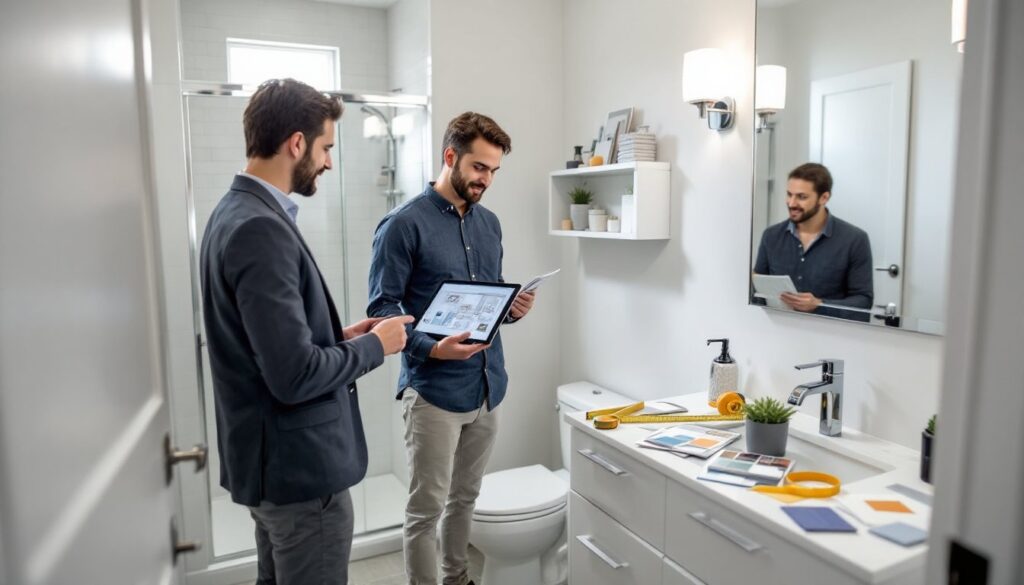
Measure the space carefully. Write down the distance from the toilet to the wall, the width of the vanity, the ceiling height, and distances to plumbing and electrical outlets. Small bathrooms live or die by inches. A slightly narrower vanity or a corner-mount shelving unit can open up a room that feels tight. Sketch the layout to scale or use a simple drawing app. This prevents you from buying a fixture that doesn’t fit or discovering mid-project that your new mirror blocks the medicine cabinet door.
Choose Cost-Effective Materials and Fixtures
Material choices make or break your budget. The good news: smaller bathrooms mean you’re covering less square footage, so investing in quality materials per unit becomes more affordable.
Vanities and Sinks
A solid wood or plywood vanity (not hollow particle board) with a ceramic or porcelain sink runs $400–$900 installed. Ready-to-assemble versions from home centers save 40%, though assembly takes time and patience. If your existing vanity is structurally sound, refinishing or replacing just the top and sink saves thousands. Vessel sinks look modern but require extra counter support and taller faucets: wall-mount sinks save floor space but limit under-sink storage.
Toilets
A standard two-piece toilet costs $100–$300. Compact or corner-mount models fit tight spaces. Dual-flush toilets ($150–$250) reduce water waste by 25–30% annually, enough to pay for themselves in 3–5 years if your water bill is steep. Avoid cheap no-name brands: poor seals and cracked porcelain lead to leaks and replacement headaches.
Fixtures and Hardware
Faucets range wildly: $50–$60 for basic chrome, $150–$300 for solid brass or stainless with good finishes. Mid-range faucets (Moen, Delta, Kohler) carry warranties and aren’t disposable. Showerheads and towel bars follow similar logic, cheap chrome corrodes and strips easily: mid-range chrome and stainless last 10+ years.
Flooring and Wall Options
Flooring takes the most water, so durability matters. Ceramic tile (3×3 to 12×12 inches) costs $2–$8 per square foot installed. Porcelain tile runs $4–$12 per square foot but resists staining better. For a 40-square-foot bathroom floor, budget $200–$500 in materials.
Vinyl plank flooring (luxury vinyl plank, or LVP) costs $3–$8 per square foot installed and mimics wood or stone convincingly. It’s waterproof and warm underfoot, big wins in small bathrooms. Installation is faster than tile if your subfloor is flat and sound.
Walls: Paint is the cheapest refresh, $1–$3 per gallon covers up to 400 square feet. Use semi-gloss or satin finish in bathrooms (glossy finishes resist moisture better than flat). For a small bathroom, skip dark colors: light and mid-tone walls reflect light and feel more open.
Tile or shiplap accent walls cost $5–$15 per square foot but add character and durability where splash is heavy. Peel-and-stick tiles ($1–$3 per tile) work as temporary backsplashes or accents but won’t last 10 years on high-moisture walls.
Shower surrounds: If you’re not gutting the bathroom, painting, caulking, and replacing grout on existing tile often looks 80% as good as retiling for 10% of the cost. Acrylic or fiberglass shower panels ($200–$600) beat retiling in speed and price but lack the longevity of tile.
Maximize Storage and Visual Space
Small bathrooms feel smaller when clutter dominates. Storage and visual tricks are non-negotiable.
Vertical Real Estate
Wall-mounted cabinets above the toilet or vanity don’t consume floor space. Floating shelves ($30–$100 each, plus installation) hold towels, baskets, and toiletries without taking up square footage. A corner shelf unit ($50–$200) captures dead space.
Mirror Magic
A large mirror (or mirrored cabinet) reflects light and visually doubles the space. Install it opposite a window if possible. Frameless or thin-frame mirrors feel contemporary and less bulky than ornate wood frames.
Recessed Storage
If you’re willing to cut into studs (and want a cleaner look), recessed medicine cabinets or shelves sit flush with the wall. This requires framing work but saves 3–4 inches of depth, significant in tight quarters.
Smart Organization Solutions
Inside cabinets and under sinks, organization systems ($50–$150) keep supplies accessible without sprawl. Stackable drawers, magnetic strips for tweezers and razors, and tension rods for spray bottles all cost under $20 and transform chaos into order.
Baskets or bins ($20–$50) corral cleaning supplies, hair tools, and extras behind closed cabinet doors. Label them. In a small bathroom, invisible storage is the best storage.
Wall-mounted toothbrush holders, soap dispensers, and toilet paper holders ($5–$30 each) eliminate countertop clutter. Towel bars and hooks mounted high keep towels off the floor and visible.
Update Lighting and Ventilation
Poor lighting makes any bathroom feel dim and uninviting. Ventilation prevents mold and humidity damage, essential in small, enclosed spaces.
Lighting
Add brightness without renovating. Upgrade existing fixtures to LED bulbs (60–100W equivalent, daylight color 5000K–6500K). Cost: $5–$15 per bulb. Install vanity sconces on either side of the mirror ($50–$150 per fixture). If the ceiling fixture is dim, replace it with a 40–60W equivalent LED flush mount ($40–$100). Avoid recessed lighting in small bathrooms unless you have 8+ feet of ceiling depth: fixtures eat insulation space and create dark shadows on the 7-foot walls typical in older homes.
Ventilation
An exhaust fan must move air out, not just into the attic. Capacity is measured in CFM (cubic feet per minute). For a small bathroom, 50–80 CFM suffices: larger spaces need 100+ CFM. Dampers prevent cold air backflow in winter. A good fan costs $50–$150: installation requires ductwork to an exterior wall or roof vent. If existing ductwork is clogged, cleaning or replacing it ($100–$300) makes an enormous difference. Run the fan during and 30 minutes after showers to pull humidity out before mold takes hold.
DIY Versus Professional Help
Know your limits. Painting, hardware swaps, shelving, and simple fixture removal are DIY-friendly. Plumbing, electrical, structural work, and gas lines demand licensed professionals. Some jurisdictions require permits for any plumbing or electrical work: skipping them voids your homeowner’s insurance and creates liability.
DIY Tasks
Painting (with good primer and sealant), replacing faucet aerators, installing towel bars, caulking, grouting, and wood stain/sealer jobs are within reach for patient first-timers. A small bathroom is the perfect practice ground, less square footage means fewer mistakes hurt your wallet or schedule. Budget 2–4 weekends for a cosmetic redo.
Hire a Pro For
Plumbing (supply lines, drain work), electrical (circuits, outlets, exhaust fans with hardwired switches), load-bearing wall removal, tile installation on shower walls (waterproofing mistakes lead to expensive mold behind walls), and gas if you have a heated towel rack. A licensed bathroom contractor or plumber in your area runs $75–$150 per hour, plus materials and overhead. A complete small bath renovation typically costs homeowners $5,000–$15,000 all-in, though regional variation is huge.
Getting Quotes
Get three estimates from licensed contractors. Ask for a detailed scope of work, timeline, warranty, and what’s included vs. extra-cost upgrades. Check references and verify insurance. Experienced contractors walk you through decisions and protect you from costly mistakes. If you’re splitting the work, you paint and do demolition, they handle plumbing and tile, clarify who buys what materials and who handles waste removal. A small bathroom renovation shouldn’t surprise you: get everything in writing before work begins.