Table of Contents
TogglePlanning a bathroom renovation means asking one question right away: what’s this actually going to cost? A bathroom remodel cost varies wildly depending on what you’re replacing, where you live, and how deep you’re willing to dig into the project. Whether you’re refreshing a half bath with new fixtures or gutting a master bathroom to the studs, understanding the real numbers upfront saves headaches, and your wallet. This guide breaks down national averages, cost drivers, and the actual price tags for different project sizes so you can make a plan that fits your budget.
Key Takeaways
- National bathroom remodel costs range from $8,000–$15,000 for mid-range projects, with half baths starting at $2,500–$5,000 and master baths reaching $12,000–$25,000 or more.
- Labor typically accounts for 40–50% of your bathroom remodel cost, so hiring licensed plumbers and electricians for rough-in work is essential despite the expense.
- Material choices dramatically impact your budget—ceramic tile at $3–$12 per square foot costs far less than natural stone at $10–$30, letting you save 20–30% with mid-range finishes.
- Keep plumbing and electrical fixtures in their original locations to save 15–20% on your renovation cost, since relocating a toilet adds $2,000–$4,000 alone.
- Bathroom renovations return 50–80% of costs in home value, making them one of the highest-ROI improvements—a $12,000 remodel can add $6,000–$9,600 to resale value.
- Strategic cost-saving includes DIY demolition and painting ($2,000–$5,000 savings), refinishing existing cabinetry instead of replacing, and shopping online retailers for 15–25% lower fixture prices.
Key Cost Factors and National Averages
The cost to redo bathroom work comes down to a handful of variables. First, scope: are you replacing fixtures and finishes, or opening walls and rerouting plumbing? Second, materials: budget tile costs different from premium subway tile, and a standard vanity costs way less than custom cabinetry. Third, location matters, labor in San Francisco runs double what you’ll pay in smaller markets.
According to recent remodeling data, the national average bathroom remodel cost sits between $8,000 and $15,000 for a mid-range project. High-end renovations exceed $25,000 or more. Budget jobs might come in under $5,000, but that usually means DIY labor and minimal structural changes. Most homeowners expect to spend $75–$150 per square foot for a complete overhaul, depending on material choices and whether you’re adding square footage.
A common rule: expect labor to eat 40–50% of your total budget. If you’re hiring licensed plumbers, electricians, and general contractors (which you likely should for rough-in work), their time compounds quickly. Permits, inspections, and unexpected structural issues, rotted subfloors, outdated wiring, plumbing surprises, can add another 10–20% on top of your estimate.
Bathroom Remodel Costs by Size and Type
Half Bath vs. Master Bath vs. Guest Bath
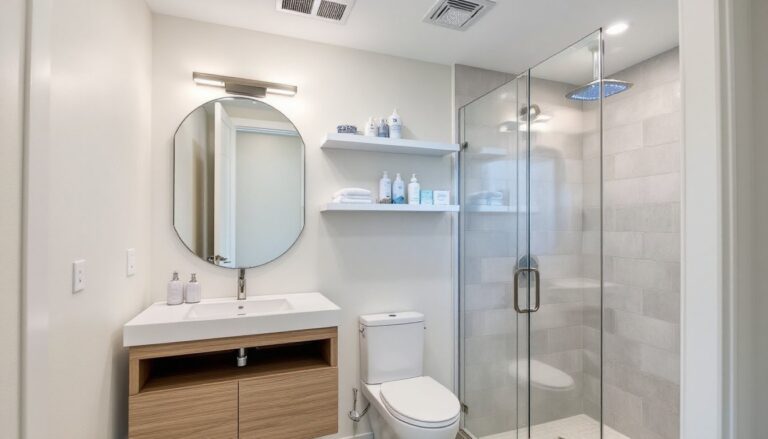
A half bath (toilet and sink, no shower) is the cheapest project. Expect $2,500–$5,000 for a cosmetic refresh with new fixtures, vanity, flooring, and paint. No plumbing complications, minimal electrical work, and a quick timeline, usually 1–2 weeks. Master baths run the longest and cost the most, typically $12,000–$25,000 or higher because you’re likely adding heated floors, a larger vanity with two sinks, a luxury shower or soaking tub, and quality finishes. Guest baths fall in the middle: $5,000–$12,000 for a functional, attractive space that doesn’t require the premium bells and whistles.
Bath remodel cost also hinges on whether you’re keeping plumbing and electrical in the same spots (easier, cheaper) or relocating them (harder, pricier). A 5×8-foot bathroom is typical for a guest or second bath. A 7×10-foot master bath gives room for dual vanities and a separate shower. Relocating a toilet adds $2,000–$4,000. Moving a shower or tub adds another $1,500–$3,500. Keep fixtures where they are, and you’ll save 15–20% right there.
Breaking Down Component and Material Costs
Here’s where the actual dollars land. A new toilet costs $150–$400 (standard two-piece to dual-flush). Vanities run $300–$2,000 depending on size and finish quality: custom cabinetry can double that. Faucets range from $100 basic chrome to $500+ for brushed nickel or matte black finishes.
Flooring is a major line item. Ceramic or porcelain tile averages $3–$12 per square foot installed. Natural stone (marble, slate, granite) climbs to $10–$30 per square foot. Vinyl plank flooring is budget-friendly at $2–$5 installed but won’t last as long as tile in a wet environment. Wall tile for shower surrounds and accents runs $4–$20 per square foot depending on material and pattern complexity.
Fixtures and hardware add up: shower valve (trim kit and rough-in) costs $150–$500. A standard shower head is $50–$200. Medicine cabinets run $100–$400. Mirrors, lighting, and towel bars might total $300–$800. Tub installation (if you’re replacing) adds $1,000–$3,000 for labor alone, plus the tub itself at $400–$2,000.
A bathroom renovation cost breakdown for materials on a mid-range 5×8 project might look like: flooring ($800–$1,500), wall tile ($600–$1,200), vanity and sink ($600–$1,500), toilet ($200–$400), faucet ($150–$400), fixtures and hardware ($400–$800), paint and minor finishes ($200–$400). That’s roughly $3,000–$6,000 in materials before labor.
Professional Labor vs. DIY Savings
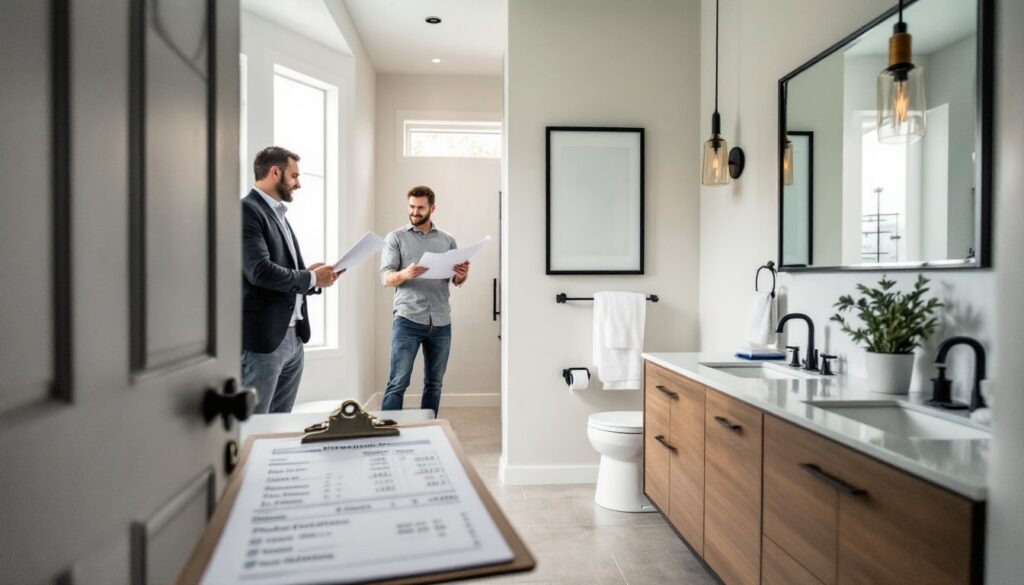
Hiring licensed trades is the safe play for most of the work. Plumbers charge $100–$150 per hour and typically need 15–30 hours for a full remodel (rough-in, drain relocation, water supply lines). Electricians run $75–$150 per hour and handle lighting, exhaust fans, and outlet placement, usually 8–15 hours. General contractors oversee the whole job and coordinate subs: expect 20–40% markup on materials plus hourly labor.
DIY saves money but has limits. You can handle demolition, painting, installing fixtures (if the rough-in is already done), and final trim work. You cannot, and should not, legally, do licensed plumbing or electrical work in most jurisdictions without a permit. Rough-in plumbing and electrical absolutely require professionals: one mistake costs thousands in callbacks or code violations.
A realistic DIY scenario: hire plumber and electrician for the heavy lifting, handle demolition, surface prep, painting, and fixture installation yourself. You might cut $2,000–$4,000 off labor costs. A full DIY bathroom redo (keeping plumbing and electrical where it is) might save $3,000–$5,000, but assumes you own the right tools, understand local codes, and have time.
ROI and Money-Saving Strategies
A bathroom renovation cost that seems high upfront often pays back. Bathrooms typically return 50–80% of renovation costs in increased home value, making them one of the highest-ROI home improvements alongside kitchens. A $12,000 remodel might add $6,000–$9,600 to resale value.
Cost-saving strategies: buy mid-range tile and finishes instead of designer brands, you’ll save 20–30% with zero loss in appearance. Stick with standard fixture sizes and layouts to avoid custom-order delays and premiums. Do one major upgrade (like a fancy tile shower) and keep other elements simple. Refinish existing cabinetry instead of replacing it, a fresh coat of paint and new hardware costs $300–$600 and transforms the space. Buy fixtures from online retailers rather than showrooms: the same brands cost 15–25% less.
Time flexibility saves cash too. Off-season projects (winter, early spring) sometimes mean contractor discounts. Getting multiple bids from trusted contractors, check bathroom renovation costs in 2026 planning guides and local resources like HomeAdvisor’s cost estimators, keeps you honest on pricing. Avoid scope creep: every “while we’re in there, let’s…” adds time and money.
Conclusion
Your bathroom remodel cost depends on scope, materials, location, and labor. A half bath runs $2,500–$5,000: a full guest bath, $5,000–$12,000: a master bath, $12,000–$25,000+. Smart material choices, selective DIY work, and working with experienced contractors keep budgets realistic. Plan for contingencies (10–15% buffer), get bids in writing, and remember: the cheapest quote often isn’t the best. A solid bathroom renovation pays dividends in daily comfort and home value for years to come.