Table of Contents
ToggleA small bathroom doesn’t have to feel cramped or outdated. Whether you’re working with a 5×8 footprint or tackling bathroom renovations for small bathrooms in an older home, strategic updates can dramatically improve both function and style. The good news? A smart small bathroom redo doesn’t require gutting the space or very costly. By focusing on layout optimization, smart storage, lighting upgrades, and thoughtful finishes, homeowners can transform a cramped powder room or guest bath into a space that feels twice its size. This guide walks you through the most impactful changes, the ones that deliver real results without unnecessary complexity or cost.
Key Takeaways
- A small bathroom redo starts with precise measurement and space assessment—map your layout, traffic flow, and fixture locations before making any changes to unlock better organization and function.
- Smart storage solutions like vertical cabinets, over-the-toilet shelving, and under-sink organizers are essential to reduce clutter and make the space feel significantly larger.
- Lighting upgrades, especially LED vanity lights and large mirrors (36+ inches wide), instantly transform perception of space and are among the highest-impact investments in bathroom renovations for small bathrooms.
- Budget-friendly fixture swaps—including modern faucets, minimal hardware, and wall-mounted pieces—refresh the look without the cost of a full renovation or extensive plumbing labor.
- Light, cool paint colors (soft whites, pale grays, light blues) and strategic tile updates (fresh backsplash or accent strips) expand the visual sense of space more than dark or busy finishes.
- Keeping existing functional fixtures and focusing selective spending on storage, lighting, and finishes allows homeowners to transform a small bathroom on a fraction of typical renovation costs.
Plan Your Layout and Assess Your Space
Before ordering a single tile or fixture, take time to measure and document what you’re working with. Grab a tape measure and record the dimensions of your bathroom wall-to-wall and floor-to-ceiling, plus the location of plumbing, electrical outlets, and windows. Sketch a rough floor plan on graph paper or use a simple digital tool, this becomes your reference as you plan. For small bathrooms, every inch matters. Identify traffic flow: where does the door swing? Does the toilet block the sink or shower? Poor flow kills the sense of space more than square footage itself.
Once you’ve mapped the basics, decide what stays and what goes. Keeping an existing toilet, sink, and tub (if it’s functional) saves thousands in plumbing labor and makes bathroom renovations for small bathrooms far more manageable. But, if your fixtures are damaged, inefficient, or installed in awkward locations, replacement might unlock a better layout. Look for opportunities to shift things slightly, moving a sink 12 inches can make all the difference. Also assess your current storage. Small bathrooms typically lack cabinetry, which compounds clutter and crampedness. Note wall space above the toilet, under the sink, and on open walls where you could add shelving or tall cabinets later. Taking stock now prevents expensive changes mid-project.
Budget-Friendly Fixture and Finish Updates
Not all bathroom improvements require major labor or expense. Swapping fixtures, faucets, towel bars, and cabinet hardware, costs little but reads as a refresh. A brushed nickel or matte black faucet ($80–200) instantly updates the look compared to chrome or brass, and modern, minimal designs feel less cluttered in tight spaces.
When shopping for fixtures in a small bathroom redo, choose pieces with cleaner lines and smaller profiles. Wall-mounted faucets save counter space, and pedestal sinks look less bulky than vanities, though they sacrifice storage. If you can’t sacrifice storage, consider a narrow vanity (24–30 inches wide) with open shelving above or beside it for visual lightness. For towel bars and robe hooks, opt for single rather than double bars to avoid visual crowding.
If your toilet works, leave it. Replacing it typically requires a plumber and costs $300–700 installed. But, if you’re replacing it anyway, a compact elongated bowl (slightly shorter depth) saves a few precious inches. Soft-close seats add luxury without major cost ($50–120).
Replace Hardware and Faucets
Swapping cabinet knobs and handles is one of the quickest wins in a small bathroom renovation. Remove the old hardware, fill the holes with matching handles (most standard spacing is 3.5–4 inches), and tighten. This alone refreshes the look for under $100. Choose minimalist designs, oversized knobs eat visual space. Matte black or brushed brass hardware feels contemporary without looking trendy and won’t date your remodel in five years.
For faucets, measure your sink’s hole configuration first (single-hole, center-set, or widespread). A single-hole widespread faucet looks sleek and doesn’t clutter the counter. When replacing, turn off the water supply at the shutoff valve under the sink, unscrew the old faucet’s supply lines using an adjustable wrench, and remove the old unit. Install the new faucet following the manufacturer’s instructions, reconnect supply lines, and test for leaks. Most homeowners can handle this without a plumber, saving $150–300 in labor.
Maximize Storage and Organization
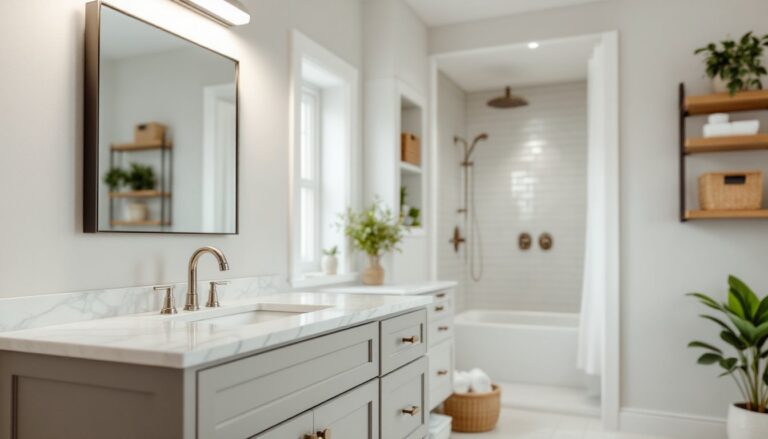
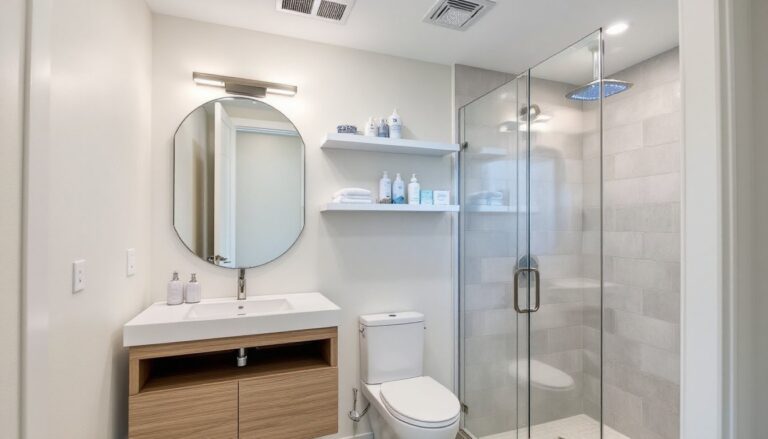
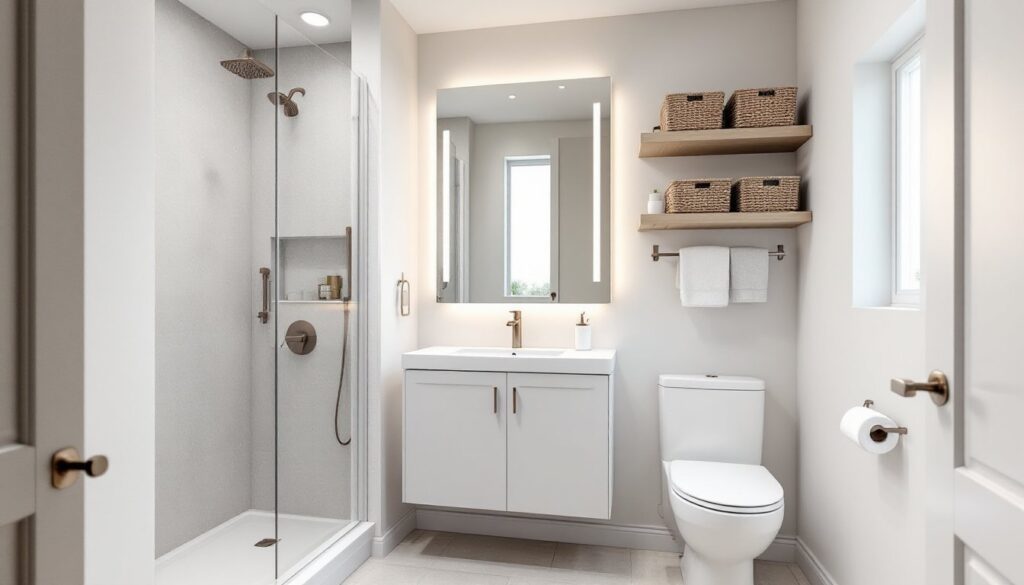
Storage is everything in a small bathroom. Without it, even a freshly painted, newly tiled space feels chaotic. Start with vertical solutions: tall, narrow cabinets (12 inches wide, floor-to-ceiling) slip into corners or beside the toilet without blocking sight lines. Open shelving above the toilet adds 6–12 cubic feet of space and costs under $150 for materials and basic hardware. Wall-mounted medicine cabinets recessed into the stud cavity don’t jut into the room, perfect for small baths.
Drawers and pull-outs inside existing vanities maximize usable space better than open shelves. If your vanity has a single deep cabinet, add a pull-out tray or two ($30–80) so you’re not digging to the back every time. Under-sink organizers (tiered shelves or pull-out baskets) multiply usable space without adding bulk. Over-the-toilet shelving units range from flimsy ($40) to sturdy ($200), but even a basic metal frame unit creates 3–4 shelves of storage. Keep baskets and clear containers to corral small items, toothbrushes, travel bottles, cleaning supplies, reducing visual clutter.
Don’t overlook the backs of doors and inside of cabinet doors. Adhesive hooks, small shelves, or slim pull-out racks hold hair tools, robes, or cleaning supplies without taking up floor space. For a small bathroom redo that sticks to budget, affordable storage solutions are your secret weapon. You don’t need bespoke cabinetry: you need smart, vertical thinking and a few well-placed containers.
Lighting and Mirror Upgrades for Visual Impact
Lighting transforms small spaces faster than almost any other upgrade. Dark, shadowy bathrooms feel smaller and more prison-like. Bright, even light makes 60 square feet feel airy. Add a combination of task lighting (vanity lights flanking or above the mirror) and ambient light (recessed ceiling fixtures or a bright flush-mount). Vanity lighting should provide at least 75 watts of LED equivalent (roughly 800–1000 lumens) spread across the mirror to eliminate shadows when grooming.
LED vanity lights ($60–150) use far less energy than older incandescent or fluorescent units and last 15+ years. If you’re replacing existing fixtures, turn off power at the breaker, remove the old fixture, and install the new one following the manufacturer’s diagram. Most are simple wire connections, no plumber needed. If you’re adding recessed lights, you’ll likely need an electrician if wiring isn’t already in place.
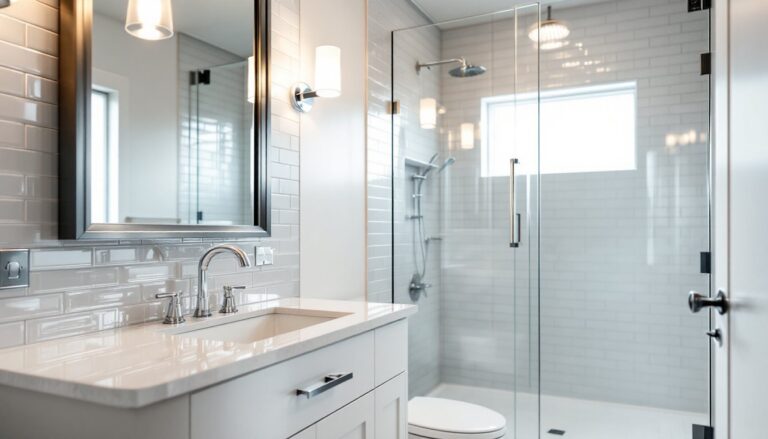
Mirrors amplify light and create the illusion of depth. A large mirror (36+ inches wide) bounces light across the room and makes the space feel bigger than a small, standard bathroom mirror. If your current mirror is small, replace it with a wider option or add a second mirror on an adjacent wall. Backlit mirrors ($150–400) add sophistication and even light, eliminating shadows, ideal if your budget allows. For a budget-friendly redo, a frameless mirror with simple chrome or brass clips ($60–100) feels modern without the cost of custom cabinetry. Mount it as high as practical to draw the eye upward and emphasize ceiling height.
Paint, Tile, and Surface Refresh Strategies
Paint is the cheapest, highest-impact change in any bathroom redo. Light, cool colors (soft whites, pale grays, light blues) expand the feeling of space, while dark or warm tones compress it. In a small bathroom, avoid dark accent walls, they visually shrink the room. Stick to one light, cohesive color on all walls and ceiling. Use semi-gloss or satin finish paint ($30–50 per gallon) rather than matte, as the subtle sheen reflects light and resists moisture better in humid bathrooms.
Prep work is crucial. Sand the walls lightly, fill holes with joint compound, sand again, and prime any new areas. Most bathrooms need 1–2 gallons of paint and primer. Apply two coats for even coverage and durability. Painting is a weekend DIY project that pays huge dividends, plan 8–12 hours of labor including prep.
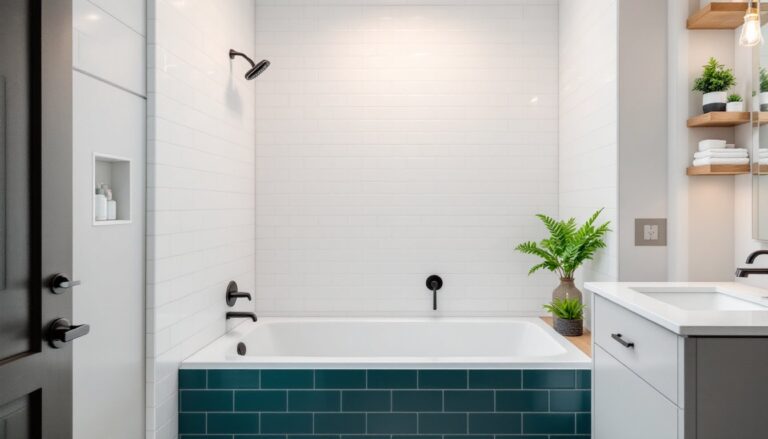
Tile updates don’t require a full remodel. If your tile is intact but dated, focus on the backsplash (2–3 square feet behind the sink) or the shower surround’s accent strip. Modern, minimal tile (subway, hexagon, or simple subway with contrasting grout) feels fresher than busy patterns. A small bathroom remodeling strategy that works: keep existing floor tile if it’s neutral: refresh the walls. New tile runs $5–15 per square foot (material only), plus grouting and sealing. If you’re inexperienced with tile, hire a pro for precision and warranty.
For the floor, if tiles are cracked or stained, a small bath renovation benefits from light, large-format tiles (12×24 inches or larger) rather than tiny mosaics. Larger tiles create fewer grout lines and feel less busy in a cramped space. Porcelain tile ($3–8 per sq ft) is more durable and stain-resistant than ceramic in bathrooms. If the existing floor is serviceable, consider a fresh grout cleaning and sealing ($150–250 pro job) before tiling. Caulk or seal the gap where tile meets the wall with silicone caulk (not grout) to allow for movement and prevent water damage. Proper surface preparation and sealing prevent future mold and water issues.
Conclusion
A successful small bathroom redo balances smart planning with selective spending. Start by measuring, mapping, and honestly assessing what can stay. Invest in storage and lighting, the two biggest drivers of space perception and function. Swap out fixtures and hardware for modern, minimal pieces that feel less bulky. Refresh with light paint and strategic tile updates. Resources like Remodelista’s small bathroom ideas and This Old House’s guides for small bathrooms offer design inspiration when you need a visual spark. With thoughtful decisions and realistic expectations, even the tiniest bathroom can become a functional, attractive retreat, and you’ll spend a fraction of what a full renovation costs.