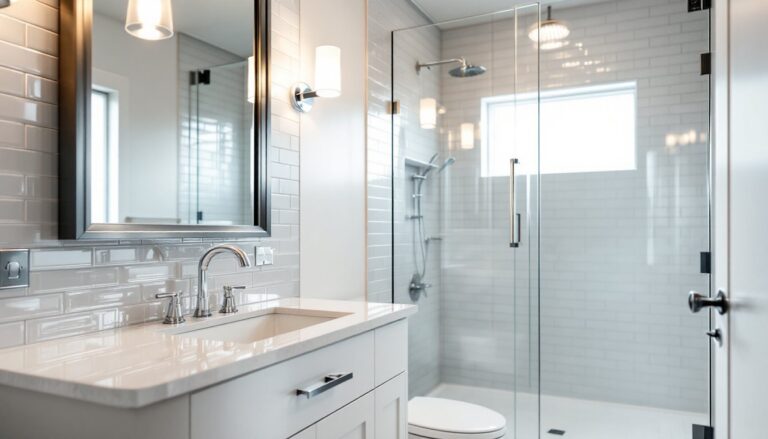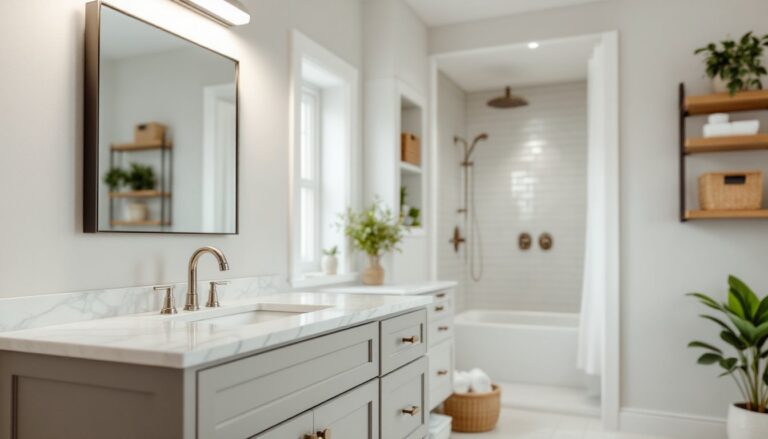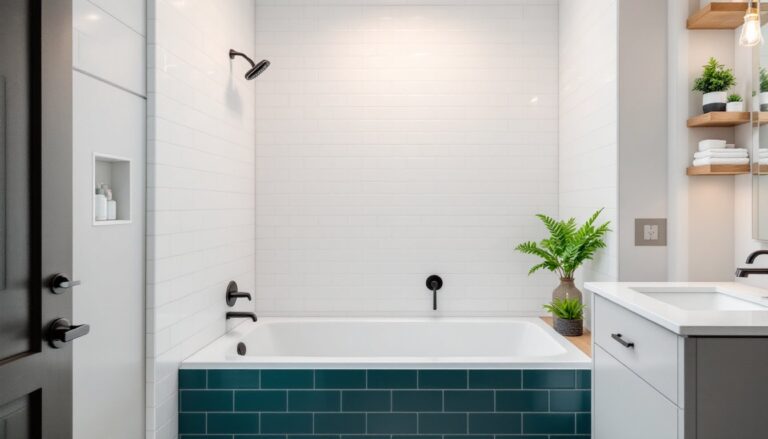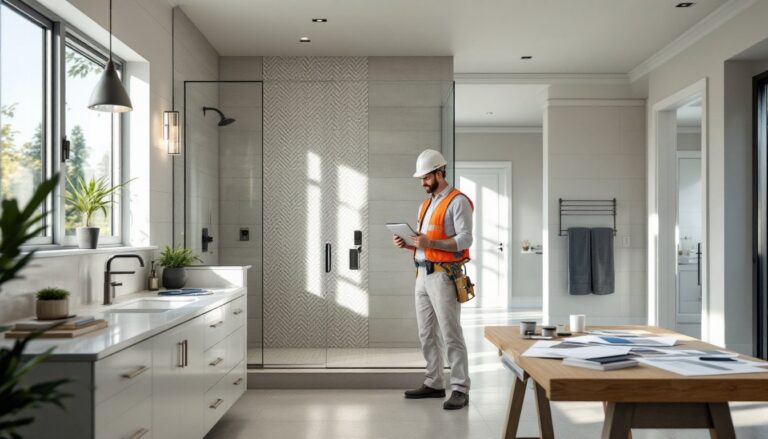
Table of Contents
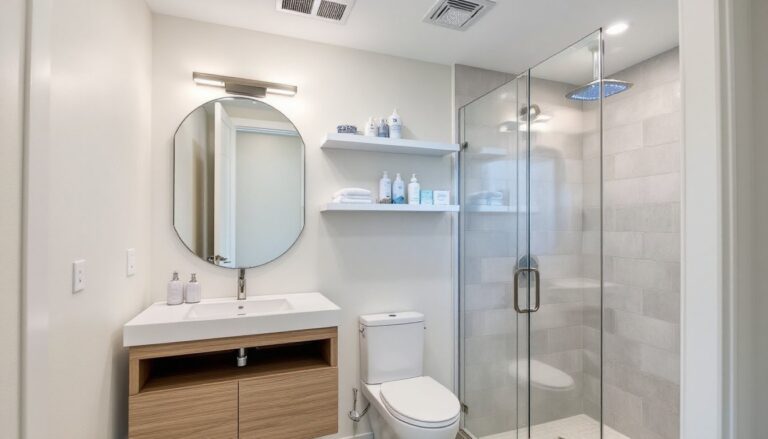
ToggleA cramped bathroom doesn’t have to stay that way. With smarter fixtures, a sharper layout, and a few clever finish choices, even a 5×8 powder room can feel twice its size in 2026. This guide walks through 15 practical small bathroom renovation ideas, from wall-mounted toilets and floating vanities to lighting tricks and tile patterns that pull double duty. Whether someone’s planning a full gut job or just a weekend refresh, the goal here is the same: more function, more breathing room, and a finished space that actually fits how they live.
Key Takeaways
- Proper planning and accurate measurements are essential before starting a small bathroom renovation, including checking local building codes and setting a realistic budget of $3,500–$15,000.
- Wall-mounted toilets and floating vanities are the most impactful space-saving fixtures, creating an illusion of a larger room while improving functionality.
- Layered lighting with ambient, task, and accent layers combined with large mirrors and soft color palettes instantly make small bathrooms feel significantly bigger.
- Budget-friendly upgrades like re-caulking, painting the vanity, and swapping hardware deliver outsized visual returns without requiring professional contractors.
- Prioritize waterproofing, proper exhaust ventilation, and GFCI protection during renovation to avoid costly mistakes and ensure long-term durability.
- Large-format tiles with vertical patterns and continuous flooring into adjacent rooms create visual expansion in compact spaces while maintaining modern 2026 design trends.
Plan Your Small Bathroom Renovation Like a Pro
Before swinging a hammer, measure twice, then measure again. Sketch the existing footprint with stud locations, joist direction, and plumbing rough-ins marked. Most residential bathrooms sit on 16-inch on-center framing, and moving a toilet flange more than a few feet usually means cutting into the subfloor.
Set a realistic scope. Cosmetic swaps (paint, fixtures, mirror, hardware) rarely need permits. Moving drains, relocating outlets, or altering load-bearing walls usually do, and IRC requirements vary by jurisdiction, so a quick call to the local building department saves headaches later.
Budget honestly. National averages for a small bathroom remodel run anywhere from $3,500 to $15,000 depending on material grade and labor market. Detailed cost breakdowns from home renovation cost guides help set expectations before tearing anything out. Homeowners tackling larger regional projects, like a complete Calgary bathroom renovation, should plan for 3–6 weeks of downtime.
Layout and Space-Saving Fixture Ideas
Layout is where small bathroom renovation ideas live or die. The standard NKBA clearance is 21 inches in front of a toilet or vanity (30 inches is better), and a shower needs at least a 30×30-inch interior. If those numbers don’t fit, the layout needs rethinking, not the code.
Swapping a tub for a curbless walk-in shower instantly opens sightlines. A corner sink or a 24-inch vanity (instead of the typical 30-inch) frees up 6 inches of walking lane. Pocket doors recover the 9 square feet a swinging door eats up, though they require opening the wall to install a frame kit.
Wall-Mounted Toilets, Vanities, and Floating Storage
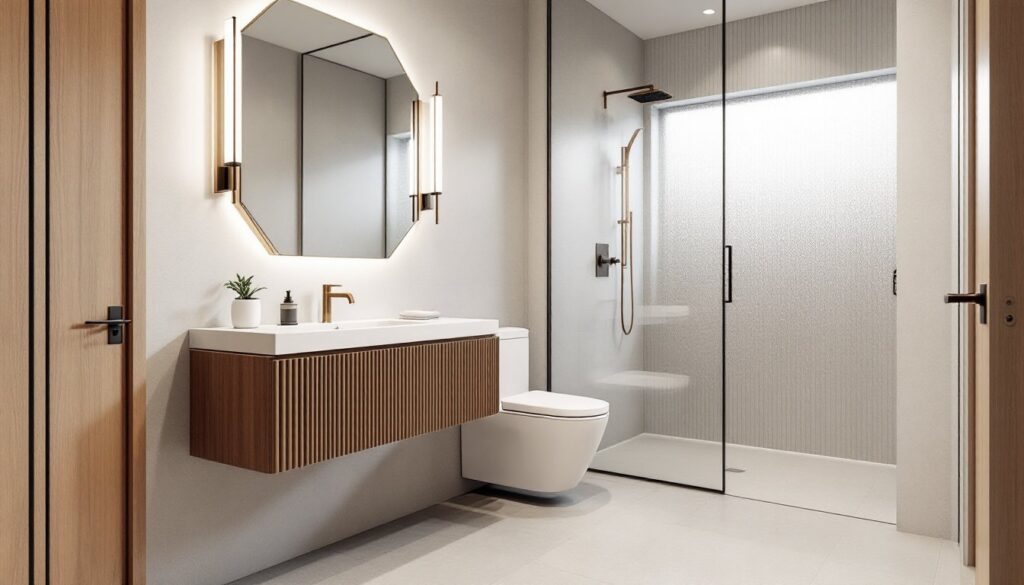
Wall-hung fixtures are the single biggest visual win in a tight room. A wall-mounted toilet with an in-wall Geberit-style carrier hides the tank inside the wall, saving roughly 9 inches of floor depth and making mopping effortless. Expect to frame a 2×6 wet wall to house the carrier.
Floating vanities do the same trick, the visible floor underneath tricks the eye into reading the room as larger. Pair with recessed medicine cabinets set between studs (standard cavity is 14.5 inches wide) for storage that doesn’t steal an inch of floor space.
Color, Lighting, and Visual Tricks That Make Small Bathrooms Feel Bigger
Light, reflective surfaces stretch a room. Off-whites, soft greiges, and pale blues in an eggshell or satin finish bounce light without the glare of high-gloss. One gallon of bathroom-rated paint covers roughly 350 square feet, usually plenty for walls and ceiling in a small bath.
Layer the lighting. A single overhead fixture creates harsh shadows and makes the space feel like a closet. Aim for three layers:
- Ambient, recessed LED cans or a flush-mount center fixture
- Task, sconces or vertical bars flanking the mirror at 60–66 inches off the floor
- Accent, toe-kick LEDs under a floating vanity or a small shower niche light
A large mirror, ideally wall-to-wall above the vanity, doubles perceived square footage. Designers curating the quiet luxury small bathroom look consistently lean on oversized mirrors and warm 2700K–3000K bulbs for the illusion of depth.
Budget-Friendly Upgrades With Big Impact
Not every small bathroom redo idea needs a contractor. Several weekend projects deliver outsized returns:
- Re-caulk the tub and vanity. Old, mildewed caulk ages a room by a decade. Use a 100% silicone for wet areas: cure time is typically 24 hours before water exposure.
- Swap the faucet and showerhead. A WaterSense-labeled showerhead saves about 2,700 gallons a year per household.
- Replace the toilet seat and supply lines. Five-minute job, massive freshness gain.
- Paint the vanity. Sand to 220-grit, prime with a bonding primer like Zinsser B-I-N, then two coats of cabinet enamel.
- Add a new mirror and hardware. Brushed nickel and matte black both hide water spots better than chrome.
For more curated bathroom remodel ideas for small bathrooms, design-led sources like Remodelista’s small space guides catalog real-world projects worth borrowing from. Homeowners in older housing stock, think a typical Pittsburgh bathroom renovation on a pre-1960s home, often find these cosmetic wins buy time before a full gut.
Stylish Tile, Material, and Finish Choices for 2026
Tile choice can make a tiny bathroom feel custom or claustrophobic. A few rules that hold up:
- Large-format tile (12×24 or 24×24) on floors reduces grout lines and visually expands the floor. Use an uncoupling membrane like Schluter DITRA over wood subfloors to prevent cracking.
- Vertical stack or vertical subway on a feature wall draws the eye upward, useful when ceilings are 8 feet or lower.
- Continuous flooring that runs from the main floor into the bathroom (no threshold) erases the visual break and adds perceived space.
For 2026, expect to see warm neutrals, fluted wood-look vanities, unlacquered brass, and zellige-style handmade tile. Matte porcelain reads more modern than glossy ceramic and hides water spots. Heated floors (electric mat systems run roughly $8–$15 per square foot in materials) are a small-bathroom luxury that’s still affordable because the square footage is low. Regional design trends, like the warm wood tones popular in a Markham bathroom renovation or the coastal-influenced palettes seen in Long Island bathroom renovation projects, show how location nudges material choices.
Common Mistakes to Avoid in a Small Bathroom Remodel
Most small bathroom renovation ideas fail in execution, not concept. The usual suspects:
- Skipping the exhaust fan. Code (IRC M1505) requires at least 50 CFM for intermittent ventilation. An undersized fan invites mold within months.
- Ignoring waterproofing. Cement board alone isn’t waterproof. Use a liquid membrane (RedGard) or sheet membrane (Kerdi) behind shower tile.
- Choosing fixtures before finalizing the layout. A 60-inch vanity won’t fit a 54-inch wall, no matter how nice it looks online.
- Forgetting GFCI protection. All bathroom outlets must be GFCI-protected per NEC. This isn’t optional.
- Over-tiling small spaces with busy patterns. One feature element is plenty.
- Wearing no PPE during demo. Safety glasses, an N95 mask, and cut-resistant gloves are non-negotiable when ripping out old tile or vanities, old grout can contain silica dust.
Second opinions help. Comparing notes against detailed regional walkthroughs, like a Raleigh bathroom renovation guide or an Aurora bathroom renovation breakdown, often surfaces issues a homeowner hasn’t considered.
A small bathroom is unforgiving, every inch and every decision shows. But that same constraint is what makes the finished project so satisfying. Plan the layout first, spend where it shows (tile, lighting, fixtures), and don’t cut corners on waterproofing or ventilation. Done right, a 40-square-foot room can punch well above its weight.