Table of Contents
ToggleSmall bathroom renovations don’t have to drain your budget or sacrifice style. In fact, a small bathroom redo is often the most cost-effective home improvement project you can tackle because less square footage means lower material costs and simpler logistics. Whether you’re working with a tight powder room, a cramped bathroom in an older home, or a second bath that’s seen better days, the right strategy turns limitations into advantages. This guide walks you through assessing your space, prioritizing the upgrades that matter most, and making smart choices about layout, storage, and materials that’ll make your small bathroom feel and function like it’s twice its actual size.
Key Takeaways
- A small bathroom remodel is one of the most cost-effective home improvements because less square footage means lower material costs and simpler logistics.
- Assess your space thoroughly before starting—measure dimensions, identify plumbing and electrical locations, and note pain points to avoid costly changes later.
- Keep the existing layout and plumbing fixed to control expenses; moving drains and electrical lines significantly increases complexity and budget.
- Prioritize high-impact upgrades you use daily: the vanity, fixtures, lighting, and ventilation fan deliver the biggest visual and functional payoff in a small bathroom.
- Maximize storage and spaciousness through vertical thinking: recessed cabinets, wall-hung vanities, and tall shelving pull dead space into action without reducing floor area.
- Layer lighting with ambient, vanity, and accent LED options, and use light colors and mirrors to reflect light and create the illusion of a larger bathroom.
Assess Your Current Space and Set Realistic Goals
Before you swing a hammer or order a single tile, grab a tape measure and understand what you’re actually working with. Measure the room length, width, and ceiling height, then note where the door swings, where windows sit, and, crucially, where existing plumbing and electrical lines run. These last two points will shape what you can realistically move and what must stay.
Walk through the room and list the pain points: insufficient storage, dim or unflattering lighting, leaks around the tub, poor ventilation that breeds mold, aging fixtures that are corroding or hard to clean. Talk to anyone who uses the space regularly. Do they struggle to find counter space? Is the single vanity a bottleneck for a busy household? Does the toilet run constantly, jacking up water bills?
Next, confirm what stays fixed. Plumbing and electrical rough-in locations are expensive to relocate: load-bearing walls can’t move without structural engineering. If your drain stack is in one corner and you want the toilet in another, the cost and complexity jump significantly. Managing scope means managing budget.
Finally, define your remodel goals clearly: more storage, easier cleaning, updated fixtures and finishes, better lighting, improved accessibility, or stronger resale appeal. A small bathroom redo with clear priorities avoids the scope creep that derails timelines and budgets.
Prioritize High-Impact Upgrades on a Budget
In a small space, every dollar should pay dividends in daily use. Focus spending on the items you interact with or see every single day: the vanity, toilet, shower or tub surround, lighting, and ventilation fan. These create the biggest visual and functional impact.
Keeping the existing layout is your secret weapon for budget control. Moving plumbing and electrical requires permits, rerouting pipes and conduit, and patching walls, work that eats budget fast. If the current sink, toilet, and shower location functions reasonably well, keep them. You’ll redirect savings toward higher-quality fixtures in those spots.
Choose mid-range, proven finishes over ultra-luxury materials. A ceramic or porcelain tile at $3–6 per square foot that’s durable and easy to clean beats a trendy natural stone that requires sealing. A solid-surface vanity top (like Corian or engineered quartz) costs less than marble and won’t stain or chip as easily. Here’s the upside of small bathrooms: because you’re using fewer square feet or fewer fixtures, a higher-end product becomes surprisingly affordable. Spending $800 on a beautiful vanity for a 5-by-8-foot bathroom feels different than the same vanity in a 20-by-15-foot master bath.
Referencing bathroom renovation costs helps you benchmark what typical upgrades cost in your region, so you allocate your budget wisely across vanity, fixtures, tile, labor, and contingency.
Optimize Layout and Storage Solutions
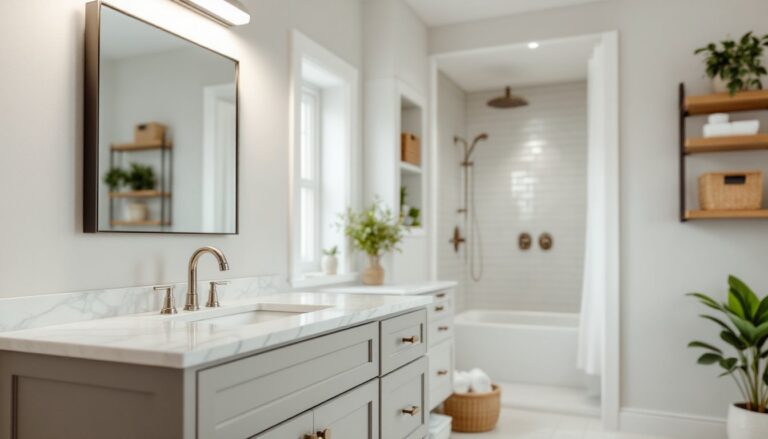
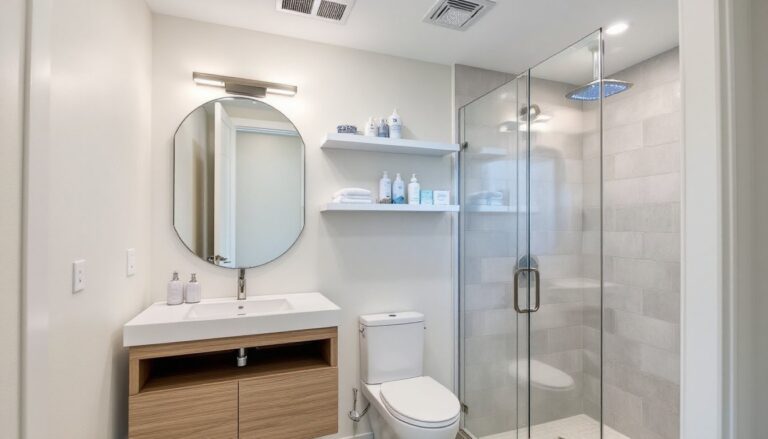
Storage is the biggest complaint in small bathrooms, and the cure is vertical thinking. Tall cabinets that reach the ceiling, open shelves above the toilet, and recessed medicine cabinets pull dead space into the equation. A recessed cabinet doesn’t protrude into the room: it fits between wall studs (assuming they’re 16 inches on center, the standard), so you gain storage without losing square footage.
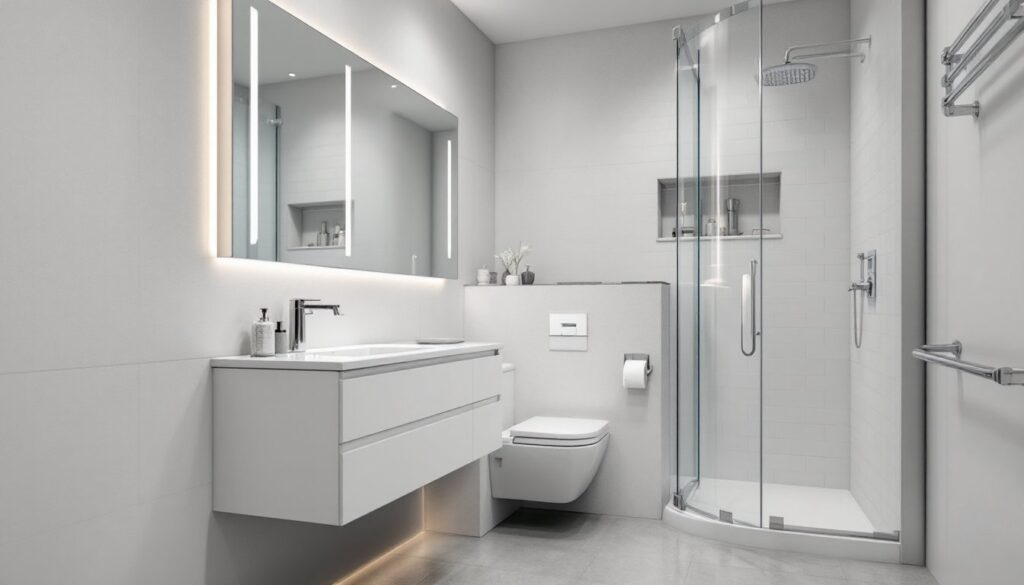
Wall-hung vanities and wall-mounted toilets are game-changers. They float a few inches off the floor, making the room feel more spacious and, just as important, making it much easier to clean the floor. Pedestal sinks save space but offer zero storage: a wall-hung vanity with 12–18 inches of depth provides counter and drawer space without dominating the room.
Consider a single sink instead of double vanities. Yes, it’s a compromise in a multi-person household, but it keeps the bathroom compact and opens counter surface. A shallow vanity (18–20 inches deep instead of the typical 21–24) saves another few inches of floor space, which matters when every inch counts.
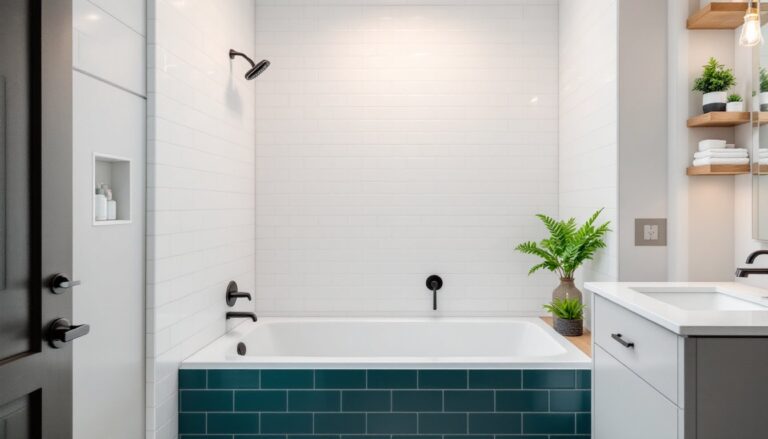
For the shower, integrate storage: a recessed niche (carved into the wall between studs) holds bottles without shelves eating into the footprint. If you’re installing a new tub or shower, plan a single-sink configuration and built-in organizers or drawer dividers in your vanity to wrangle toiletries. These habits prevent clutter that makes small spaces feel cramped.
Lighting and Color Strategies for Spaciousness
Lighting layers matter enormously in small bathrooms. Overhead ambient lighting (a recessed fixture or small flush-mount) provides base illumination. Dedicated vanity or mirror lighting, ideally on both sides of the mirror to eliminate shadows on the face, is non-negotiable. Many small bathrooms have only a bare overhead bulb, which is functional but unflattering and creates harsh shadows.
Consider accent lighting: an LED strip along the toe-kick of the vanity, above cabinets, or around a mirror adds warmth and makes the room feel larger. LED strips are efficient, run cool, and don’t require standard fixtures. Install a dimmer on your ambient light so you can adjust mood without a harsh glare at 6 a.m.
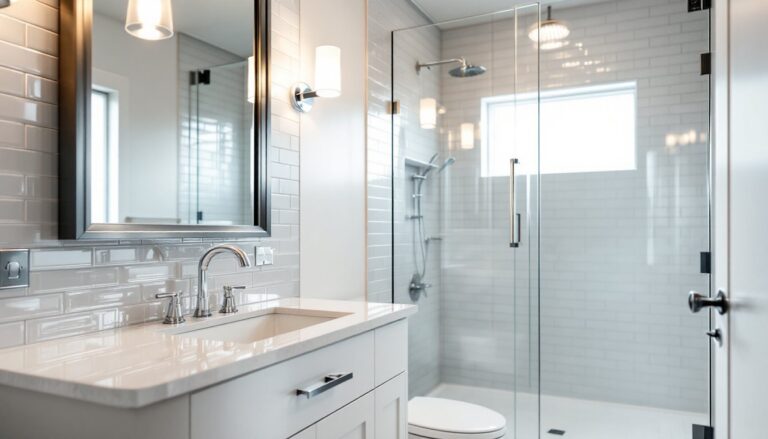
Color and finish choices expand the perceived space. Light, neutral wall colors (soft whites, pale grays, warm beiges) reflect light and don’t visually close in the room. If you want color, a single accent wall works: painting all four walls in dark tones shrinks the space psychologically. Continuous flooring and wall finishes, the same tile running from the vanity area to the shower without a visual break, make the eye travel smoothly and the room feel larger.
Large mirrors or mirrored cabinets reflect light and create depth. A medicine cabinet with a mirrored door pulls double duty: storage plus the illusion of space. A floor-to-ceiling mirror on one wall (if plumbing and framing allow) is a simple, renter-friendly trick that works.
DIY vs. Professional Help: What to Know
Be honest about skill, tools, and time. Painting, swapping hardware, installing simple lighting, and replacing a showerhead are solid DIY tasks if you’re comfortable with basic tools and have a weekend or two. Accessories and décor are always DIY territory.
Plumbing relocation, new electrical circuits, ventilation duct installation, structural changes, waterproofing, and tile work in wet areas (shower surround, tub) usually require professionals. Improper waterproofing behind a shower surround leads to hidden mold and structural rot that becomes an expensive problem. Rough plumbing requires knowledge of trap arms, venting, and code-compliant layouts. Electrical work in wet areas demands GFCI protection and proper grounding, mistakes here pose safety risks.
Before hiring, confirm that any contractor is licensed, insured, and bonded. Verify references, check online reviews, and ask to see recent bathroom projects. Use a written contract that details scope, timeline, materials, payment schedule, and warranty. Obtain permits where required: skipping permits invites code violations and insurance complications.
A professional contractor or licensed plumber and electrician cost more upfront, but they avoid the costly mistakes that add thousands in rework. In a small bathroom renovation, the labor typically exceeds material cost, so investing in skilled trades protects your budget and timeline.
DIY vs. Professional Help: What to Know
Plenty of homeowners start a small bathroom remodel and hit unexpected snags. Reference sites like HomeAdvisor cost estimators to benchmark material and labor costs in your area. Check design inspiration on Remodelista’s bathroom resource guide for real examples of thoughtful small-space design. Tools like ImproveNet let you connect with local contractors and get accurate quotes.
The best small bathroom remodels balance strategic spending (high-impact items), smart layout choices (keeping plumbing fixed, maximizing storage), and honest assessment of what you can DIY versus what needs a pro. Start with a clear plan, communicate with your contractor or team, and reserve a 10–15% contingency for surprises. Small spaces mean faster project timelines and lower total costs, so your return on investment is strong, and the daily improvement to your home’s most-used room pays dividends every single day.
Conclusion
A small bathroom remodel delivers outsized returns when you keep the fundamentals tight: retain the basic layout to control costs, target high-impact upgrades (vanity, fixtures, lighting, ventilation), maximize storage and light through smart design, and use durable, moisture-resistant materials suited for wet areas. Know when to DIY and when to hire a licensed professional. Small bathrooms aren’t limitations, they’re opportunities to create a beautifully functional space that works hard and looks great for years to come.