Table of Contents
ToggleA small bathroom can feel like a puzzle with too many pieces and not enough table. The toilet bumps the vanity, the door clips the tub, and there’s nowhere to hang a towel that doesn’t drip on something. The good news? Tight square footage forces smart decisions, and smart decisions usually mean a better-looking, better-functioning room. This guide walks through how to renovate a small bathroom from budget through finish work, with honest takes on what’s worth the effort and what’s better left to a pro.
Key Takeaways
- A cosmetic small bathroom renovation costs $2,500–$6,000, while a full gut remodel ranges $10,000–$20,000+, so build a detailed line-item budget with a 15% contingency for unexpected issues.
- Space-saving layout tweaks like swapping hinged doors for pocket doors, installing wall-hung sinks, and using frameless glass showers can make a small bathroom feel significantly larger without major plumbing work.
- Layer your lighting with vanity sconces at 65 inches high, ceiling fixtures, and damp-rated LEDs in the shower using 3000K color temperature to maximize brightness and visual space.
- Larger format tiles (12″ x 24″ or bigger) with vertical stacking or herringbone patterns create visual openness, while mildew-resistant paint in lighter, cooler tones makes walls recede.
- DIY cosmetic tasks like demo, painting, vanity installation, and tiling are manageable, but hire a pro for plumbing moves, electrical work, waterproofing, and permit-required tasks to avoid costly mistakes.
- Common renovation pitfalls include underpowered exhaust fans, skipping material acclimation time, dark grout with white tile, cheap drain valves, and ignoring subfloor damage—address these proactively to prevent expensive fixes.
Planning Your Small Bathroom Renovation Budget and Timeline
Before anyone swings a hammer, the numbers need to make sense. A cosmetic small bathroom renovation (paint, fixtures, vanity, mirror) typically runs $2,500–$6,000 in materials for a 40 sq ft space, while a full gut with new tile, plumbing rough-in, and electrical can push $10,000–$20,000+ depending on region and material grade.
Build a line-item spreadsheet covering demo, plumbing, electrical, drywall, tile, fixtures, vanity, lighting, paint, and a 15% contingency. Old houses hide surprises, rotted subfloor under the toilet flange is practically a rite of passage.
Timeline-wise, expect 2–3 weekends for a DIY refresh and 3–5 weeks for a full remodel with trades. For deeper planning frameworks, this budget-focused renovation guide breaks down realistic regional cost ranges.
Space-Saving Layout Ideas That Make a Tiny Bathroom Feel Bigger
Layout changes that move plumbing walls require permits in most jurisdictions (check local IRC adoption), but small layout tweaks can transform a tiny bathroom redo without touching the stack.
- Swap a hinged door for a pocket or barn door, reclaims roughly 9–10 sq ft of swing space.
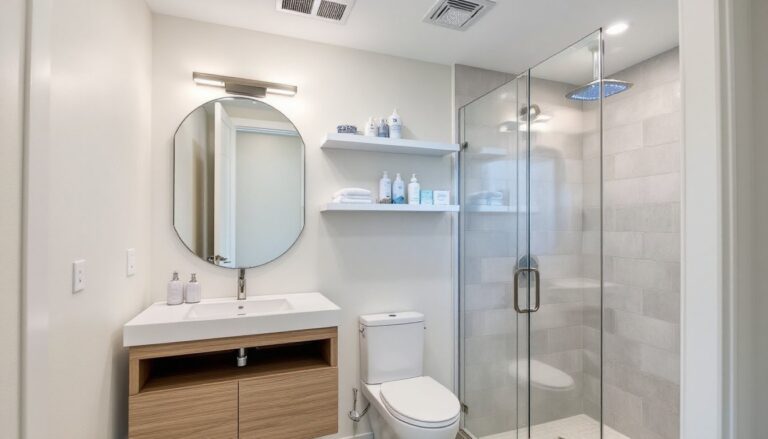
- Replace a vanity cabinet with a wall-hung or pedestal sink, exposes floor, tricks the eye into seeing more square footage.
- Trade the tub for a curbless walk-in shower if a bath isn’t needed, minimum 30″ x 60″ per IRC for code compliance.
- Shift the toilet 6–12 inches to open up walking lanes (this does mean moving the flange and requires plumbing work).
For more visual proof of what layout swaps can do, these renovation transformations show before-and-after layouts in tight footprints.
Choosing the Right Fixtures, Vanity, and Storage Solutions
In a small bath, every fixture has to earn its spot. Scale matters more than style.
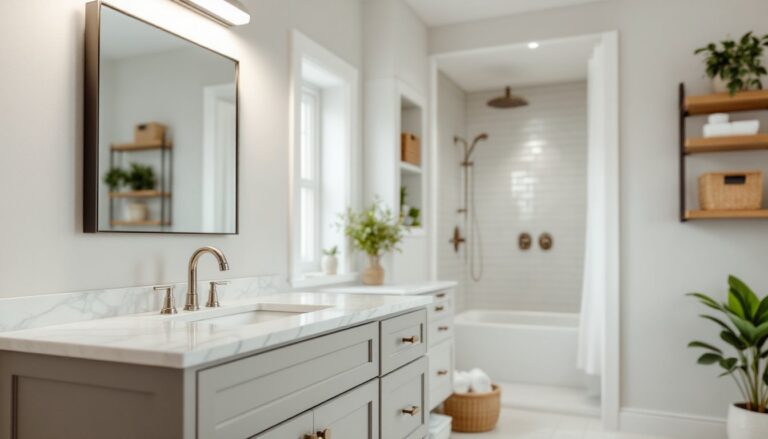
- Vanity: Look at 24″–30″ widths, or float a custom 18″ deep vanity instead of the standard 21″. Wall-mounted units free up visual floor space.
- Toilet: A round-front bowl saves about 2 inches over elongated. Skirted, one-piece designs clean easier.
- Sink: Vessel sinks eat counter space: an undermount or integrated basin keeps the top usable.
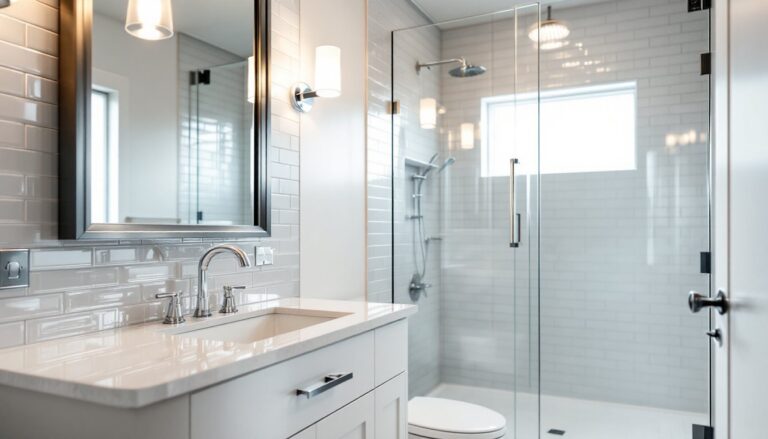
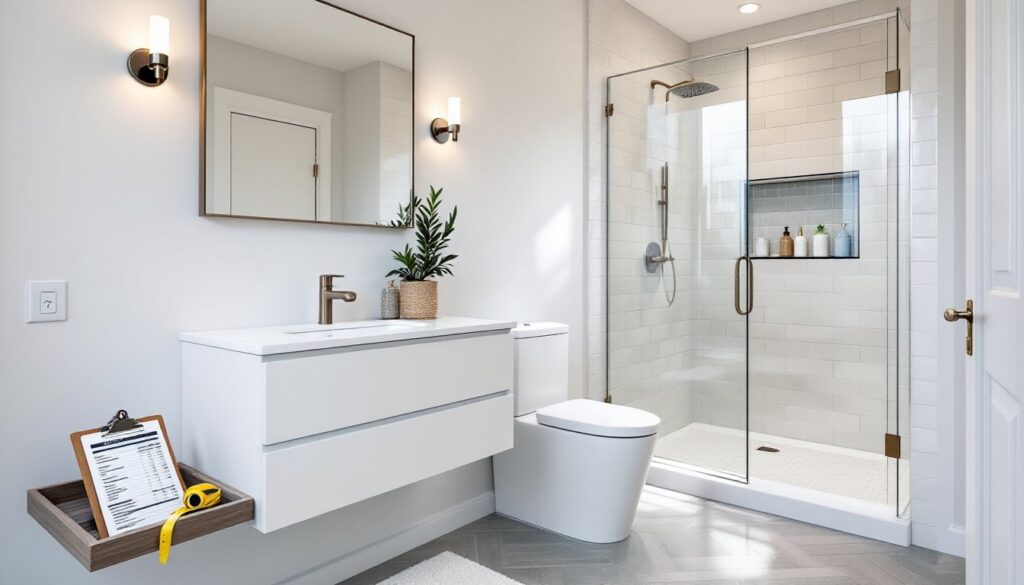
- Shower: Frameless glass beats a shower curtain or framed door for visual openness.
For storage, go vertical. A recessed medicine cabinet set between studs (standard 14.5″ on center stud bay) adds depth without bumping into the room. Over-toilet shelving, ladder racks, and a magnetic strip inside a drawer for bobby pins and tweezers all pull weight. Small basement bathrooms use many of the same tricks when ceiling height and footprint are tight.
Selecting Tile, Paint, and Lighting to Brighten the Space
Three finishes carry the look of any small bathroom remodel: tile, paint, and light.
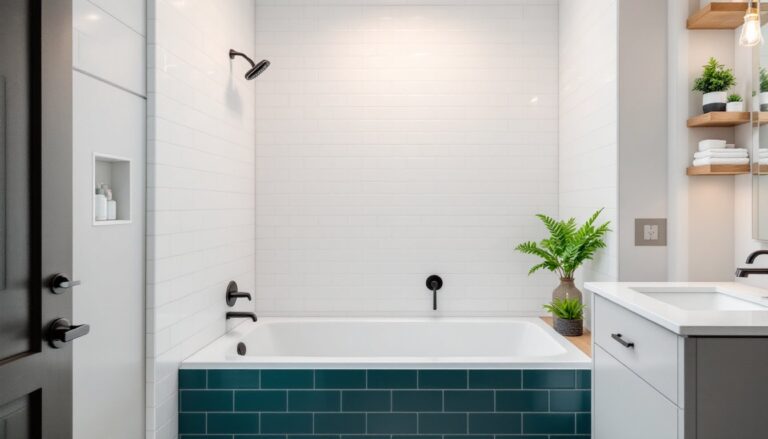
Tile. Larger format tiles (12″ x 24″ or bigger) read as fewer grout lines and a more open floor. Run them in a vertical stack or herringbone to draw the eye up. For shower walls, subway tile stays cheap and timeless, budget about $1.50–$4 per sq ft for ceramic, more for porcelain or handmade. Curated design sourcebooks like Remodelista’s tile roundups are useful for narrowing the field before stepping into a tile showroom.
Paint. Stick with mildew-resistant interior paint in a satin or semi-gloss finish. One gallon covers roughly 350–400 sq ft, a small bath usually needs just one. Lighter, cooler tones reflect more lumens and make walls recede.
Lighting. Layer it: vanity sconces at eye level (around 65″ off the floor), a ceiling fixture or recessed cans, and ideally a damp-rated LED in the shower. Per NEC Article 410, any fixture within a tub or shower zone must be marked damp- or wet-location rated. A 3000K color temperature flatters skin tones better than cool 4000K. Small-space publications like Apartment Therapy’s small bath tours are good for seeing layered lighting in action.
DIY vs. Hiring a Pro: What You Can Tackle Yourself
Honest split: cosmetic work is fair game for a confident DIYer: anything behind the wall usually isn’t.
Reasonable DIY tasks:
- Demo (wear an N95, safety goggles, and gloves, watch for old galvanized plumbing and possible asbestos in pre-1980 flooring)
- Painting, including ceiling and trim
- Installing a new vanity, faucet, and toilet (if the rough-ins are in the right place)
- Tiling floors and walls (a wet saw rental beats trying to score-and-snap porcelain)
- Swapping light fixtures on existing circuits
Call a pro for:
- Moving drains, vents, or supply lines
- Adding circuits, GFCI requirements, or fan venting through the roof
- Waterproofing a custom shower pan (a leak here means tearing it all out)
- Anything requiring a permit
For homeowners weighing the trade-offs, this guide on hiring a contractor covers vetting, contracts, and red flags. Detailed labor cost data is also available through resources like ImproveNet’s cost calculators.
Common Small Bathroom Renovation Mistakes to Avoid
Most small bathroom remodel ideas fail in execution, not in concept. Watch for these:
- Skipping the exhaust fan upgrade. Code (IRC M1505) requires 50 CFM intermittent or 20 CFM continuous ventilation. An underpowered fan invites mold.
- Forgetting to acclimate materials. Tile, vinyl plank, and engineered wood need 48–72 hours in the room before install.
- Choosing dark grout with white tile in a wet zone. It looks crisp at first: mineral deposits make it look patchy in a year.
- Undersizing the vanity drain trap or going cheap on the shut-off valves. These are $8 parts that prevent $800 problems.
- Buying fixtures before finalizing the layout. Rough-in dimensions vary, measure twice, order once.
- Ignoring the floor. A spongy subfloor under the old tub almost always needs sistered joists or a new underlayment. Regional pros like those covered in Markham bathroom remodels and Queens bathroom projects regularly note subfloor repair as the most common hidden cost.
Conclusion
A small bathroom rewards patience and planning more than budget. Nail the layout, scale the fixtures, layer the light, and don’t cut corners on waterproofing or ventilation. Whether the project is a weekend refresh or a studs-out remodel, the same rule holds: measure carefully, prep thoroughly, and know when to hand off the work. The square footage may be small, but the payoff is daily.